
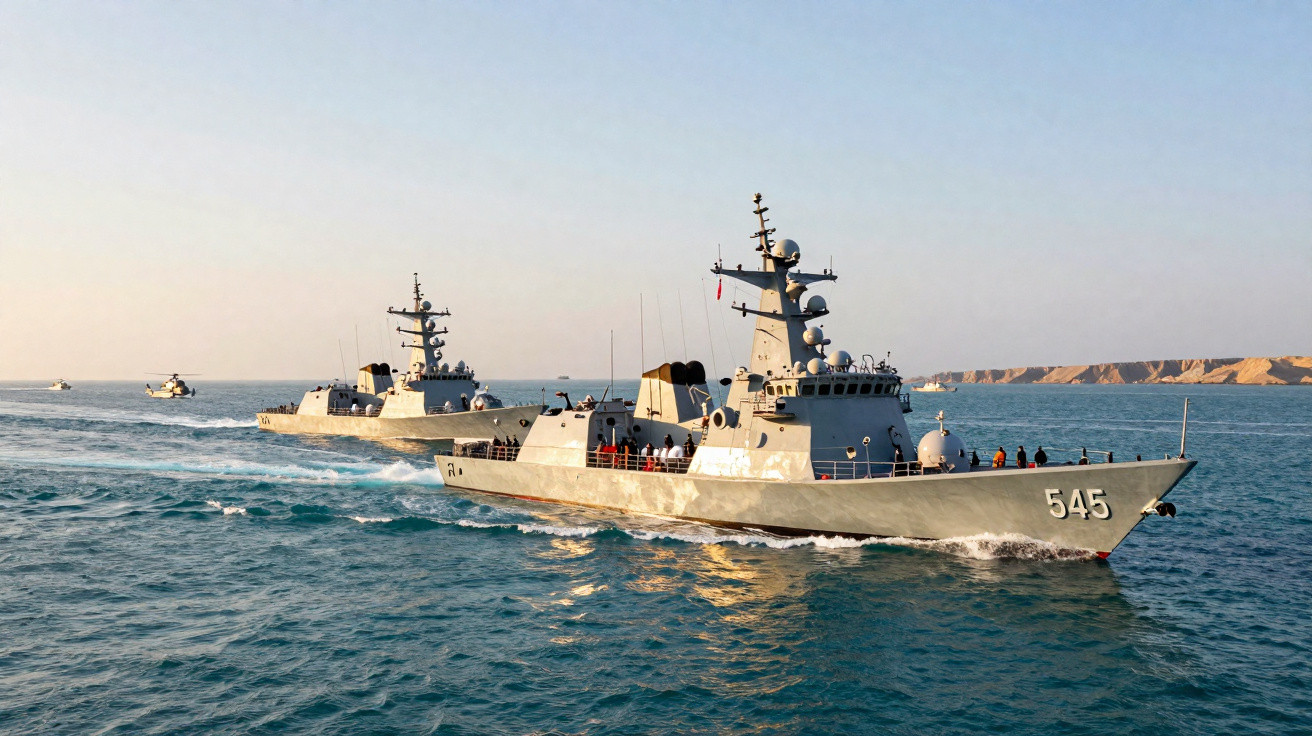
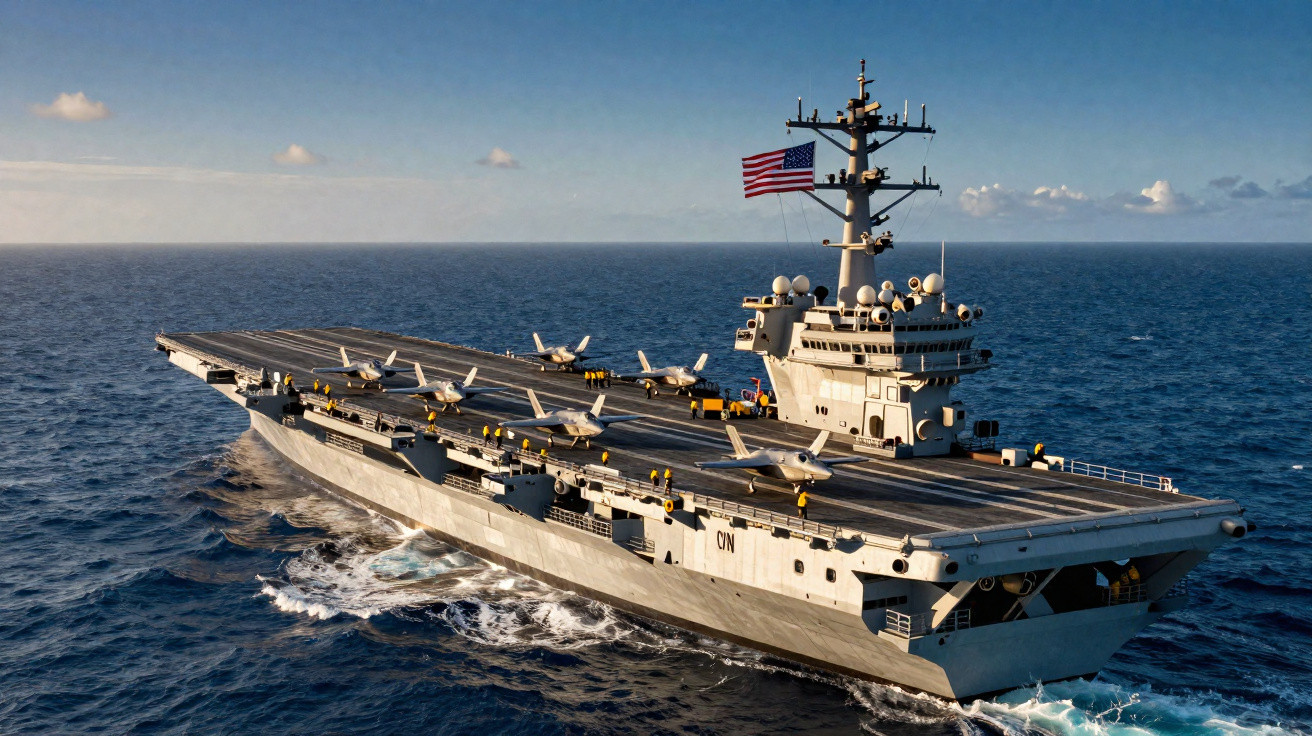
At a time of heightened sensitivity in the Middle East, a corvette from the Russian Navy's Baltic Fleet has conducted combined drills with units of the Iranian Navy in the waters of the Gulf of Oman, a key area providing access to the Strait of Hormuz and the Arabian Sea, where the US aircraft carrier USS Abraham Lincoln (CVN-78) is located. The TASS news agency reported that the vessel involved was the Stoikiy (545), a Steregushchiy-class corvette, which carried out manoeuvres focused on training and naval co-operation.
Russian and Iranian naval exercises in the Gulf of Oman
Although the statement did not provide every operational detail of the activity, the drills fall within the category known as “Passex” exercises. These involve training in communications, formation sailing, tactical manoeuvring and procedures related to maritime safety.
One of the most significant elements of the exercise is the Russian ship's origin. The deployment of a Baltic Fleet corvette entails a long-distance voyage through several maritime areas before reaching the Indian Ocean. Such rotations form part of Russia's policy of maintaining a sustained naval presence in theatres far from its territorial waters, combining naval diplomacy, military co-operation and training in operational settings with regional allies and friendly nations.
The Stoikiy (545) belongs to Project 20380 and has been in service since 2014. The vessel is more than 100 metres long, has a beam of 13 metres and a displacement of 2,220 tonnes. Its armament includes Uran anti-ship missile systems and the Redut air-defence system.
Russian Navy deployments across multiple theatres
Alongside this deployment, other Russian Navy units have been sailing in the Pacific and in other strategic regions. This is illustrated by Pacific Fleet corvettes heading towards the Sea of Japan after completing anti-submarine exercises near the Kuril Islands archipelago. In this context, the presence of a Baltic Fleet unit in the Gulf of Oman conveys the image of a Russian Navy maintaining active rotations in several theatres at the same time.
The Gulf of Oman as a strategic setting
The recent exercise, as well as the visit to Iran, carries particular importance because of the area in which it took place. The Gulf of Oman serves as the gateway to the Strait of Hormuz, through which a significant share of global trade passes. In the current regional environment - shaped by tensions surrounding Iran's nuclear programme and a strengthened military presence - any multinational naval activity in these waters takes on an additional political and diplomatic dimension.
For Tehran, conducting manoeuvres with a naval power such as Russia reinforces its narrative of military co-operation and its ability to operate alongside extra-regional partners. For Moscow, meanwhile, this type of exercise enables it to retain visibility and influence in a region where the United States and its allies maintain a permanent naval presence.
Finally, this is not the first time the two countries have undertaken activities in the Indian Ocean or the Gulf of Oman. In recent years, the two nations - at times alongside China - have held naval exercises focused on maritime security and countering non-conventional threats. One of the most recent examples demonstrating this closeness took place on 20 January, during the Multinational Will for Peace 2026 exercise, when the navies of China, Russia and Iran joined forces in South Africa to conduct naval activities with BRICS+ member countries.
Cover image used for illustrative purposes.
You may also be interested in: Without fearing US sanctions, Russia reportedly delivered the first Su-57E stealth fighters to the Algerian Air Force
Comments
No comments yet. Be the first to comment!
Leave a Comment