
The 571st Aircraft Maintenance Squadron is deactivated
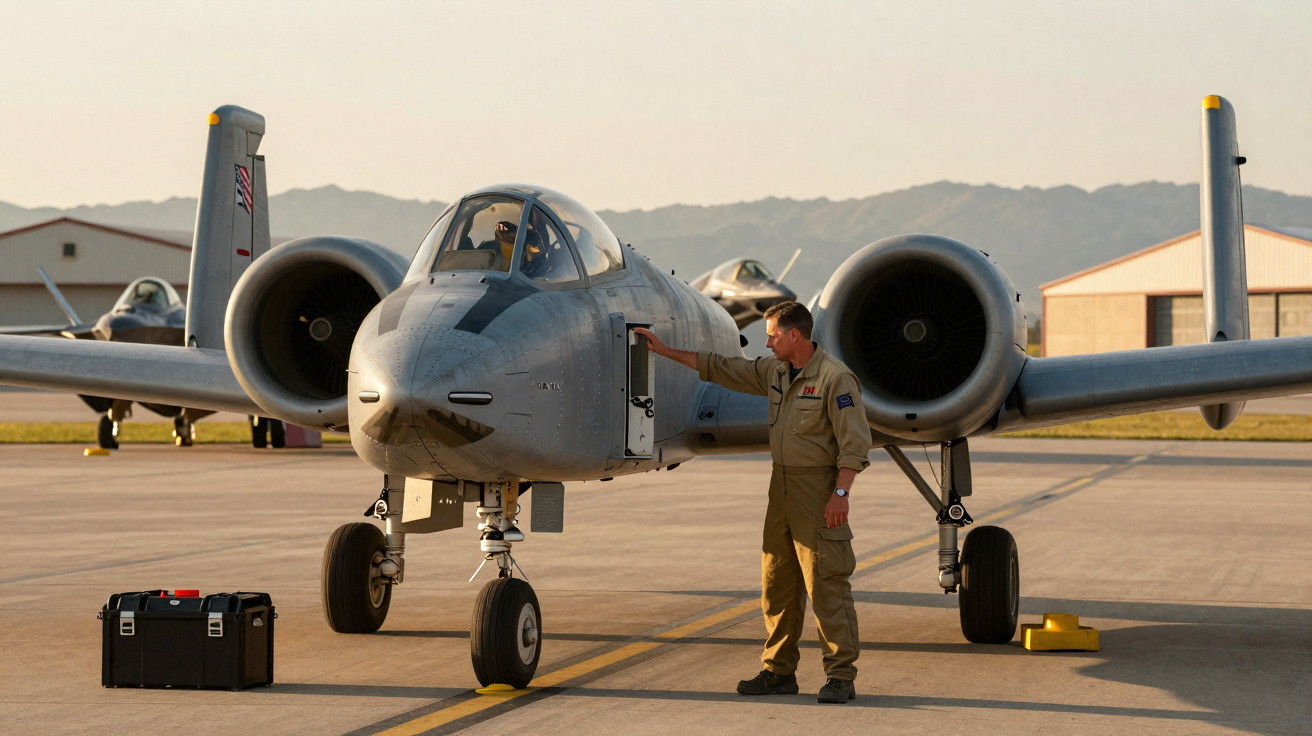
Just weeks after shutting down a test unit that was central to its technological development, the US Air Force has taken another step towards retiring the A-10 Thunderbolt II by deactivating one of the platform’s most important maintenance units: the 571st Aircraft Maintenance Squadron. The squadron was part of the Ogden Air Logistics Complex at Hill Air Force Base, Utah, which has long been essential to keeping the legendary attack aircraft operational throughout its extensive service life.
In his farewell address, Brigadier General Hall Sebren, commander of the Ogden Air Logistics Complex, stated: “This mission has been a source of pride for the entire complex. The A-10 came to Hill because of the skill and commitment of our people, and it remained here because that expertise grew stronger over time. Our maintenance technicians extended the service life of this aircraft time and again, doing so with a pride and professionalism that has become part of Hill’s identity.”
Hill Air Force Base’s long-standing A-10 Thunderbolt II support
The maintenance facilities have worked on A-10 Thunderbolt II aircraft since 1998, becoming one of the US Air Force’s main centres for these activities. They served as a reference point for tasks including full airframe inspections and related structural repairs, as well as work on each aircraft’s wings. At other times, the centre also trained a large number of technicians and engineers, resulting in hundreds of personnel working on the maintenance line assigned to the Warthog.
A-10 retirement and the arrival of F-35A Lightning II fighters
Today, however, the US Air Force is moving firmly ahead with the withdrawal of these aircraft as part of a broader plan to modernise and redirect resources. In recent months, as the service carries out that process, the A-10’s role has been confined to Middle East deployments as part of a close air support force for US Navy vessels patrolling the Persian Gulf under CENTCOM’s authority. In particular, the aircraft have proved effective at destroying unmanned airborne and maritime threats, whose use is becoming increasingly apparent in modern operational environments.
Meanwhile, Hill Air Force Base itself is already preparing to receive Lockheed Martin-built F-35A Lightning II stealth fighters, a move said to provide a major capability improvement for participation in high-intensity conflicts. This entails not only the arrival of new aircraft, but also the reorganisation of the base infrastructure needed to maintain them. That will require additional space and investment, neither of which would be possible without retiring the A-10s.
Image credits: US Air Force
Comments
No comments yet. Be the first to comment!
Leave a Comment