
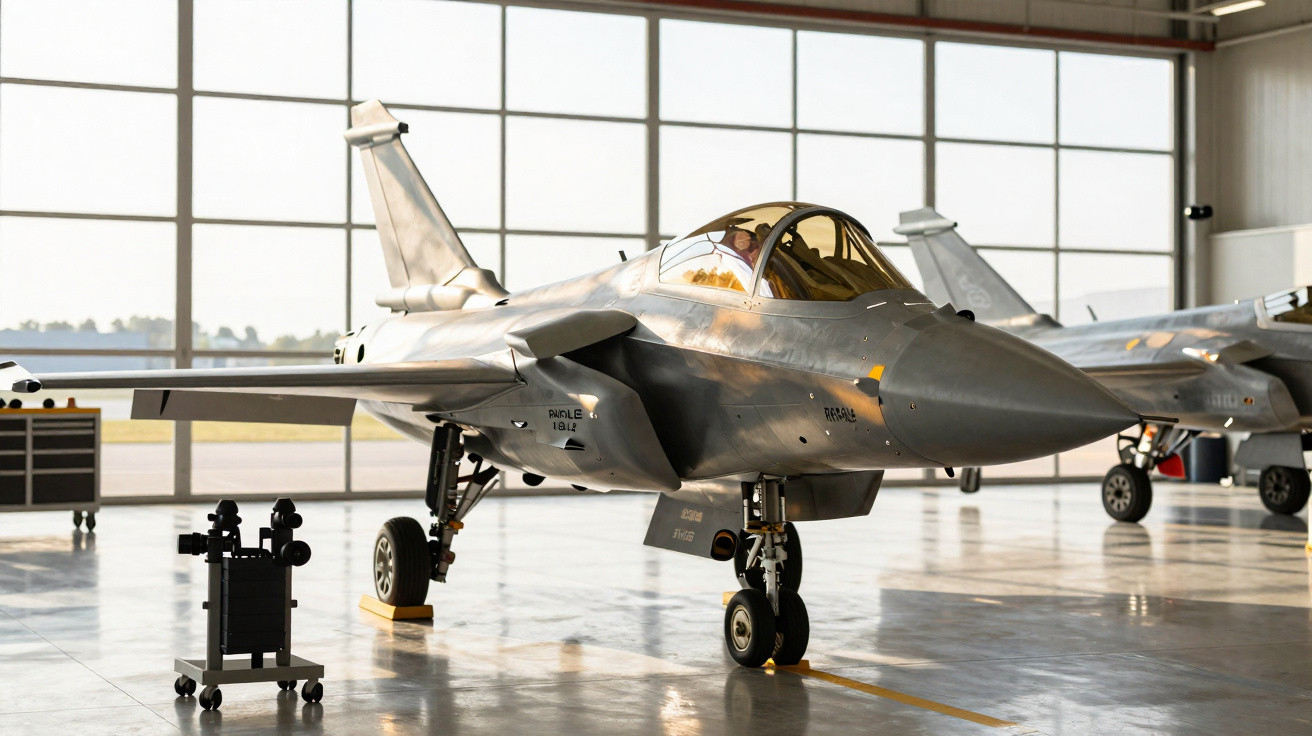
The Dassault Rafale has a lower top speed than the United States’ stealthy F-35, but many pilots and defence planners consider it the more formidable aircraft in several operational situations. That apparent contradiction is explained by a combination of outright manoeuvrability, intelligent engineering and a design approach intended to perform numerous missions exceptionally well rather than specialise in only one.
Why a “slower” jet can win the fight
At first glance, maximum speed appears straightforward: the Rafale reaches approximately 1,912 km/h, while the F-35 exceeds 1,900 km/h depending on the version. In present-day air combat, however, top speed seldom determines which aircraft prevails.
More important factors include how rapidly a fighter can turn, climb, lose speed and recover it, alongside the pilot’s ability to control those demands without being overloaded by data. The Rafale was specifically designed to perform strongly in these areas.
- High agility: its delta wing and canards enable tight turns and rapid nose-pointing.
- Strong acceleration: two engines deliver thrust as well as redundancy.
- Refined aerodynamics: an unstable configuration, controlled by computers, exchanges inherent stability for manoeuvrability.
- Pilot-friendly cockpit: information is fused into one tactical picture to accelerate decision-making.
The Rafale was built not to be the fastest jet in the sky, but to be the one that can change the fight the fastest.
During short-range engagements, a fighter’s capacity to move quickly from defence to attack, sustain high-G turns while retaining control, and keep its sensors fixed on a manoeuvring opponent can matter more than a small difference in top speed.
Rafale agility by design, not by accident
The Rafale’s recognisable shape, with triangular wings and forward canards positioned close to the cockpit, is not simply an aesthetic feature. It represents a deliberate choice to prioritise manoeuvrability.
Delta wings and canards: the agility combination
The Rafale’s delta wings provide substantial lifting area, enabling it to carry heavy weapon loads while retaining control at high angles of attack. Its canards work as small forward wings, continuously trimming the aircraft and allowing the pilot to aim the nose accurately where required, including at low speeds and in aggressive manoeuvres.
This “relaxed stability” arrangement could not be controlled by a pilot alone. Flight-control computers make minute adjustments hundreds of times each second, keeping the aircraft close to instability without allowing it to exceed that point. The result is tight turns, quick roll rates and assured handling in turbulent conditions or during low-level flying.
Agility is not an emergency feature for the Rafale; it is the core of its design philosophy.
Power, weight and balance
Two Snecma M88 engines provide the Rafale with sufficient thrust for high-G manoeuvres even when it is carrying a full complement of missiles, bombs and fuel. For a twin-engine fighter, its comparatively low weight benefits both manoeuvrability and range.
Whereas certain heavier aircraft designed around stealth retain less emphasis on close-in performance, the Rafale has maintained a more traditional focus on dogfighting ability. Although beyond-visual-range missiles dominate modern aerial warfare, armed forces still prepare for the possibility of pilots ending up in close quarters, turning hard, where pure agility can alter the result within seconds.
Versatility: from air superiority to nuclear strike
Dassault promotes the Rafale as an “omnirole” fighter, and the company uses the term intentionally. The objective was not merely an aircraft capable of several roles, but one able to move rapidly between them during a single mission.
| Mission type | Rafale role |
|---|---|
| Air superiority | Intercepts hostile aircraft, escorts bombers and patrols contested airspace. |
| Strike missions | Attacks ground targets using precision-guided bombs and cruise missiles. |
| Maritime operations | Engages vessels, supports naval task forces and operates from aircraft carriers. |
| Intelligence and reconnaissance | Employs pods and sensors to map, photograph and observe battlefields. |
| Nuclear deterrence (France) | Can carry France’s air-launched nuclear missile as part of strategic forces. |
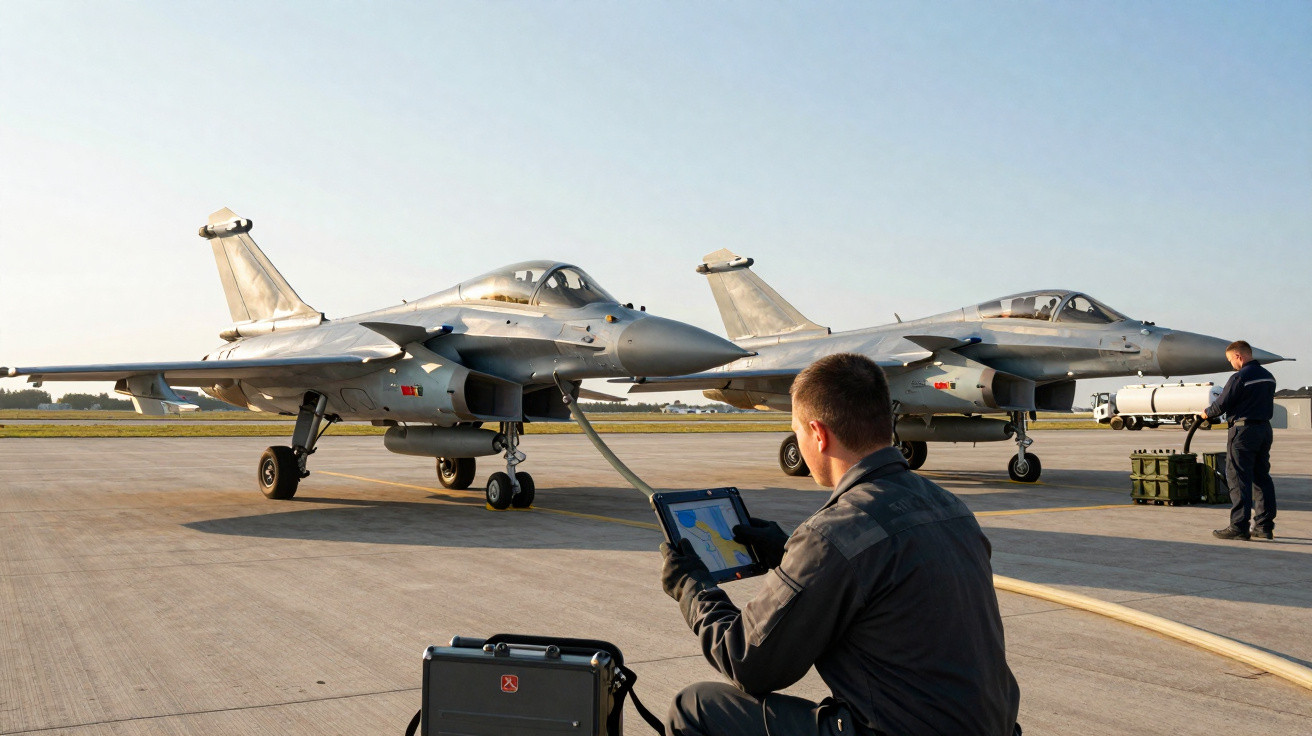
During operations in the Middle East and Africa, Rafales have frequently carried mixed weapon loads: air-to-air missiles for self-defence, laser-guided bombs for close air support, stand-off weapons against high-value targets, and pods providing surveillance to troops on the ground.
A single Rafale can take off with one plan and adapt in‑flight as the battlefield changes, without returning to base for reconfiguration.
Combat-proven where it counts
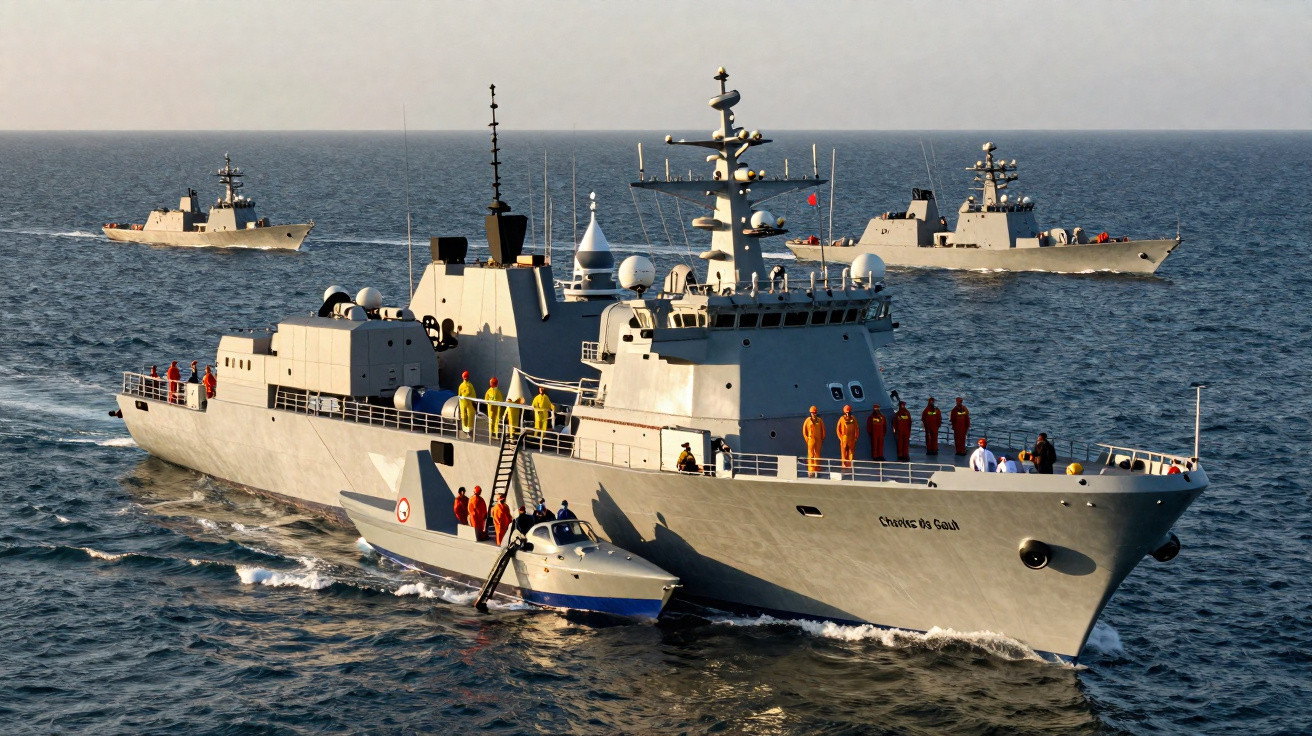
France has deployed the Rafale extensively on genuine operations rather than solely in exercises. Across Libya, Mali, Syria and Iraq, the aircraft has carried out air strikes, intelligence sorties and air patrols, operating from land bases as well as the aircraft carrier Charles de Gaulle.
Those operations have produced significant feedback. Aircrew and ground personnel have called for faster maintenance, improved sensor integration, and enhancements to weapons and electronic-warfare systems. Dassault and the French defence ministry have gradually incorporated these lessons into successive aircraft standards.
That continuing development is important to overseas customers. India, Egypt and Qatar, among other nations, have selected the Rafale partly because it is a mature platform proven in demanding conditions rather than an untested promise on paper.
Keeping pace through constant upgrades
Although the Rafale does not possess the F-35’s all-aspect stealth, it offsets this limitation through its electronic systems and weapons. France has financed successive improvements intended to ensure the aircraft remains relevant against new threats.
Eyes, ears and electronic muscle
The Rafale’s radar has progressed to an active electronically scanned array (AESA), allowing it to follow several targets while remaining harder to detect. Its infrared search-and-track sensors also offer a “passive” means of finding opposing aircraft without transmitting radar emissions.
In addition, the Spectra electronic-warfare suite can interfere with hostile radars, alert pilots to incoming missiles and, on some occasions, deceive threats so they miss altogether. This combination of situational awareness and protection improves survivability, particularly in defended airspace.
The Rafale’s real speed advantage lies in how quickly it can sense, decide and act, not in its Mach number.
The Rafale’s weapons suite, including long-range air-to-air missiles, stand-off cruise missiles and precision bombs, has also undergone refinement. Updated software standards regularly add capabilities without requiring changes to the airframe.
Export success and strategic influence
For France, the Rafale is more than a combat aircraft. It serves as a central element of both foreign policy and industrial strategy. Every export contract extends French influence, supports thousands of jobs in France and finances the next cycle of upgrades.
India’s widely reported acquisition, followed by further agreements with Egypt, Qatar and other countries, has made the Rafale a substantial commercial competitor to American and European fighters alike. Buyers value not only the aircraft but also the degree of technology transfer and industrial collaboration France is prepared to provide.
This export history creates a self-reinforcing cycle: a larger operator base brings additional funding, broader maintenance knowledge and a stronger argument for continued development. For customers, that means Rafales purchased today are likely to gain new capabilities for many years.
How Rafale and F-35 might actually meet
Despite arguments online, the Rafale and F-35 were created according to distinct principles. The F-35 places major emphasis on stealth, sensor fusion and networked warfare, while the Rafale focuses on manoeuvrability, multirole flexibility and freedom from US-controlled systems.
In a theoretical encounter, the opening stage would likely take place beyond visual range. The F-35’s reduced radar signature would provide a substantial initial advantage. Should Rafales survive that first exchange, through terrain masking, electronic warfare and support from land- or ship-based radar, combat could move to shorter distances where manoeuvrability and raw kinematics become more significant.
In such finely balanced situations, the Rafale’s tight turning radius, acceleration and high-off-boresight missiles could change the outcome. No air force intends to depend exclusively on one form of engagement, which is why mixed fleets and alliances remain standard practice.
Key terms worth clarifying
Multirole vs omnirole: “Multirole” usually describes a fighter able to conduct several missions after being reconfigured on the ground. “Omnirole”, in Dassault’s usage, refers to the ability to carry out and change between those missions during the same sortie.
Beyond visual range (BVR): Aerial combat conducted across tens, or even more than a hundred, kilometres using radar and long-range missiles. At such distances, data links and sensor quality can be more important than how tightly an aircraft can turn.
Electronic warfare: The use of radio waves and signals to identify, jam, confuse or deceive enemy systems. For a modern fighter, electronic warfare is as essential as armour once was for tanks.
What this means for smaller air forces
For nations unable to purchase vast fleets or separate aircraft for every role, the Rafale’s combination of strong real-world performance and versatility is clearly attractive. A relatively small fleet can undertake air defence, strike, maritime patrol and intelligence work, reducing both training and logistical expenditure.
At the same time, dependence on sophisticated sensors and software introduces further issues, including cyber security, electronic vulnerability and reliance on regular manufacturer updates. Weighing those risks against the advantages of a fighter able to do almost everything is now a major question for many defence ministries considering their next major acquisition.

Comments
No comments yet. Be the first to comment!
Leave a Comment