
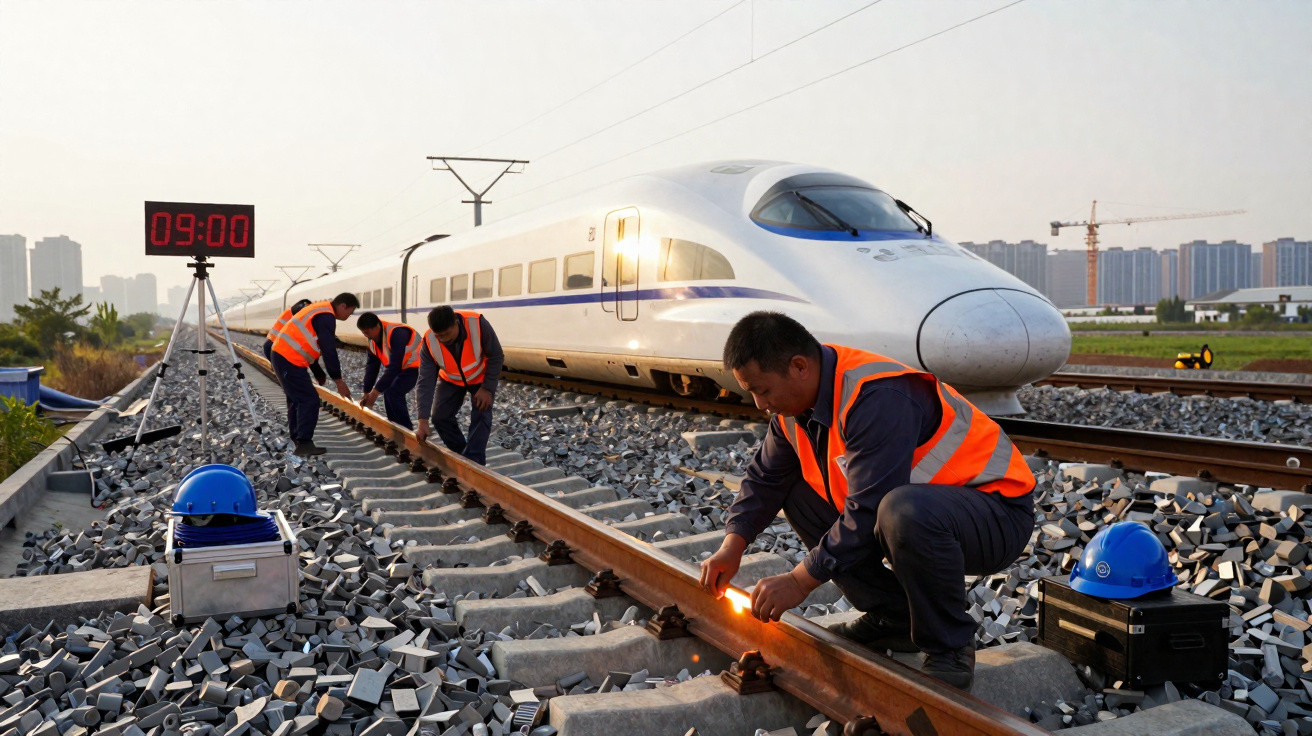
Just after dawn in south-east China, thousands of mobile-phone cameras shone beside a dusty construction site. The sky remained grey, casting the sort of light that makes every movement appear slower. Yet nothing moved slowly on this stretch of land in Fujian province. More than 1,000 workers in orange high-visibility vests operated almost as one body, cranes swept through rehearsed arcs, and steel rails were eased into position with the clang of something decisive. Nine hours later, a seven-hour trip between two major cities had been reduced to only 90 minutes. There was no grand ceremony or ribbon-cutting speech. It was simply one of those moments when a country quietly redraws its own map.
This time, though, everybody noticed.
China’s nine-hour rail sprint that stunned the world
At first hearing, the story seems almost implausible. With more than 1,000 people working on site, China completed a vital section of a new high-speed railway in only nine hours, reducing a journey of more than seven hours to roughly an hour and a half. A single working day transformed a slow, draining journey into something resembling a morning commute.
For residents, it represented more than an additional route on a map. Their city suddenly felt much nearer to everything around it.
People who saw the work compared it with a real-life time-lapse sequence. Teams rotated throughout the night as floodlights illuminated the site like a sports stadium. Lorries arrived to an exact timetable carrying pre-assembled track sections. Every crew knew its position, the bolts it needed to secure and the signals it had to follow. There was no aimless waiting and no pause to ask, “what do we do now?”
By daybreak, an area that had been bare ground contained a completed stretch of railway, ready for trains travelling at speeds that would have sounded extraordinary a generation earlier.
Such pace is not the product of one exceptional night. It reflects years of repeated practice in a country that has constructed the world’s largest high-speed rail network at extraordinary speed. China has installed more than 40,000 kilometres of high-speed lines, refining the method until work that might halt other countries for an entire weekend has become close to routine. The nine-hour sprint was not a one-off.
It was a system performing precisely as it was intended to.
From seven hours of fatigue to 90 minutes of possibility
Consider what a seven-hour journey means in ordinary life. It is too lengthy for an easy day out, too brief for many people to think a flight is worthwhile, and tiring enough to leave travellers exhausted on arrival. Before this new route, anyone travelling between the two cities had to arrange their entire day around one journey: depart at dawn, arrive at dusk, and lose a full day to travelling a few hundred kilometres.
Then, virtually overnight, the same distance became a 90-minute journey.
A shopkeeper who previously travelled to see suppliers twice a year can now make the trip twice a month. Parents who only saw children at university during holidays can begin considering unexpected weekend visits. A student could leave after lunch, arrive before a class, and still return home in time to sleep in their own bed. These examples may look minor on paper, but in reality they change lives.
Most people know the feeling: a long journey you used to dread suddenly becomes “no big deal” because a quicker route or direct train has opened.
Behind that emotional impact lies a practical issue governments around the world continue to grapple with. Faster railways are not merely about speed itself. They reshape economic areas, alter where people are prepared to live, and distribute opportunities beyond overcrowded megacities towards smaller, more affordable towns. A seven-hour divide usually keeps people separate; a 90-minute connection begins to bring them together. Travel time is not simply a figure on a timetable; it is a subtle filter determining which opportunities we take and which we leave behind.
When that filter shifts, everyday life begins to reorganise.
How China builds a 9-hour rail miracle, one quiet system at a time
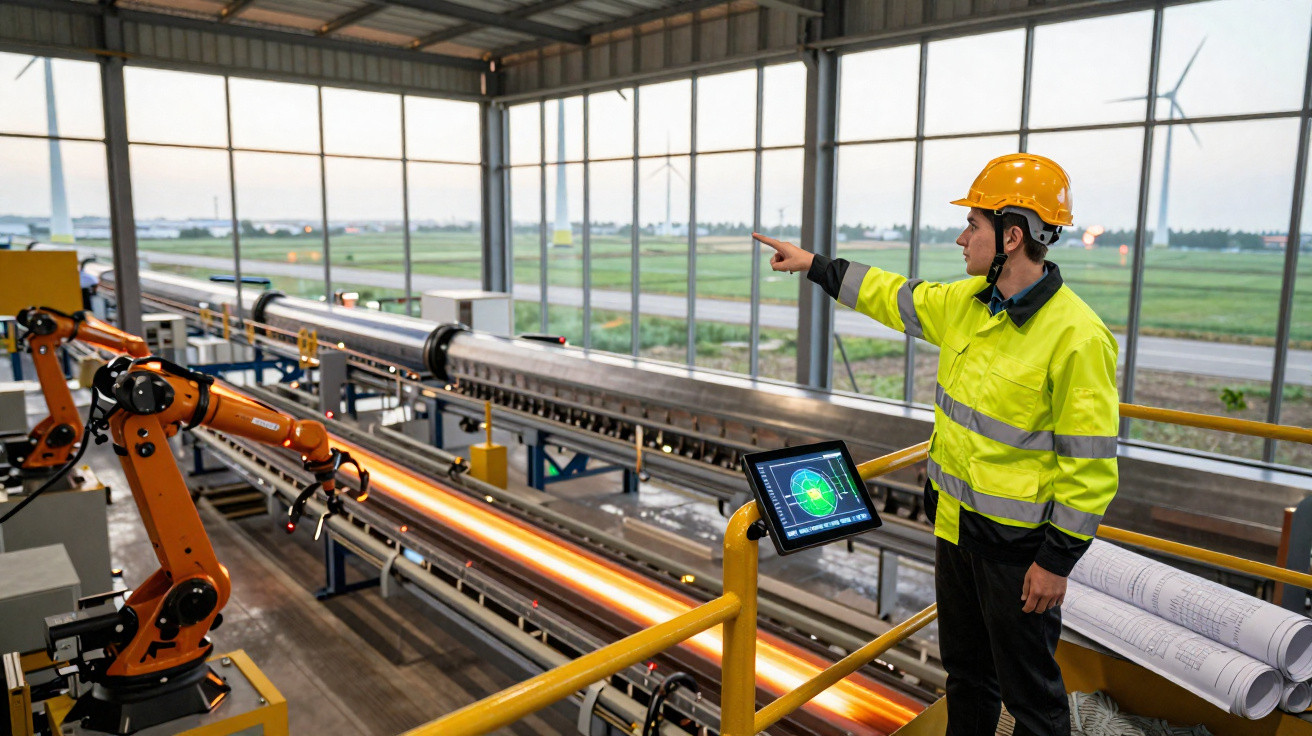
The nine-hour construction drive looked remarkable on social media, but its real secret lay in everything completed before the first worker arrived. Chinese engineers assembled crucial parts away from the site. Rails were measured, cut and tested in factories, while concrete components were cast and cured days or weeks in advance. Digital models simulated the entire operation, including the order in which cranes would move.
As a result, when the night arrived, the site resembled less a conventional construction project and more a tightly directed performance.
Many countries aspire to this pace, yet become held up by paperwork, neighbourhood disputes and vulnerable schedules. Delays accumulate, costs rise and public confidence gradually fades. Eventually, people begin to roll their eyes whenever another “new infrastructure plan” is announced. Honestly, few people read those glossy project brochures from beginning to end. China takes a markedly different route: make the decision first, align local and national authorities, and then commit enormous, coordinated resources to delivery.
It may not appear gentle, but it is ruthlessly efficient.
“Standing there that night, watching the track go in, I thought: my children will never know the old seven-hour trip,” one commuter told local media. “For them, this will just be ‘normal’ speed.”
- Pre-assembly of components: Rails, sleepers and vital structures are made off-site, then delivered ready to fit, sharply reducing the time required at the construction site.
- Standardised designs: Reusable, proven templates enable teams to work rapidly without designing every project anew.
- 24/7 shift coordination: Rotating crews allow work to continue safely overnight, with defined responsibilities and no unnecessary waiting.
- Digital planning tools: Simulations identify potential conflicts in advance, meaning solutions are found on screen rather than in the mud.
- Top-down decision clarity: Once a route receives approval, regional authorities, utility providers and railway companies work towards the same aim rather than in opposing directions.
What a 90-minute world quietly does to our lives
Journeys that were once made “once a year” gradually become trips taken “once a month”. Jobs that once seemed impossibly distant suddenly appear in people’s searches. A recent graduate might take a role in another city without moving there completely, confident that a fast train can close the distance. Grandparents who once carefully conserved their energy for occasional visits can take a morning train and return home that evening. The mental map of distance contracts, without a major announcement or a ribbon-cutting photograph.
People simply begin living as though their country has become smaller.
This 9-hour construction effort and the 90-minute rail connection form part of a wider story about the effect of speed on a society. It is not only physical speed, but also the speed of decisions, coordination and trust in the system. Countries observing China face a difficult choice: do they want this degree of rapid change, with every trade-off it entails? No single miracle model suits everybody. Some countries will opt for slower, more consultative approaches. Others may gradually adopt parts of China’s model.
The straightforward reality is this: once people have experienced 90 minutes instead of seven hours, they do not want to return.
For the moment, somewhere on the new route, passengers are making their first journey between two cities that once felt painfully distant. A teenager scrolls through a phone, scarcely glancing through the window. A worker sleeps, knowing they will still be home for dinner. A grandparent watches the speed shown on the onboard display, partly unable to believe it. The train cuts through the countryside, and nobody on board had to wait a generation to witness the change.
That is the understated force of a nine-hour night on a dusty stretch of land.
| Key point | Detail | Value for the reader |
|---|---|---|
| China’s 9-hour rail build | More than 1,000 workers completed a crucial section of a new high-speed line overnight | Demonstrates what coordinated infrastructure can deliver in real time |
| From 7 hours to 90 minutes | High-speed rail dramatically reduced travel time between major cities in Fujian province | Helps explain how distance and opportunity are quietly transformed |
| System, not miracle | Pre-assembly, standardisation and digital planning make “miracle” projects repeatable | Provides a way to compare infrastructure debates in other countries |
FAQ:
- Question 1: How did China build a crucial section of railway in only nine hours?
- Question 2: Which area of China had its journey time reduced from seven hours to 90 minutes?
- Question 3: Does this railway form part of China’s broader high-speed network?
- Question 4: What does this mean for people in smaller or medium-sized Chinese cities?
- Question 5: Could other countries realistically replicate this type of rapid railway construction?




Comments
No comments yet. Be the first to comment!
Leave a Comment