
Add us to your favourites on Google.
Why add us? Receive the latest updates from Zona Militar in your Google feed.
USS Cleveland becomes the final Freedom-class littoral combat ship
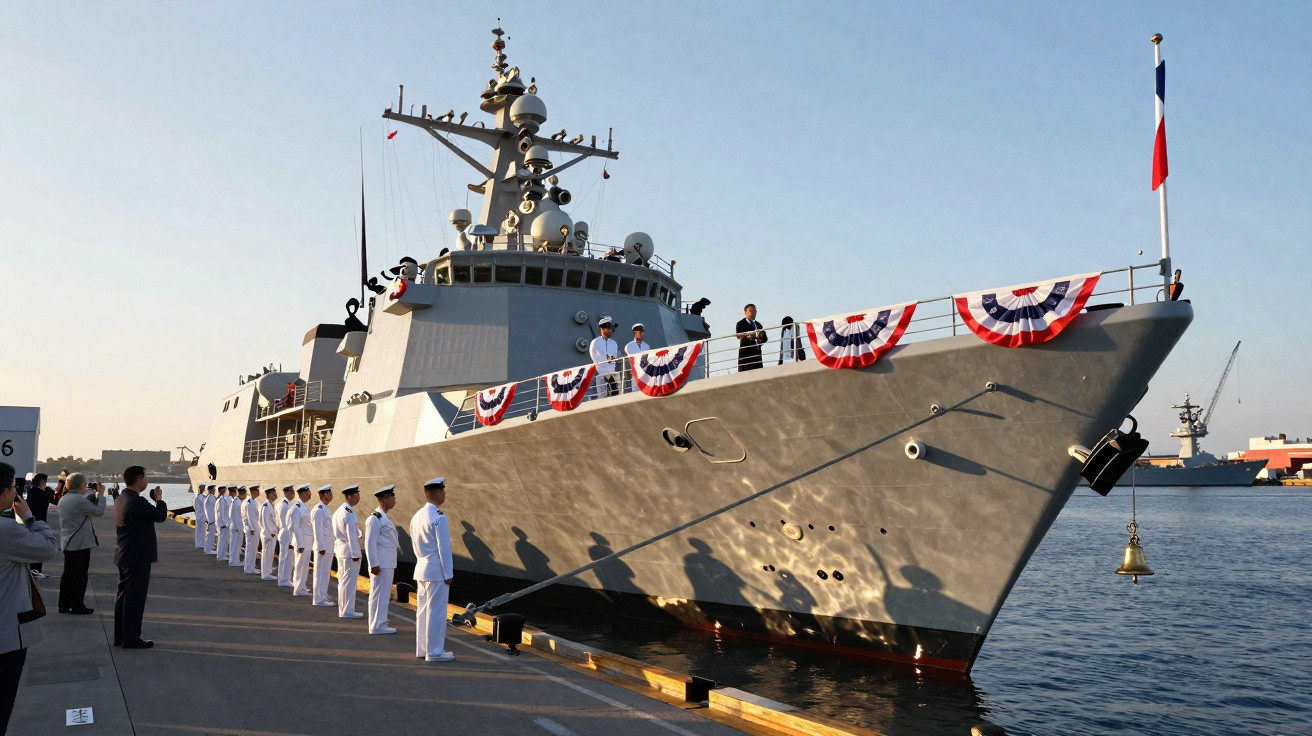
The United States Navy has commissioned the final Freedom-class littoral combat ship, USS Cleveland (LCS 31), in an official ceremony in the city for which the vessel is named. As the sixteenth Freedom-variant ship under the Navy’s Littoral Combat Ship (LCS) Programme, LCS 31 will now proceed to its home port at Naval Station Mayport, Florida. There, it will join Littoral Combat Ship Squadron 2 within the Atlantic Fleet.
Lockheed Martin and Fincantieri Marinette Marine built USS Cleveland (LCS 31) in Marinette, Wisconsin. The ship’s formal handover to the U.S. Navy in December 2025 brought Freedom-class construction to a close. Of the 16 ships completed, five - USS Freedom (LCS 1), USS Milwaukee (LCS 5), USS Detroit (LCS 7), USS Little Rock (LCS 9), and USS Sioux City (LCS 11) - were decommissioned because of design defects and propulsion-system issues. After the early withdrawal of those vessels, the Freedom class now comprises 11 littoral combat ships in service, among them the newly commissioned USS Cleveland.
The U.S. Navy Littoral Combat Ship Programme and its variants
Launched in 2002, the U.S. Navy’s LCS Programme sought to develop and field a new category of fast, adaptable surface combatants for littoral operations and for support roles in network-centric combat forces. Under the programme, the Navy commissioned two distinct designs: the Freedom class, constructed by Lockheed Martin at Fincantieri Marinette Marine’s Wisconsin shipyard, and the Independence class, produced by Austal USA at its Alabama facilities. Of the 19 Independence-class vessels completed, two - USS Independence (LCS 2) and USS Coronado (LCS 4) - have been removed from service.
LCS vessels use modular mission packages, enabling them to adapt to a range of combat situations. Their associated capabilities include mine countermeasures (MCM), surface warfare (SUW), unmanned surface vehicles (USV), the Naval Strike Missile and the MK-70 missile launch system. Freedom-class ships are assigned to Littoral Combat Ship Squadron 2, based at Mayport, Florida, within the Atlantic Fleet. The Independence class, meanwhile, serves with Littoral Combat Ship Squadron 1 in San Diego, California, under the Pacific Fleet.
Technical shortcomings of the Freedom and Independence classes
Notwithstanding the U.S. Navy’s plans for its future littoral combat ship force, the LCS Programme experienced technical and operational shortcomings from the outset of service. These included escalating build costs, which resulted in the cancellation of several programme vessels; propulsion failures; difficulties in the connection between diesel engines and turbines on the Freedom class; and structural-integrity concerns involving the aluminium hulls that distinguish the Independence class.
USS Cleveland (LCS 31) is the final planned vessel of the Freedom variant. When the penultimate ship, USS Beloit (LCS 29), was delivered to the U.S. Navy, the service confirmed that Freedom-class construction had ended, highlighting the ships’ operational unsustainability as a result of their numerous technical limitations. The United States Navy is now concentrating on other naval programmes, including the future Trump-class battleships, Columbia-class ballistic-missile nuclear submarines and Gerald R. Ford-class nuclear-powered aircraft carriers, all included in the institutional report “U.S. Navy’s Shipbuilding Plan 2026.”
You may also like: The U.S. Navy aircraft carrier USS Nimitz is already in Rio de Janeiro to carry out exercises with the Brazilian Navy






Comments
No comments yet. Be the first to comment!
Leave a Comment