
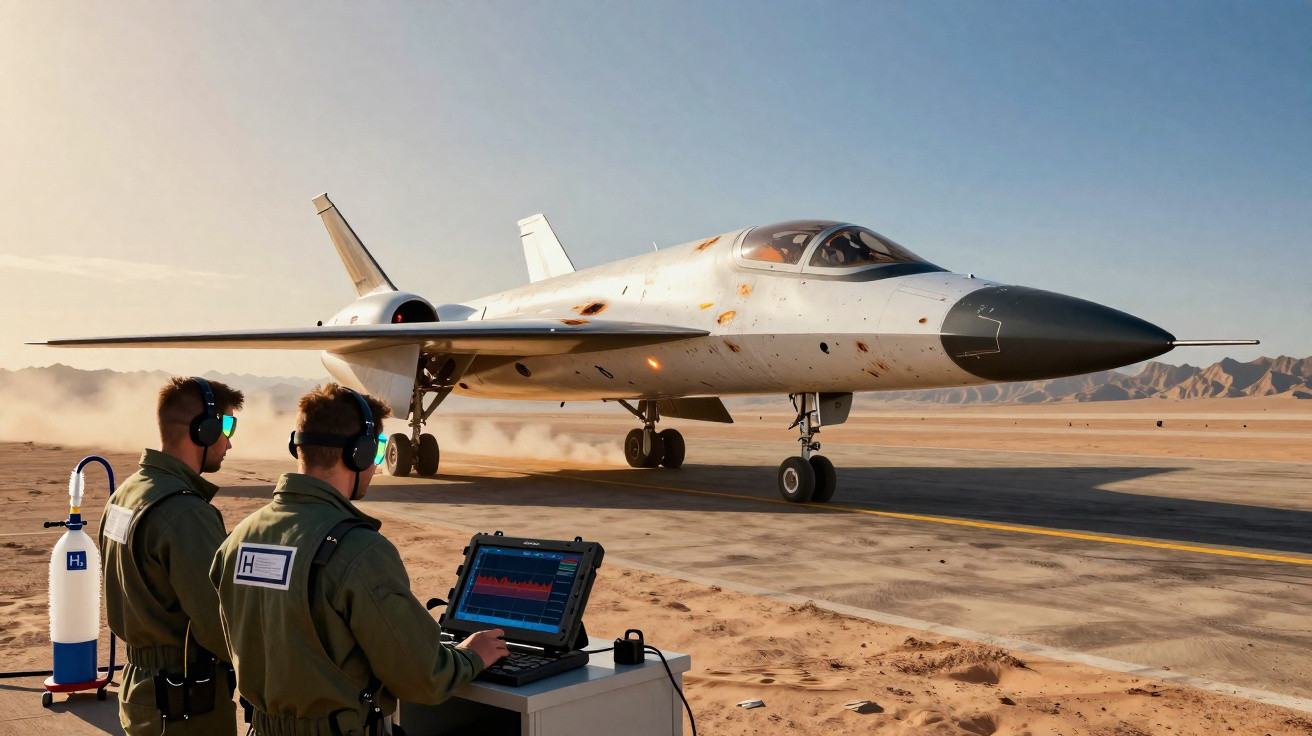
The figure making the headlines - 24,501 km/h - is the sort of claim that sets social feeds alight, makes frontiers seem smaller and unsettles competing capitals. The ambition is now impossible to miss.
As camera crews arrived, the hangar lights were lowered and the morning chill seeped inside. The atmosphere went quiet: the particular silence that comes before a major pledge, when everyone privately considers who will be expected to deliver it. Engineers, bleary-eyed and holding coffees, stood beneath a huge screen displaying a silver, dart-like aircraft. Its needle-shaped intake and LED-lit fuselage gave it an almost liquid appearance.
When “24,501 km/h” appeared on the display, several people raised their heads, as though trying to grasp the number before it vanished. A commander murmured “Mach 20”, part prayer and part arithmetic. Nobody in the room exhaled.
The hydrogen scramjet aircraft reaching towards space
A consortium with a British focus and substantial propulsion heritage is behind the project, which aims to show that a hydrogen scramjet can operate cleanly, intensely and for long enough to be useful. Its proposed layout combines a front-mounted precooler, a dual-mode ramjet/scramjet at its centre, and thermal batteries integrated into the wings. The description sounds technical, until you imagine air being cooled from furnace temperatures to jumper weather within milliseconds so that the engine does not choke.
The 24,501 km/h claim is more than a boast: it challenges assumptions. At that velocity, air behaves like chemistry and the suitability of metal becomes uncertain. The team outlined a staged programme, starting with ground rigs, continuing through booster-supported test hops, and culminating in a high-altitude sprint close to the upper atmosphere. To them, “Mach 20” is not merely a headline; it is a chart marked with every danger along the route.
The underlying hardware has some precedent. British precooler technology has already endured testing at US facilities, dropping air from more than a thousand degrees to close to ambient temperature in an instant. That demonstrated the ability to control heat before it consumes an engine. Australia and the US have both operated hypersonic programmes that have explored Mach numbers much as climbers probe a ledge with a boot. Hydrogen alters the equation: it delivers greater specific impulse, cleaner emissions and a coolant that also serves as fuel. That twofold role is what makes this attempt stand out.
How the aircraft could operate against a hostile sky
Hydrogen is an outgoing fuel: light, energetic and constantly looking for a route out. The challenge lies in keeping it cold and dense without making the airframe resemble an airborne flask. Designers discuss suppressing slosh, using foam insulation and forming tanks along the aircraft’s spine, preserving capacity without swelling its profile. They must also strike a balance by sending cryogenic loops towards the nose and leading edges, where heat naturally accumulates, while ensuring the engine is not deprived during a burn.
The inlet acts as the gatekeeper, determining which air enters and how violently it arrives. At hypersonic speeds, the wrong angle can drive a shockwave into the combustor and extinguish the flame as easily as wind blows out a birthday candle. This explains the scalpel-like intake lip and why control software is as important as the hardware itself. The engine switches between ramjet and scramjet modes, metering hydrogen precisely enough to keep the flame rapid without letting it become unstable.
The proposed sequence has more sense than any single press announcement can convey. Cooling calculations must first be validated on hot-flow rigs, followed by stable combustion trials in wind tunnels that roar like thunder. A test core is then attached to a booster and ignited where the air is sparse and unforgiving. Only after that comes a complete vehicle, protected by thermal shielding fitted across its surface like armour. It may seem slow; it may seem cautious. But that is the only route by which such figures can endure the ascent.
Reading the claims and the hardware behind Mach 20
Focus on milestones rather than imagery. Updates should be checked for terms such as “hot fire”, “flight-relevant inlet conditions”, “thermal soak” and “dual-mode transition”. Those expressions show that the team is confronting the appropriate difficulties. TRL, or Technology Readiness Level, indicates development maturity: TRL 4–5 covers laboratories and rigs, while TRL 6 denotes flight-like conditions. At TRL 7, the system has been taken outside to face the atmosphere directly.
Everyone recognises the familiar pattern in which a dramatic render advances faster than fabrication. Wind-tunnel evidence should not be mistaken for real flight. Units also need scrutiny: Mach changes with altitude and temperature, so speed claims require careful interpretation. Establish whether “Mach 20” describes a peak, a sustained level or a momentary burst. In truth, few people read the footnotes every day. A useful shortcut is to follow the funding: enduring finance and named partners are more convincing than slogans.
Teams run into trouble when they regard heat as an inconvenience rather than a defining part of the mission. The teams that succeed design first for temperature, then for shape, and lastly for spectacle. Mach 20 does not excuse choosing aesthetics over physics.
“Think of hydrogen as your fuel and your firefighter,” a senior propulsion lead told me. “If you don’t route that cold to where the heat is born, the engine eats itself. We design for the hot flush, not the perfect day.”
- Look for a genuine flight-test timeframe and airspace filings.
- Seek data on inlet-unstart mitigation and scram stability.
- Establish whether the tanks are structural, because that is where weight and volume reside.
- Identify who controls the guidance software; it is the understated kingmaker.
- Question how refuelling and re-cooling would work between sorties.
Why this announcement matters beyond the render
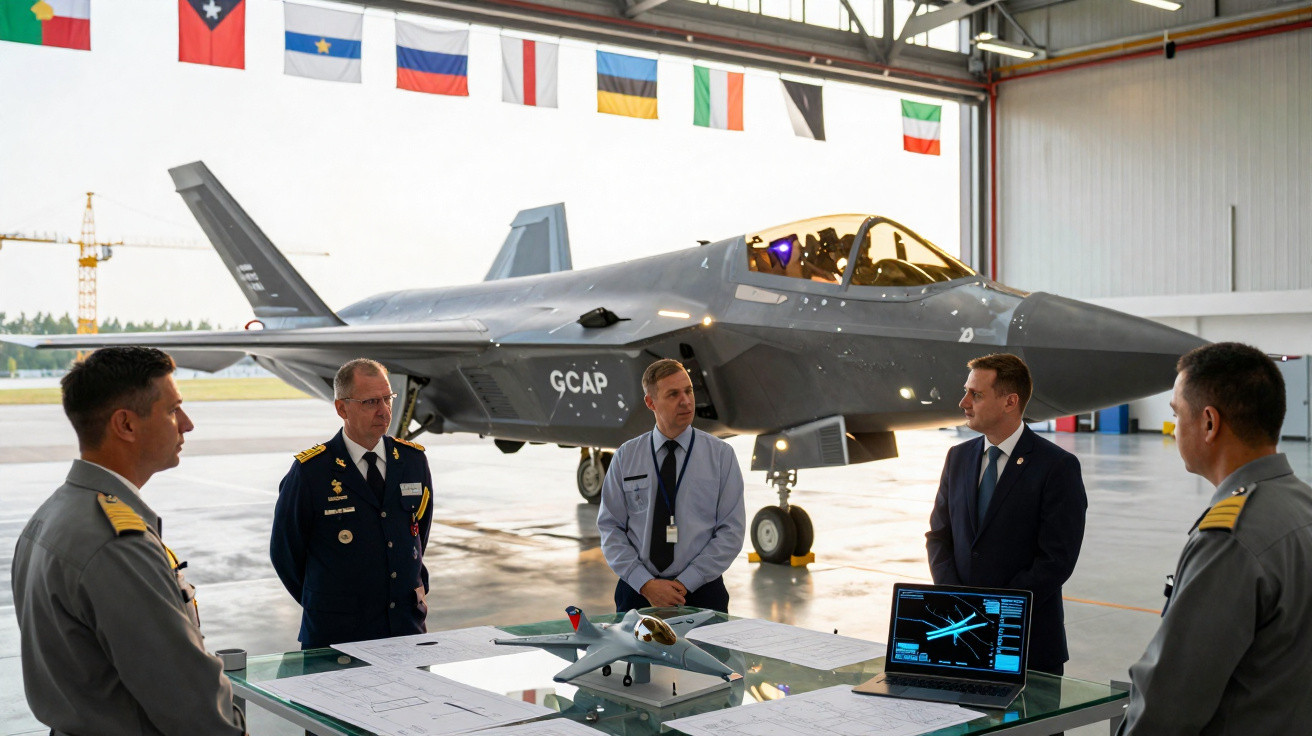
For a medium-sized power with a long association with Concorde, Spitfires and Rolls-Royce badges, this is a declaration forged in alloy. The central message is clear: we’re not playing second fiddle in the hypersonic era. That carries weight in a world where travel, deterrence and supply chains span oceans faster than legislation can react. It also presents hydrogen as something beyond a climate requirement - a performance tool that makes clean flight fast without sacrificing character for velocity.
This is not simply bravado. Difficult questions remain overhead: how to create a hydrogen ground network without costs becoming unmanageable; who assumes responsibility for safety when cold fuel is stored alongside hot engines; and where flights can take place when test corridors approach sensitive borders. Even so, the unveiling places a marker in a busy field, and markers can alter maps even when the aircraft remains years from a full-speed run. The wager concerns more than one vehicle. It is a wager on a culture that values solving the hard problems.
The effects are already apparent. Universities are seeking funding opportunities. Competitors are sending emails to senior managers at unusual hours. Young people are lifting their eyes from phones to sketch winged needles. The aircraft may conduct a demonstration before the decade ends, or it may instead generate spin-offs that quietly transform everything from cooling equipment to composite tanks. Either way, a country has openly declared that the edge of space is a runway rather than a ceiling. Statements of that sort often become reality piece by piece.
| Key point | Detail | Why it matters to readers |
|---|---|---|
| Hydrogen + hypersonics | Hydrogen serves as both fuel and on-board coolant, supporting sustained high-Mach operations | Explains why this combination could enable cleaner, faster flight |
| Real milestones to watch | Hot-fire scram tests, inlet-unstart control and high-altitude booster hops | Makes it easier to follow progress without being distracted by renders and buzzwords |
| Geopolitical signal | An Anglo-Saxon country seeks leadership rather than catch-up at a claimed 24,501 km/h | Shows how technological ambition can reshape travel, defence and industry |
FAQ:
- Is 24,501 km/h even possible without a rocket? It is a claimed peak within a hypersonic flight regime, potentially achievable for short periods with a scramjet at high altitude. Maintaining it over long durations is the genuine challenge.
- Why hydrogen instead of conventional jet fuel? Hydrogen provides high specific impulse and exceptional cooling ability for inlets and leading edges, which is a vital benefit when air temperatures rise sharply at hypersonic speeds.
- When could a demonstrator actually fly? Projects of this kind normally spend years progressing through rigs and subscale tests; a high-altitude demonstrator later this decade would be ambitious, but not implausible.
- Will passengers ever ride this? Not in the near term. Early missions would probably involve defence, research or rapid logistics. Civil applications require new safety, noise and infrastructure standards.
- What makes this different from past hypersonic projects? Integrated hydrogen thermal management, the focus on a dual-mode engine and a clearer industrial route give this programme a chance of repeatable operations.



Comments
No comments yet. Be the first to comment!
Leave a Comment