
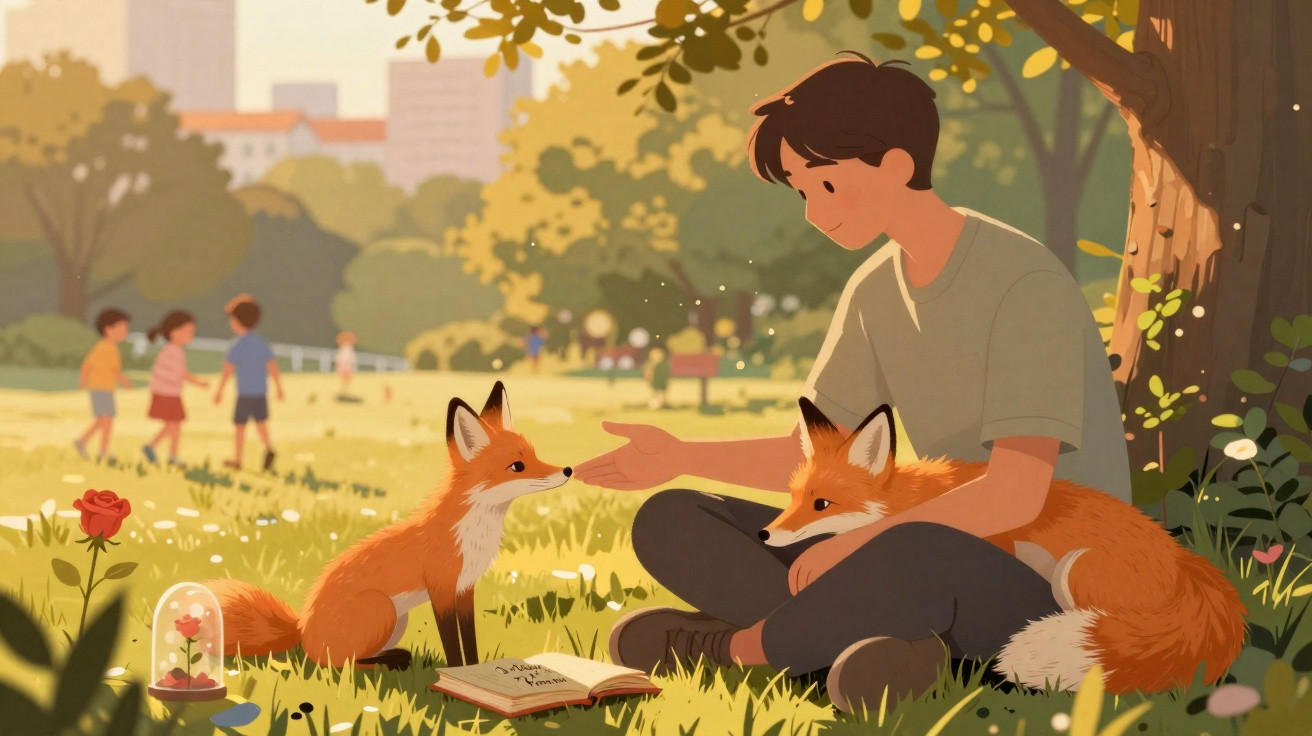
The phrase “You become responsible, forever, for what you have tamed” has resonated across generations because it concerns bonds, care and consequences. In The Little Prince, it turns love into responsibility and friendship into conscious presence.
What does being responsible for what you tame mean?
The words are spoken during the meeting between the Little Prince and the fox, who explains that taming means forming bonds. Once that connection exists, the other person is no longer ordinary: they gain unique value and emotional memory.
This responsibility is not presented as possessive burden, but as an awareness that our closeness affects others. When someone has been tamed, they expect care, consistency and presence; a genuine bond therefore requires attention, respect and maturity in everyday choices.
The passage can be understood in this way:
- Fox: teaches that taming means creating bonds.
- Rose: symbolises the bond that becomes special.
- Bond: develops through time, listening and shared experience.
- Care: turns feeling into a concrete action.
- Commitment: emerges when words and actions align.
What is the context of the phrase in The Little Prince?
In The Little Prince, Antoine de Saint-Exupéry’s novella published in 1943, the encounter with the fox deepens the meaning of human bonds. The fox shows that living alongside someone creates uniqueness and gives meaning to what had previously appeared the same.
The conversation helps the prince understand his relationship with the rose. She is not special because she is perfect, but because she has been cared for. This realisation shifts affection away from idealisation and towards responsibility and everyday commitment.
How does this idea relate to love and friendship today?
The phrase remains powerful in modern relationships because it challenges quick, disposable connections lacking emotional care. Taming someone does not mean controlling them; it means recognising that closeness creates expectations, trust and real emotional consequences.
A bond is not possession
Emotional responsibility requires balance
Caring for someone does not mean carrying everything alone or accepting relationships without respect.
The message is about presence, honesty and healthy boundaries within relationships.
In love and friendship, mutual responsibility means listening, not promising a presence you do not intend to offer, and repairing mistakes where possible. The phrase speaks to current discussions about care, boundaries and reciprocity in relationships.
In practical terms, this reflection invites us to:
- be clear about intentions and emotional expectations;
- avoid treating people as disposable experiences;
- respect the other person's boundaries, time and feelings;
- care without turning a bond into control;
- recognise when it is necessary to apologise or step away.
Why should the phrase not be confused with guilt?
The notion of responsibility can be misunderstood when it becomes endless pressure or an obligation to remain in every relationship. The book is about meaningful bonds, yet this does not remove boundaries, autonomy or self-care.
Being responsible for what you tame does not mean accepting disrespect, carrying a relationship alone or solving another person's life. It means behaving honestly, acknowledging impacts and nurturing bonds with emotional awareness.
For a clearer interpretation, it is worth remembering:
- emotional responsibility is not possession of anyone;
- care must come from both sides of a relationship;
- healthy boundaries also safeguard important bonds;
- not every separation signals a lack of love or friendship;
- honesty prevents deeper wounds than empty promises.
Why does The Little Prince still move readers?
Those seeking phrases about genuine connection and true bonds will find a powerful summary in this passage. In the public domain since 2015, the work remains relevant because it addresses affection without abandoning responsibility.
The phrase is powerful because it reminds us that every important bond calls for time, attention and consequences. To tame is to make room for someone in your own life, and that demands gentleness, maturity and presence with another person.





Comments
No comments yet. Be the first to comment!
Leave a Comment