
Trolleys squealed, a ringtone blared somewhere nearby and a toddler fussed by the biscuits. Then a sound sliced through the noise: an adult’s voice, sharp and level, like a slap. The small boy went still, his eyes widening as he held a squashed cereal bar in his fist. Shoppers looked over, then turned away. The remark was brief, ordinary and almost innocuous at first glance. But you could see it register throughout his body.
He did not cry; he simply made himself smaller. His shoulders sagged, his eyes fell to the floor and every movement became tentative, as though the air around him had suddenly grown dense. The adult carried on looking at their phone as though nothing had occurred. In ten seconds, with one sentence, something in that child seemed to fade. I remember thinking: this will stay with him. Only later did I understand how deeply.
The sentence that silently rewires a child’s brain
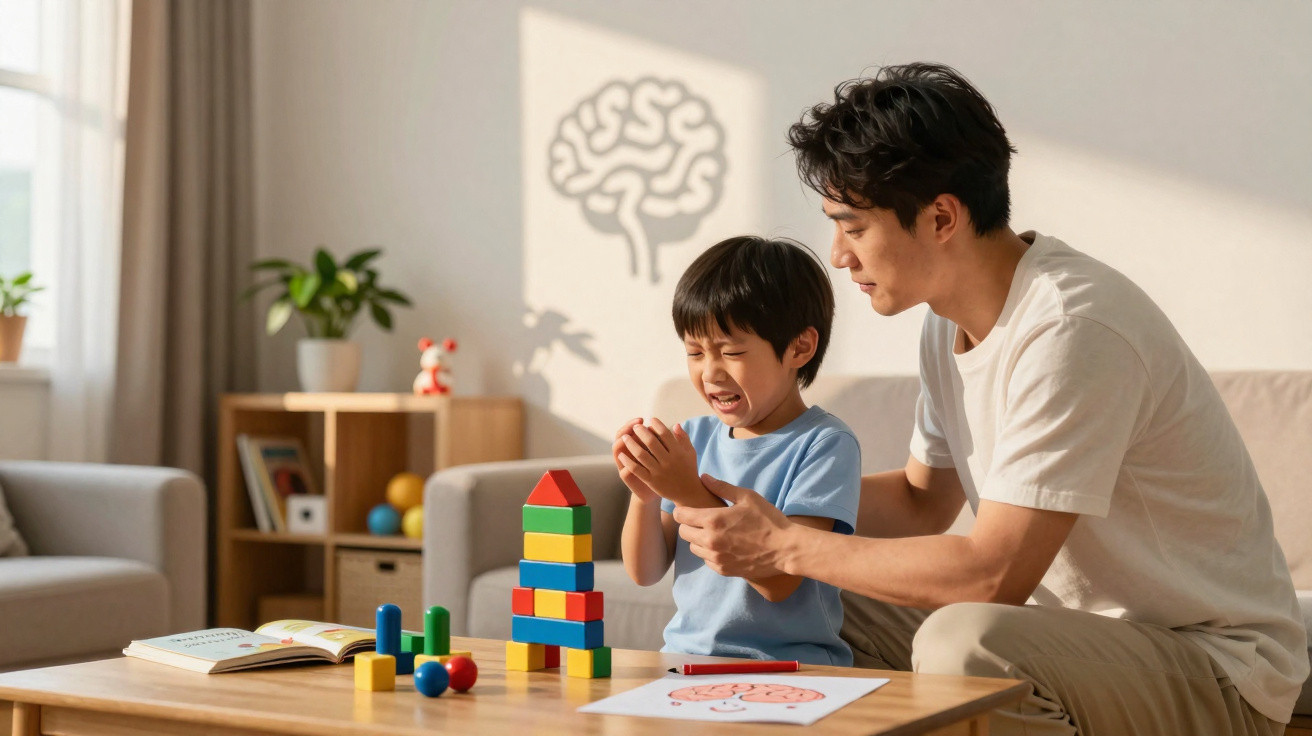
The single phrase you should never say to a child under 7 is almost painfully mundane: “You’re not very smart.” It may instead be said as “You’re stupid”, “You’re slow”, or even, with a weary sigh, “You’re just not clever like your sister.” The phrasing may differ, but the harm does not. It is a label rather than a comment on behaviour, and at that age labels cling like superglue.
Before the age of 7, a child’s brain is being built at speed. Millions of neural connections are forming as they try to answer one basic question: Who am I? When the person they rely on for love and security calls them “not smart”, their brain responds by adapting. It begins to protect itself, putting in less effort in areas where it expects further shame. Intelligence is not solely something you are born with; it is also something you feel brave enough to use.
One longitudinal study of early verbal interactions found that children who regularly heard negative ability labels (“you’re dumb”, “you’ll never get this”) scored, on average, 6–8 IQ points lower at 8–10 years old than comparable children exposed to neutral or encouraging language. They had the same socio-economic backgrounds and attended the same schools; the difference was the language used at home. The divide did not emerge overnight. It widened silently over the years, like a crack in a wall that goes unnoticed until a section finally gives way.
The parents in those studies were not monsters. They were exhausted, under pressure and repeating language they had heard themselves: “He just doesn’t have the brain for maths”, “She’s hopeless with words.” Their children took those messages in. When work became difficult, they gave up sooner. They made fewer guesses and asked fewer questions at school. Teachers then began to accept the label as well. Gradually, the world reshaped itself around a story first spoken in a kitchen years before.
Psychologists use terms such as “learned helplessness” and “fixed mindset”, but the process itself is brutally straightforward. Children under 7 do not distinguish between “I made a mistake” and “I am a mistake”. Therefore, when an adult tells them, “You’re not very smart”, they do not hear a fleeting judgement. They hear a final verdict. Their brain starts saving energy: why persist if failure is simply what you are? That drop in effort may later appear as as much as an 8-point difference in IQ tests – not because the brain is incapable, but because it no longer thinks trying is worthwhile.
What to say instead when you’re exhausted and they’re melting down
What can you say when you are in the hallway, shoes are scattered everywhere, homework has not been touched and your 6-year-old is lying on the floor like a stranded starfish? The urge to snap, “You’re impossible” or “You’re so stupid sometimes” is real. The answer is not artificial, sugary praise. It is specificity: clear, practical and brief. “This bit of maths is difficult, but your brain can learn it.” “You got it wrong this time; with practice, you’ll get it.”
Swap labels about identity for words about effort and strategy. Rather than saying “You’re clever” or “You’re dumb”, try: “You kept going, and that helped.” “You tried one approach and it did not work, so it is time to try another.” It may sound straightforward, even too slight to make a difference. But these small changes show a child that their brain is a muscle, not a fixed mark. Across hundreds of everyday moments, you are doing more than preventing harm: you are quietly lifting their ceiling.
On a difficult day, you will not always have the patience to formulate flawless sentences. Let’s be honest: nobody truly manages that every day. Instead, prepare a handful of default phrases to use even when your temper is short. “You’re overwhelmed right now; let’s pause.” “You made a mistake – that’s how brains learn.” Say them awkwardly if necessary. The aim is not elegant language; it is to sever the connection between behaviour and identity, allowing their self-image to remain secure while their abilities develop.
We have all had moments when the wrong words escape before our minds catch up. Guilt soon follows. At that point, many parents become stuck, certain they have “broken” their child with a single remark. The truth is both tougher and gentler. Repeated patterns cause damage. A single outburst followed by repair can even build trust. Children learn: “My grown-up makes mistakes, then puts things right. I’m still worth returning to.”
If you hear yourself say something such as “You’re not very smart”, the strongest response is not self-loathing. Go back to them. Kneel down. Meet their eyes. Say, “I said something that wasn’t true and it might have hurt. You are learning. That’s what brains do. I was tired and angry; that’s on me.” In that instant, you begin changing the story before it hardens within them. You are also teaching them how to respond to their own mistakes one day.
“Almost nothing a parent says once is permanent. What carves into a child’s sense of self is what they hear again and again, especially about who they are.” – Dr Elena Morris, child psychologist
To make this easier to apply amid everyday chaos, here is a short cheat sheet to save:
- Never say: “You’re not very smart.” Try instead: “This is tricky, but your brain can learn tricky things.”
- Never say: “You’ll never get it.” Try instead: “You don’t get it yet; let’s take it one small step at a time.”
- Never say: “You’re hopeless / lazy.” Try instead: “You’re stuck right now. What is one tiny thing you can try next?”
- Never say: “Why aren’t you like your brother/sister?” Try instead: “You and your brother learn in different ways. Let’s find yours.”
Raising a brain that believes in itself
Language influences brain wiring, but it does not trap it forever. A child who has heard “You’re not very smart” for years can still recover – and even flourish – once the narrative shifts. Brains remain remarkably plastic. Synapses grow stronger where attention, emotion and repetition come together. When the adults around a child start recognising effort, curiosity and small successes, those are the circuits that begin to strengthen.
At times, the most difficult change is not in the child but in our own inner voice. Many adults were raised with “You’re useless”, “You’re thick”, or “Why can’t you be like…”. Those words remain in our nervous systems and surface automatically when we are triggered. Noticing them is as much an act of self-repair as it is parenting. You are not merely safeguarding your child’s IQ score; you are ending a generational pattern of making people feel small through language.
Changing the way we speak does not mean treading on eggshells. Children do not require perfect parents. They need adults who speak sincerely and clearly, without making every error a judgement on their worth. Ultimately, childhood intelligence is less a number than an atmosphere: a home where questions are welcomed; where “I don’t get it yet” is ordinary; where a poor mark is a puzzle rather than a prediction. That atmosphere will not make life effortless, but it will make their mind resilient.
| Key point | Detail | Why it matters to the reader |
|---|---|---|
| The harmful sentence | Labels such as “You’re not very smart” can reduce measured IQ by up to 8 points over time. | Helps you identify and stop phrases that quietly undermine your child’s potential. |
| Age sensitivity | Under 7, children merge “what I did” with “who I am”, meaning attacks on identity cut deeply. | Explains why the early years should be a priority for careful, honest language. |
| Better alternatives | Move from identity (“you are…”) to effort and strategy (“you tried…”, “your brain can learn this”). | Provides practical wording you can use tonight, even when you are tired. |
FAQ:
- Does saying “You’re not very smart” once really lower a child’s IQ? One isolated remark will not magically remove 8 IQ points. The danger lies in repeated negative labels, which gradually teach a child to stop trying and view themselves as permanently limited.
- What if I’ve already said hurtful things to my child? Repair has real power. Acknowledge what you said, state plainly that it was not true and begin using language focused on effort. Children are notably resilient when adults take responsibility for their errors.
- Isn’t calling a child “clever” just as bad as “not smart”? Positive fixed labels can also cause problems. Children praised only for being “clever” may avoid difficult tasks to protect that image. Praising curiosity, persistence and strategies is healthier.
- My parents spoke to me this way and I turned out fine. Why change? You may have coped despite that language, rather than because of it. Changing your words gives your child the same resilience without the needless hurt and self-doubt.
- How can teachers and carers do this without extra workload? Small changes to everyday comments are enough: “You worked hard on that”, “What did you try when it became difficult?” It adds no tasks; it simply changes the soundtrack children hear while learning.






Comments
No comments yet. Be the first to comment!
Leave a Comment