
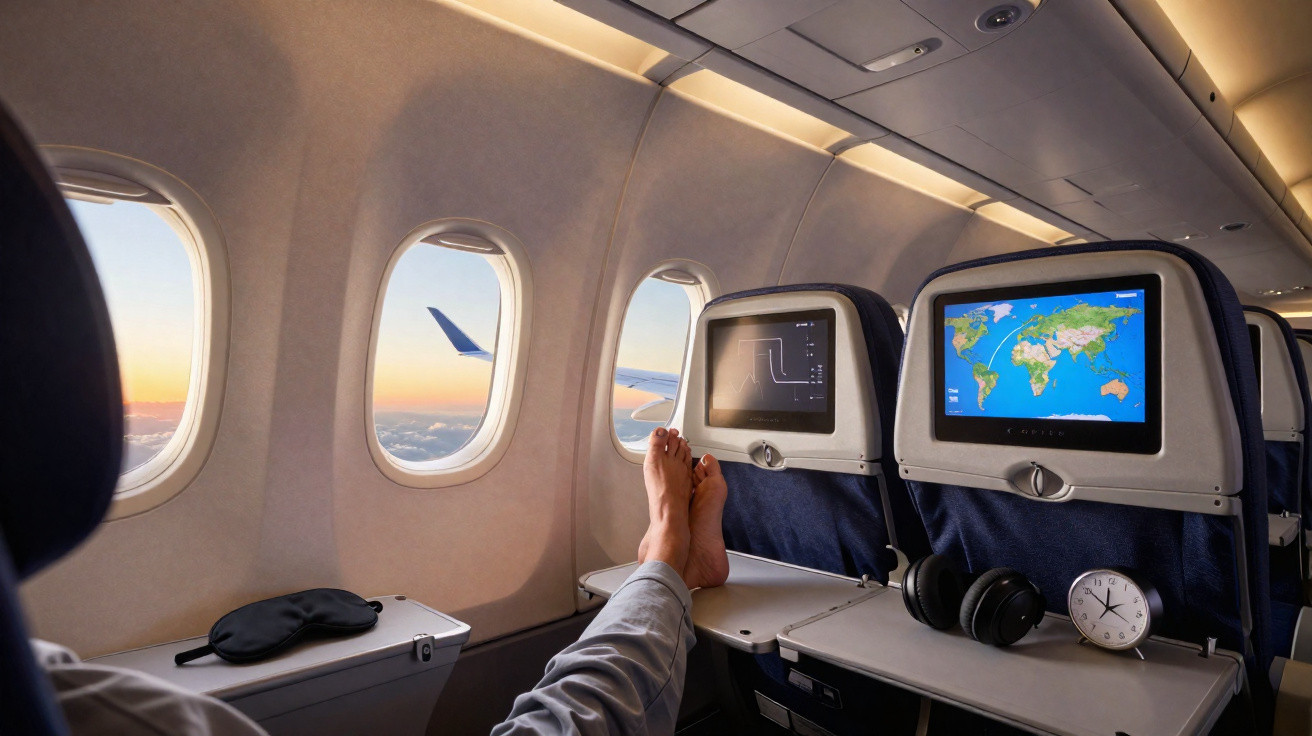
At a time when connections between continents can seem ordinary, a new generation of aircraft promises to transform long-haul travel completely.
Airbus, working with Qantas, is preparing to introduce an aircraft capable of staying airborne for more than 20 hours without stopping. Behind this technical achievement lies a different approach to international flying: fewer stopovers, more time saved and an on-board experience redesigned for a journey that crosses almost half the globe in one go.
A leap that redefines the meaning of a “direct flight”
For decades, connecting cities such as Sydney and London in a straight line, without an intermediate landing, sounded like the ambition of an optimistic engineer. It now has a place in the timetable. From 2026, Airbus will begin flight testing the A350-1000ULR, the ultra-long-range version of the A350-1000, designed to remain in the air for up to 22 hours.
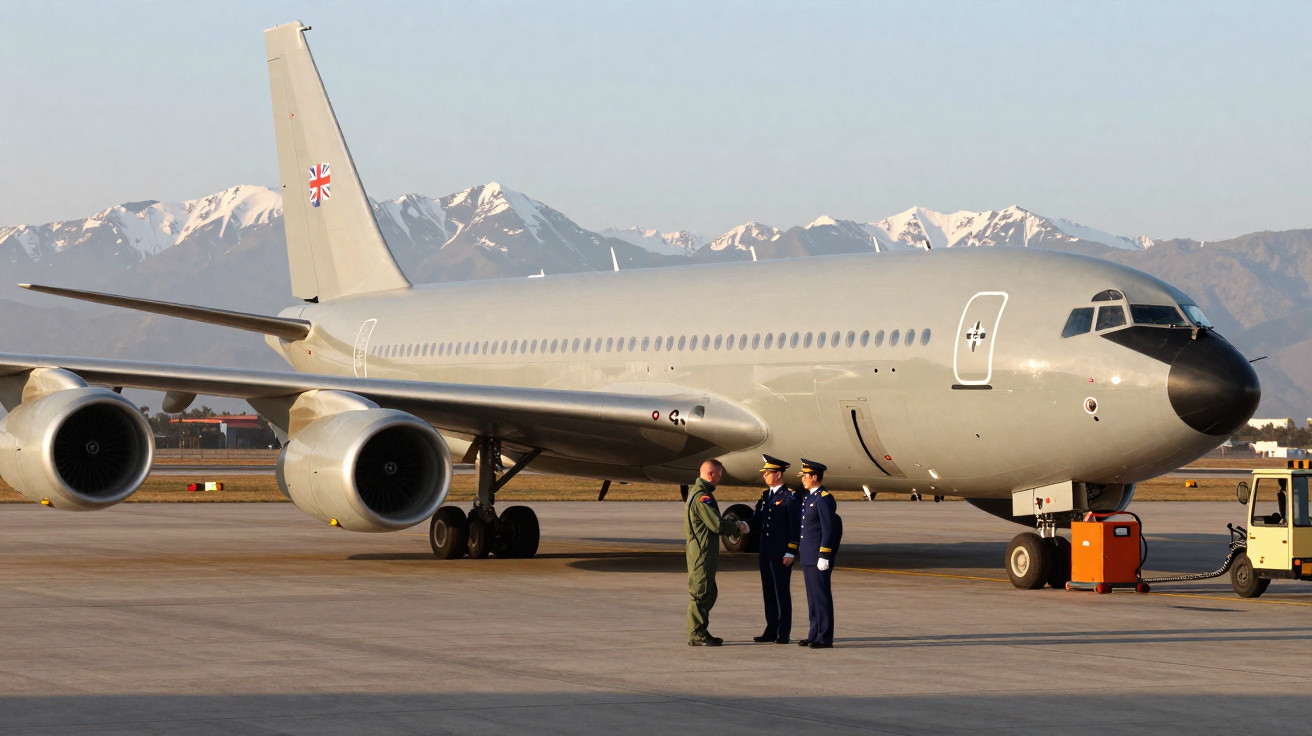
The first aircraft are already leaving the production lines in Toulouse, France. Its additional range comes from a series of precise modifications rather than a visual revolution. The aircraft retains the familiar profile of a very long-haul jet, with a wide fuselage and extended wings. The key differences are not immediately visible.
The A350-1000ULR has received an extra fuel tank in the rear section of the fuselage, adding around 20,000 litres of fuel compared with the standard version. This addition extends its operating range to routes that were previously practical only with at least one stopover. The changes are supported by aerodynamic improvements, more extensive use of lightweight composite materials and latest-generation Rolls-Royce Trent XWB engines, which use fuel more efficiently.
The new Airbus A350-1000ULR was designed to handle up to 22 hours of continuous flying, linking Australia, Europe and the US without stops.
A less crowded cabin with greater comfort
While the aircraft may look familiar from the outside, the interior tells a different story. Qantas has chosen to configure the A350-1000ULR with around 238 seats, compared with more than 300 seats in conventional versions of the same aircraft. The aim is straightforward: fewer passengers, more room and greater comfort for a journey that takes up almost an entire day of a traveller’s life.
The cabin has been developed with input from sleep, ergonomics and chronobiology specialists. Every class, from the most exclusive suite to economy, has received particular attention to reduce fatigue, make rest easier and ease the well-known jet lag associated with crossing several time zones at once.
The design includes freely accessible wellbeing areas where passengers can stretch, walk a little, move their bodies and change position. The purpose is to reduce the sense of complete confinement that often defines exceptionally long flights.
- Fewer seats, with more space between them
- Areas for moving around and stretching during the flight
- Lighting adjusted to passengers’ biological rhythms
- Menus designed to reduce digestive discomfort
Time as the product: Qantas’s bet
A 20-hour flight cannot be marketed on technical achievement alone. Qantas sees the project as a way of selling something increasingly scarce: time. On average, the new routes are expected to cut roughly four hours from journeys compared with itineraries involving a connection.
For the intended audience - executives, frequent travellers and tourists willing to pay more for convenience - those saved hours become a tangible advantage. Fares are expected to cost, on average, 20% more than equivalent tickets with stopovers.
The logic is clear: people who can afford to pay more are willing to invest in a ticket that gives back valuable hours and removes the uncertainty of connections.
This business model also relies on the idea of exclusivity. A limited number of seats, rare routes, a “record-breaking” narrative and cutting-edge technology create an almost aspirational product. Qantas turns the aircraft’s physical endurance into a status symbol for those on board.
Test flights designed to tackle jet lag
Before finalising the on-board experience, Qantas conducted test flights in 2023. Volunteer passengers travelled with sensors, sleep monitoring, lighting protocols and varied menus.
The data helped reveal how the body responds to spending almost a full day in a pressurised cabin. This then informed experiments involving gradual lighting changes, set meal times, simple exercise options on board and even adjustments to the sequence of activities, all intended to align passengers’ internal clocks with the time zone at their destination.
When distance becomes a geopolitical argument
The A350-1000ULR is not merely a long-range aircraft. It is also a strategic tool for a geographically isolated country such as Australia. By connecting Sydney directly with London or New York, it reduces - both practically and psychologically - the feeling that the country is “far from everything”.
The programme, named Project Sunrise, has a powerful symbolic dimension. Qantas has already ordered twelve aircraft, with the first commercial flight scheduled for the first half of 2027. The intention is to take the lead on the world’s longest commercial routes, surpassing the current Singapore Airlines records between Singapore and New York.
| Route | Airline | Estimated duration | Flight type |
|---|---|---|---|
| Sydney – London | Qantas (A350-1000ULR) | ~20 hours | Direct, non-stop |
| Sydney – New York | Qantas (A350-1000ULR) | more than 19 hours | Direct, non-stop |
| Singapore – New York | Singapore Airlines | ~18 hours 40 minutes | Direct, non-stop |
In this context, the distance record becomes more than a technical headline: it is a tool for global positioning. A symbolic route conveys economic power, technological capability and competitive ambition. Airlines that lead this kind of operation strengthen their brand among corporate customers and high-spending tourists.
By removing the stopover, Qantas is trying to sell not only a faster flight, but also an idea of greater proximity between Australia and the major economic centres.
Challenges, risks and opportunities of ultra-long-haul flights
Twenty-hour flights raise practical questions. What will be the environmental impact of such lengthy journeys? The aircraft uses a great deal of fuel, even if its engines are more efficient. Airlines and manufacturers refer to carbon offsetting, the future use of sustainable aviation fuel (SAF) and more direct routings to reduce waste.
There is also the physical issue. Remaining seated for so long raises the risk of deep vein thrombosis, particularly for people with a cardiovascular history. For that reason, movement areas, encouragement to perform simple stretches and on-board health information are likely to feature more prominently in safety briefings and cabin materials.
Crew fatigue is another sensitive issue. Stopovers have always provided a natural break in the working journey for pilots and cabin crew. Without intermediate stops, regulators and airlines will need to adapt rest rules, crew rotation arrangements and fatigue protocols to maintain operational safety.
Terms that help explain this new phase
Some concepts are becoming more common in this debate:
- ULR (Ultra Long Range): a category covering aircraft and routes that generally involve more than 18 hours of flying.
- Circadian rhythm: the body’s internal clock regulating sleep and wakefulness; this is what jet lag disrupts.
- SAF (Sustainable Aviation Fuel): aviation fuel with a lower carbon footprint, produced from renewable sources.
Internal industry simulations point to scenarios in which this type of aircraft acts as a “premium bridge” between major hubs. In the near future, an executive could leave Sydney, land in London already adapted to local time thanks to a planned sequence of lighting and meals, attend meetings and return the following day, all supported by a more expensive but exceptionally direct ticket.
At the same time, debate is growing over the acceptable limits of time spent inside a cabin. Some travellers may prefer a two-hour stop to stretch their legs and change surroundings, even if it means arriving a little later. The market will determine which preference prevails: the promise of arriving as quickly as possible or the need to divide the journey into more human stages.





Comments
No comments yet. Be the first to comment!
Leave a Comment