
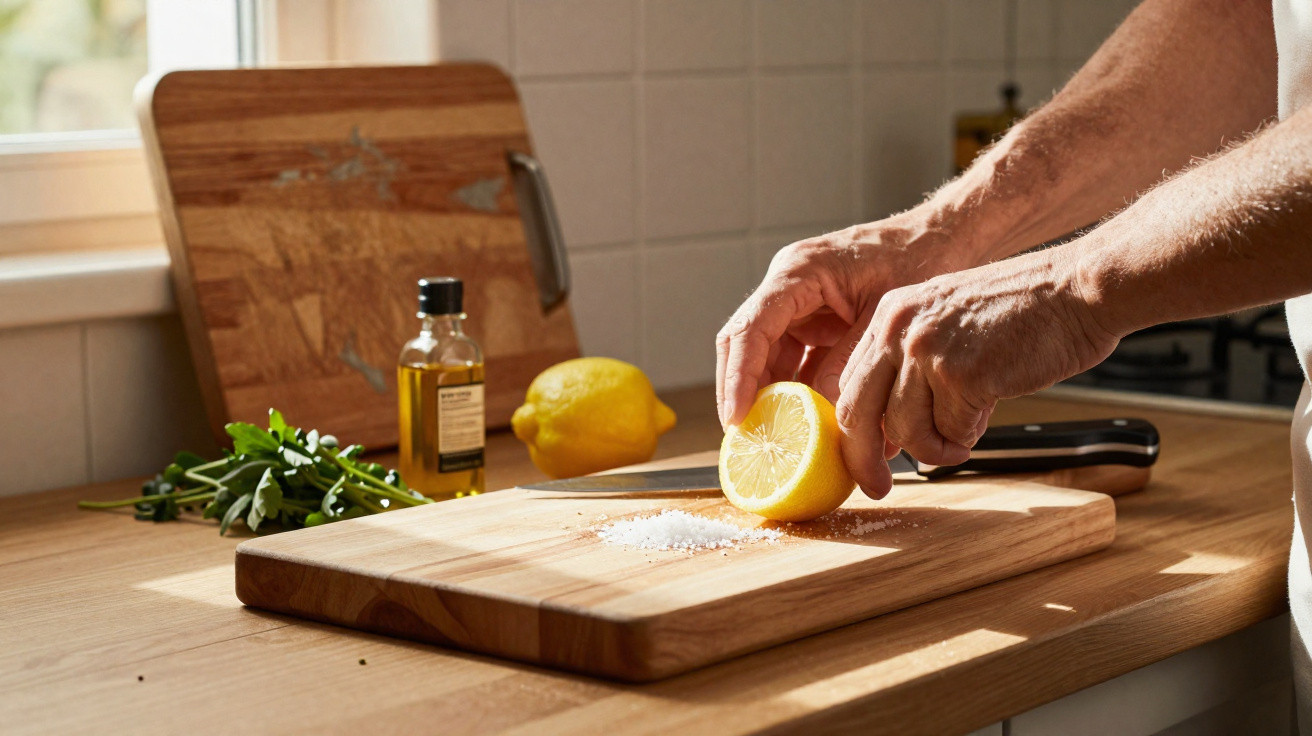
In the United States, scientific research has renewed questions about plastic chopping boards, which remain widespread in French kitchens.
Published on 31 May 2025, the original article, whose media outlet is not identified in the supplied extract, highlights the wear affecting plastic chopping boards. Repeated knife use scores their surface and may release tiny particles. Solid wood is therefore presented as a long-lasting alternative, provided it receives suitable care.
Plastic scratches at the centre of concerns
Convenient, lightweight and often inexpensive, plastic chopping boards have long been favoured in kitchens. They stand up well to everyday use and can commonly be put in the dishwasher. Their key drawback becomes apparent over time: knife blades leave marks that can sometimes be deep.
These grooves are not merely unsightly. They make cleaning more difficult because food debris can become trapped inside them. They may also cause the material to wear away gradually. Polypropylene and polyethylene are the plastics most commonly used to make these utensils.
The article draws on a US study published in a specialist scientific journal by the American Chemical Society. The research suggests that frequent use of plastic chopping boards could contribute to the ingestion of microplastics.
Pressure cutting, chopping and serrated knives are among the uses likely to increase wear on a plastic chopping board.
Microplastics are extremely small pieces of plastic. Their presence in the environment and in food is the subject of extensive research. The article does not establish a specific health risk associated with any individual board, but it does encourage people to monitor the condition of this everyday kitchen item.
Solid wood chopping boards return to kitchens
In response to these concerns, the article recommends boards made from good-quality wood. Walnut, oak and bamboo are among the materials mentioned. A solid wood board can last for a long time when it is washed, dried and protected regularly.
Wood is often regarded as less hygienic than plastic because its surface is not completely smooth. However, the article notes that bacteria can remain for several days in the grooves created on plastic boards. Wood, meanwhile, is described as having properties that naturally make the growth of certain bacteria less favourable.
This feature does not remove the need to clean a board after every use. A dirty, cracked, heavily worn or damp board can become an unsuitable work surface, regardless of what it is made from.
Why the condition of the surface matters just as much
A heavily scratched board creates two issues. First, pieces of the material may come away while food is being cut. Second, there is a hygiene concern: traces of meat, fish, vegetables or food juices can build up inside the cuts.
Before selecting a material, it is therefore important to assess the actual state of the board. A surface that is deeply scored, warped or cracked should be replaced. This applies equally to plastic and wooden boards.
- Keeping one board for raw food and another for ready-to-eat food helps to reduce cross-contamination.
- Washing the board immediately after use prevents residues from drying inside the grooves.
- Using a properly sharpened knife limits unnecessary pressure during cutting.
- Avoiding storage while the board is damp helps to prevent unpleasant odours and warping.
How to care for a wooden chopping board
Wood requires a few straightforward measures. The article advises washing it in hot water with a small amount of cleaning product, then drying it straight away with a clean cloth. Soaking should be avoided, as water can enter the fibres and cause the material to swell.
A board should also not be left close to a heat source or in direct sunlight. Such conditions encourage drying and distortion. To maintain the surface, the article recommends applying mineral oil or an oil suitable for food contact on a regular basis.
A wooden chopping board that is properly dried and maintained can remain usable for years without staining or warping.
Oil does not clean the board. Its purpose is to nourish the wood fibres and reduce excessive moisture absorption. The surface should always be washed and dried thoroughly first.
Precautions when handling raw meat
The article advises against using a wooden board for raw meat if it cannot be cleaned immediately afterwards. This precaution is intended to limit the transfer of bacteria to other foods.
In a family kitchen, a simple arrangement can help: one board for fruit, vegetables, bread and cooked foods, and another reserved for raw products. Cleaning hands, knives and the worktop remains just as important as choosing the board itself.
What French kitchens should remember
In France, food hygiene rules are based in particular on preventing cross-contamination. At home, this means separating raw foods from ready-to-eat preparations as far as possible, cleaning utensils after use and keeping work surfaces in good condition.
The choice between plastic and wood does not replace these practices. A lightly worn plastic chopping board that is carefully cleaned remains a common kitchen utensil. Conversely, a neglected wooden board can deteriorate. The main benefit of solid wood lies in its potential durability and in the possibility of maintaining it over time.
Bamboo also deserves particular consideration. Although it is often grouped with “wooden” boards, it has a different structure and can be harder. Depending on the model selected, this hardness may speed up knife wear. For people who cook frequently, cutting comfort, board stability and ease of cleaning remain practical factors to consider before buying.





Comments
No comments yet. Be the first to comment!
Leave a Comment