
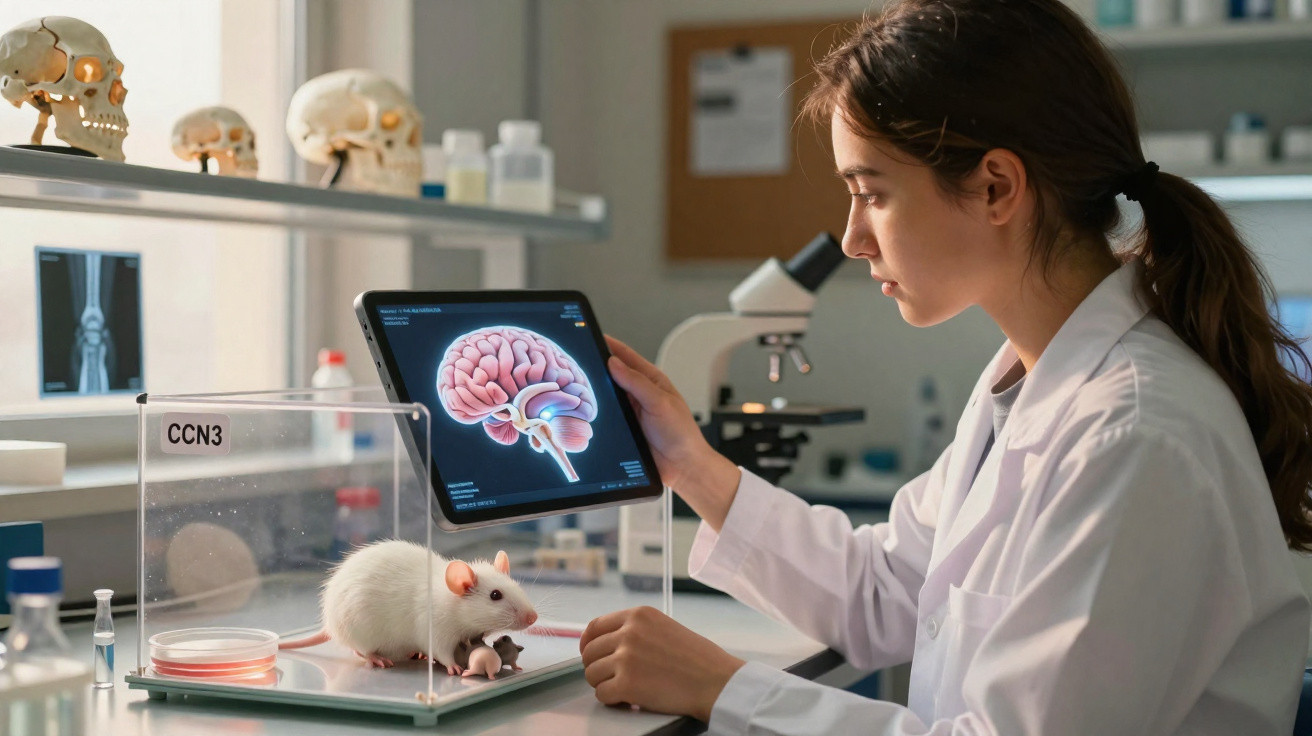
Mammalian mothers make major sacrifices to rear their offspring. To provide milk for newborns, their bodies draw calcium from their own bones.
For years, scientists have questioned why this demand does not cause mothers’ skeletons to collapse under the strain. Now, US researchers led by the University of California, San Francisco (UCSF) believe they have uncovered the explanation.
The researchers identified an entirely new hormone in female mice that encourages the formation of exceptionally dense, strong bone.
Neuroscientists have called it the maternal brain hormone (MBH). Although its discovery arose from studies of mothers, it can build robust, healthy bones in mice of every age and sex.
"One of the remarkable things about these findings is that if we hadn't been studying female mice, which unfortunately is the norm in biomedical research, then we could have completely missed out on this finding," says pharmacologist Holly Ingraham, who leads her own laboratory at UCSF.
"It underscores just how important it is to look at both male and female animals across the lifespan to get a full understanding of biology."
Why female mice revealed the maternal brain hormone
Male brains have historically been the subject of most brain research. Just 2 percent of published neuroimaging studies have investigated hormonal influences such as sex steroids.
Oestrogen, a bone-building sex steroid, has broad effects on the brain. Its levels naturally fluctuate over a lifetime, but production declines after menopause, making older women susceptible to the bone-damaging effects of osteoporosis.
Oestrogen also falls during breastfeeding, slowing bone formation. At the same time, a mother’s body leaches, or ‘resorbs’, calcium from her skeleton so that she can continue nourishing her newborn, seemingly placing her bones under even greater risk.
In 2019, Ingraham’s UCSF laboratory unexpectedly found that blocking oestrogen in one particular region of the female mouse brain significantly improved the animals’ bone strength.
This suggested that another bone-forming hormone was taking oestrogen’s place. Researchers have now identified that hormone.
MBH, CCN3 and bone strength
The maternal brain hormone, or MBH, is the known protein CCN3. It is released by neurons in the arcuate nucleus, a brain region involved in puberty and reproduction.
In mice undergoing normal lactation, production of MBH by these neurons rises sharply as oestrogen levels decline.
In laboratory tests, MBH stimulated stem-cell activity in both mouse and human bone tissue. In live mice of all ages and sexes, increased MBH enhanced bone remodelling and sped up fracture healing.
This function is especially significant for female mice. Raising a large litter requires a rodent mother to give up nearly 30 percent of her bone density.
Although those losses return to normal once lactation ends and oestrogen rises again, both mothers and pups would fare badly without MBH’s balancing effect. In experiments involving live mice, artificially suppressing MBH production caused mothers to lose substantially more bone density than usual, while their pups quickly lost weight.
Conversely, adding extra MBH to young adult and old mice of both sexes led to dramatic gains in bone mass and strength within weeks.
In older female mice with extremely low oestrogen levels, MBH treatment more than doubled bone mass.
"There are some situations where highly mineralized bones are not better; they can be weaker and actually break more easily," says stem-cell biologist Thomas Ambrosi from the University of California Davis.
"But when we tested these bones, they turned out to be much stronger than usual. We've never been able to achieve this kind of mineralization and healing outcome with any other strategy."
Potential use of MBH for fractures
There was further encouraging evidence. Researchers enclosed MBH in a hydrogel patch and placed it directly over a fractured bone in an older mouse, where it encouraged bone growth at the break site.
More work is needed to establish how effectively these findings apply to people. Humans temporarily lose around 10 percent of their bone density while breastfeeding, considerably less than mice do.
"Bone loss happens not only in post-menopausal women but often occurs in breast cancer survivors that take certain hormone blockers; in younger, highly trained elite female athletes; and in older men whose relative survival rate is poorer than women after a hip fracture," explains Ingraham.
"It would be incredibly exciting if [MBH] could increase bone mass in all these scenarios."
The study was published in Nature.






Comments
No comments yet. Be the first to comment!
Leave a Comment