

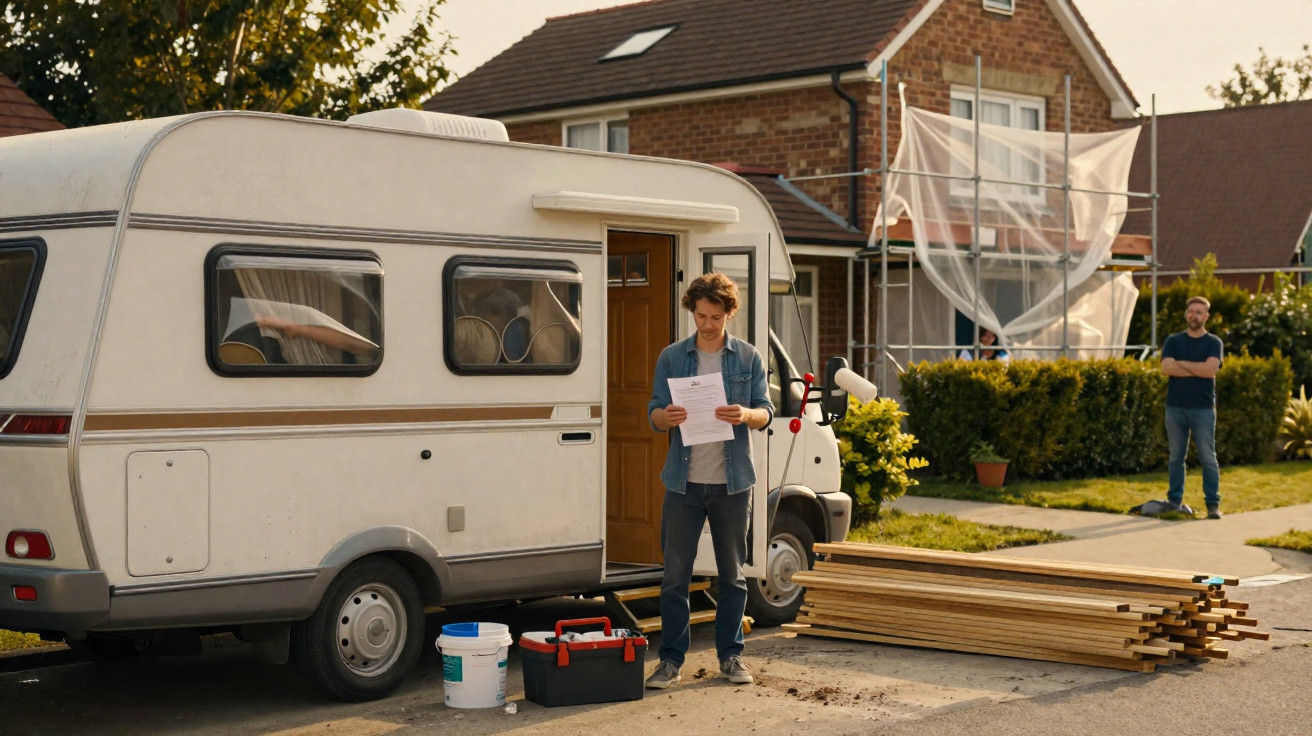
The motorhome had been parked at the far end of the garden, beside the old cherry tree, for so long that Didier’s children called it “the blue bedroom”. Every birthday, Christmas or long weekend, Nathalie put clean sheets and two towels inside for relatives travelling from afar. There was nothing luxurious about it: an awning, a few folding chairs and an extension lead carefully put away each evening. Then, four years after the vehicle arrived, a letter from the town hall landed on the doormat. A neighbour had reported the arrangement. Didier could not understand it: the motorhome had not moved, nobody had complained to them directly, and the family believed they were simply being helpful. Yet the line between a parked vehicle and an arrangement treated as accommodation can be extremely fine. That detail changes everything.
Four quiet years, then the report that changes everything
We all know how a practical family arrangement, made with no ill intent, can eventually become a permanent feature of daily life. For Didier and Nathalie, the motorhome was never meant to become an extension of the house. It simply avoided turning the sitting room into a dormitory when cousins arrived with their children. Over time, though, it acquired a small wooden deck, a less visible electricity connection and a water supply. From the road, the set-up looked less and less like a vehicle ready to drive away. The most harmless habits are often the ones that draw attention.
The neighbour says he waited a long time before contacting the town hall. He mentions frequent visitors, lights on late at night and fears that the plot could become a regular accommodation site. In small villages, this kind of case rarely begins with a motorhome alone: it may also expose an old dispute, an overgrown hedge or disagreement about property boundaries. Let us be honest: nobody really does this every day. However, when a neighbour feels that the rules are not applied equally to everyone, tensions can rise quickly.
A report is neither a conviction nor automatic proof of a breach. The town hall must first assess the actual situation: does the motorhome remain mobile, is it used only occasionally, does it have fixed connections, and what does the municipality’s local planning scheme provide? In France, parking a vehicle on private land is not always governed by the same rules as the long-term installation of a caravan or accommodation. The length of time involved, the way it is used and the equipment around the vehicle all carry significant weight in that assessment. An inspection may therefore result in a straightforward request for information, or in a more complicated regularisation process.
Before replying to the town hall: steps that prevent the case from getting worse
Didier’s first instinct was to ring the neighbour. Nathalie talked him out of it, at least for the time being. It is wiser to read the letter carefully, note the response deadline and request an appointment with the planning department. They should bring straightforward evidence: photographs of the motorhome, proof that it is insured and roadworthy, the date it arrived, plans of the plot and any invoices for the alterations. This openness will not solve everything, but it helps prevent the authorities from assuming permanent occupation where there are only family stays.
A common mistake is to think that private land permits every type of use. The local planning scheme may, however, regulate caravan parking, lightweight structures, utility connections and even the external appearance of installations. If the motorhome has become a genuine guest room, with a fixed deck, wastewater drainage or a lasting connection, the town hall may consider that the arrangement goes beyond simple parking. Prior declaration may sometimes be required for a caravan installed on a long-term basis, depending on the circumstances and local rules. For a motorhome, the assessment remains highly fact-specific: seeking written guidance from the municipality offers better protection than an oral assurance.
Before giving a final response, Didier and Nathalie would also benefit from checking whether their plot is buildable, within an agricultural zone or close to a protected area. Some municipal requirements are stricter than expected, particularly when a vehicle appears fixed to the ground through the way it is used. A planning adviser often puts the issue very plainly:
“The vehicle is not always the problem; it is what is built around it and how it is used that can change its classification.”
- Request the zoning rules that apply to the plot.
- Keep every written exchange with the town hall.
- Avoid adding an awning, deck or utility connection before receiving a response.
- Check whether relatives stay there occasionally or on a repeated basis.
The family motorhome: a modest lifestyle choice that also raises neighbourhood concerns
This story reflects something very common: the wish to keep loved ones close without having the money, or the desire, to extend the house. A motorhome in the garden can seem like a flexible, welcoming and almost obvious answer. Yet four years are enough to turn this affectionate stopgap into a visible arrangement that attracts comment and, sometimes, objections. Dialogue with the town hall can prevent needless escalation, provided people do not wait for a recorded-delivery letter. There is also the question of neighbourly relations: could the plan have been explained sooner, could neighbours have been invited to discuss it, or could the signs of long-term occupation have been limited? Everyone draws the line differently between the right to enjoy their land and respecting shared rules. That is often where the real conversations begin.
| Key point | Detail | Value for the reader |
|---|---|---|
| Neighbour’s report | It triggers an inspection, not an automatic penalty. | Respond without panic and prepare factual answers. |
| Motorhome use | Its mobility, the length of occupation and utility connections are assessed. | Identify what could turn it into a long-term installation. |
| Local rules | The local planning scheme and the plot’s zoning may impose specific restrictions. | Obtain written guidance from the town hall before making any further alterations. |





Comments
No comments yet. Be the first to comment!
Leave a Comment