
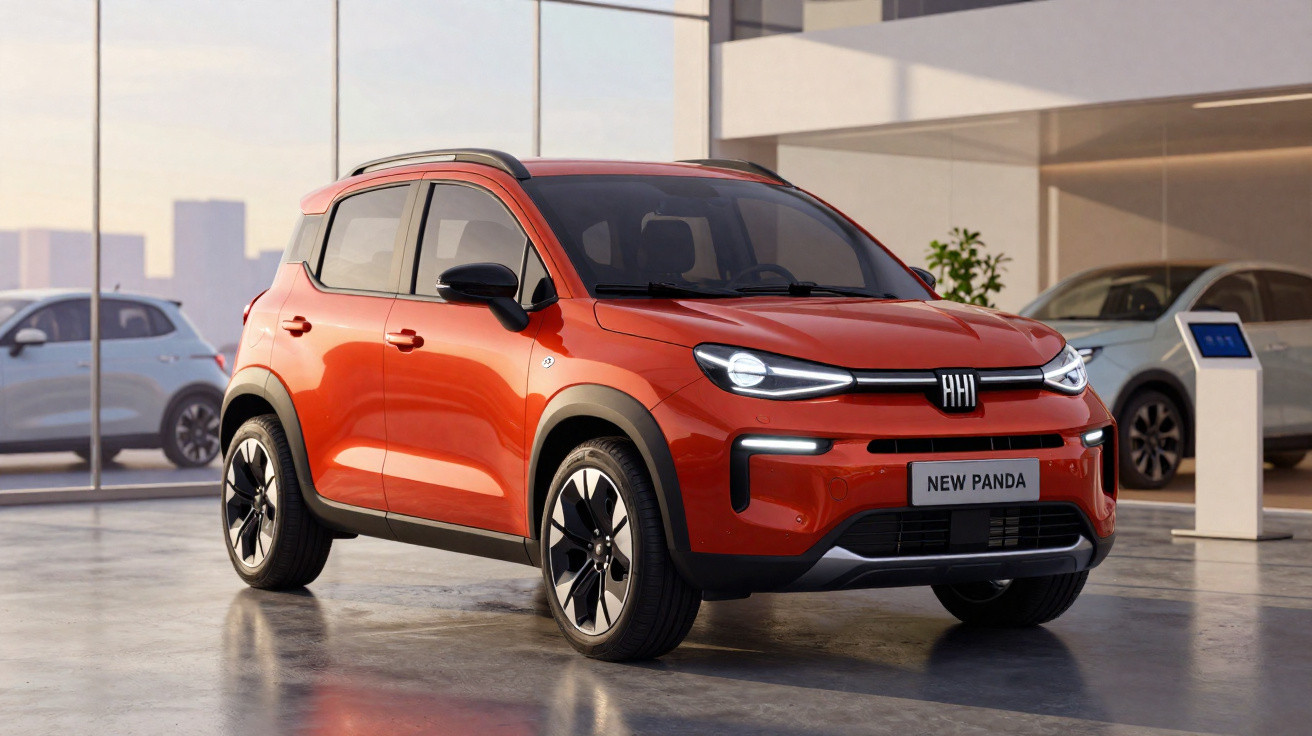
After a period defined by electrification, FIAT has entered 2026 with a more pragmatic strategic adjustment. The Italian marque remains committed to electric cars, while once again making room for combustion engines and, above all, preparing a substantial expansion of its line-up with models designed to deliver volume.
The first indication of this shift is the return of the FIAT 500 Hybrid. Introduced in 2021 as an electric-only model, the current 500 generation became a symbol of the brand's energy transition. Yet, following a promising start to its life, sales fell considerably and have not since recovered. To change that situation, FIAT has taken the unprecedented step of adapting its electric car to accommodate a combustion engine.
FIAT 500 Hybrid returns with combustion power
Rather than a retreat, this is an adjustment to the market's actual pace. From March, the 500 Hybrid will be available in Portugal with the familiar 65 hp 1.0 Firefly 12 V mild-hybrid engine. It is €7,000 cheaper than the electric version - with prices starting at €20,850 - and we have already driven it. Here are our first driving impressions:
However, FIAT's biggest developments do not concern the 500 or the wider 500 family.
Panda becomes FIAT's new growth pillar
The real transformation for FIAT lies within the Panda family. Already on sale, the Grande Panda is the first member of a model family that will give the Italian brand greater synergies and economies of scale on a global level, bringing FIAT's European and South American operations - its strongest region - closer together than they have been for a long time.
This new family stands for more than simply launching new models. It marks FIAT's return to genuinely global vehicles, something it has not done since the days of the Palio in the 1990s. The Grande Panda, for instance, will arrive in Brazil this year, while the family will expand on both continents with two further models. For now, they are known only as the Giga-Panda and Fastback.
Like the Grande Panda, both will use the multi-energy Smart Car platform, and no mechanical surprises are anticipated. They will offer electrified versions - featuring a 1.2 Turbo 48 V mild-hybrid powertrain - alongside fully electric alternatives with 44 kWh and 54 kWh batteries, offering maximum ranges of around 400 km. Their body styles, however, will differ.
Giga-Panda and Fastback broaden the Panda family
As its name suggests, the Giga-Panda will be a giant Panda in SUV form. It will be equivalent to the established Citroën C3 Aircross and Opel Frontera, sharing their technical foundations as well as the option of seven seats. The Fastback, meanwhile, is derived directly from the Giga-Panda, with its name referring to its ‘SUV-coupé’ silhouette.
The Fastback has frequently been spotted undergoing road tests, although it is expected to be the last to arrive, during the second half of the year. The Giga-Panda could be revealed in the first half. Both will indirectly fill the space left by the Tipo, production of which ended in 2025.
FIAT becomes less ideological and more pragmatic
FIAT has not given up on electric cars, but it is no longer presenting them as the only solution. This strategic move has spread across every Stellantis brand, embracing the coexistence of different solutions. It also reflects a greater ambition for volume, particularly in the European market.
The return of the combustion-engined 500 is the first stage - FIAT forecasts 100,000 units per year, almost five times the current figure - but the structural commitment lies with the Grande Panda and the future members of this family. By developing models from the outset for different regions and various propulsion systems, FIAT is once again seeking global scale.




Comments
No comments yet. Be the first to comment!
Leave a Comment