
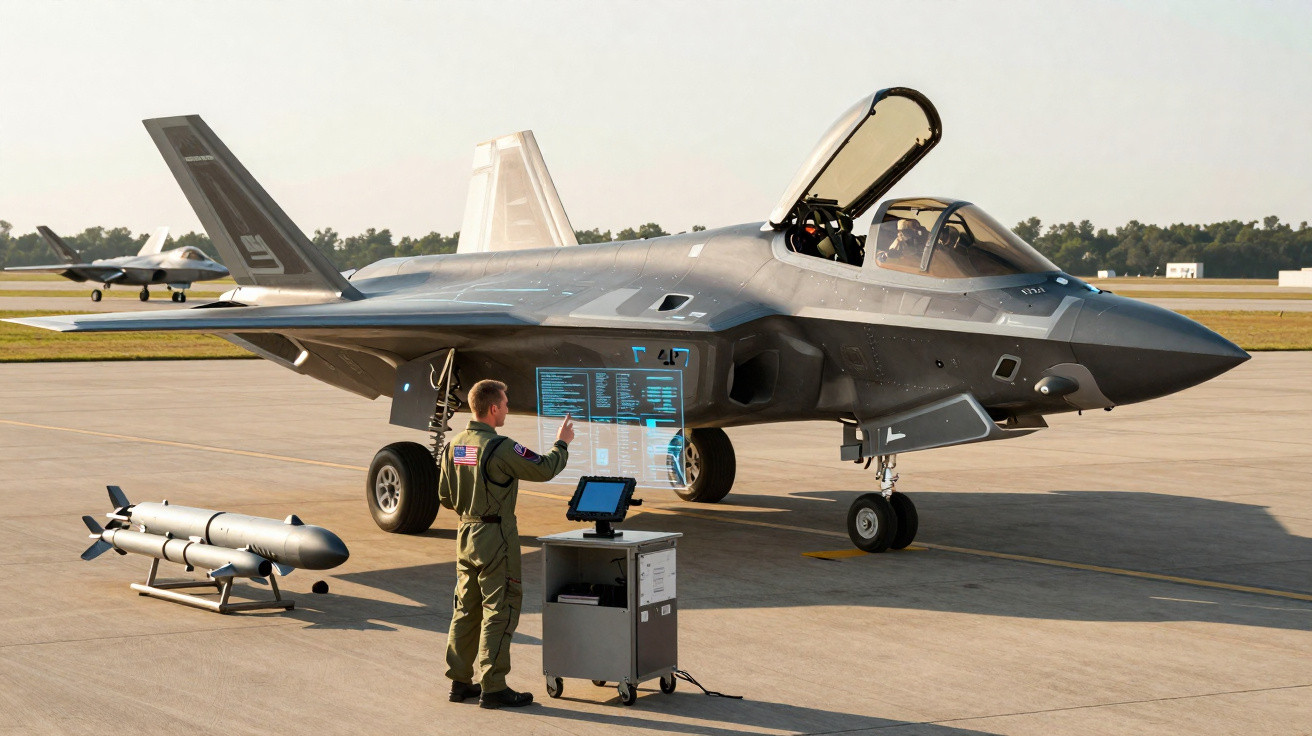
F-47 timetable and the F-22 bridge
A US congressman has offered a hint about the anticipated delivery timetable for the F-47 programme, stating recently that the US Air Force’s (USAF) future sixth-generation fighter is unlikely to be ready before 2030. This would mean the service must consider sustaining its existing platforms for longer than originally expected. Speaking at the McAleese Defense Programs Conference, Virginia Republican Rob Wittman, chairman of the House Armed Services Committee’s Tactical Air and Land Forces Subcommittee, said the USAF would need to retain its F-22 fighter fleet as an interim capability until the transition is fully completed.
The target set by senior US Air Force officials is to have the first F-47 aircraft available in 2028 for the relevant flight testing. That would represent a three-year period from Boeing receiving the contract, a timeframe local analysts consider highly ambitious. They have drawn comparisons with the F-35 programme, which took five years to reach the same milestone. At present, however, the service remains hopeful that it can meet this target, according to statements by General Dale White, who oversees the F-47 programme.
USAF control over F-47 development
In line with this approach, General White said the USAF is taking an increasingly prominent role in defining the roadmaps linked to the F-47 programme, covering matters such as design, development and subsequent production schedules. In his words: “We needed the government to get back into engineering. We had outsourced engineering for a long time. And being able to do that, to have a government reference architecture in collaboration with industry, allowed us to have more continuous competition, avoiding reliance on a single supplier. But at the same time, we now have a contract that allows us to develop our capabilities.”
This view was also expressed by the USAF’s now former Chief of Staff, General David Allvin, who told members of Congress last year that the Air Force was in the process of assuming greater responsibilities during these stages of the programme. As he explained at the time, this would give Washington more control over, and understanding of, the platform’s development process. This was not the case with the F-35, as Lockheed Martin retained rights to key design data.
F-47 performance and future weapons
The USAF envisages its future sixth-generation F-47 fighters as a direct replacement for its most capable fighters currently in service: the F-22s mentioned above. The aircraft is therefore being developed with the aim of creating a combat platform able to operate in highly demanding environments. Boeing is developing it after being selected in March 2025 as the winner of a tightly controlled competition that also involved Lockheed Martin and Northrop Grumman.
Regarding the fighter’s characteristics known so far, primarily from information released by the USAF itself, the F-47 is expected to exceed Mach 2 and have a combat radius greater than 1,000 nautical miles (1,852 km). The latter figure is particularly significant, as its range would be almost double that of the F-22s it is intended to replace, thanks to the new XA103 engines being developed by Pratt & Whitney.
Alongside this development work, the US Air Force has also indicated that it wants to develop a new missile that could become one of the F-47’s first weapons. Although the effort remains an initial search for industrial partners, a document released by the USAF Life Cycle Management Center at Eglin Air Force Base stated that it would be a model comparable to the SiAW, which would also need to be compatible with B-21 bombers and F-35 stealth fighters.
Images used for illustrative purposes






Comments
No comments yet. Be the first to comment!
Leave a Comment