
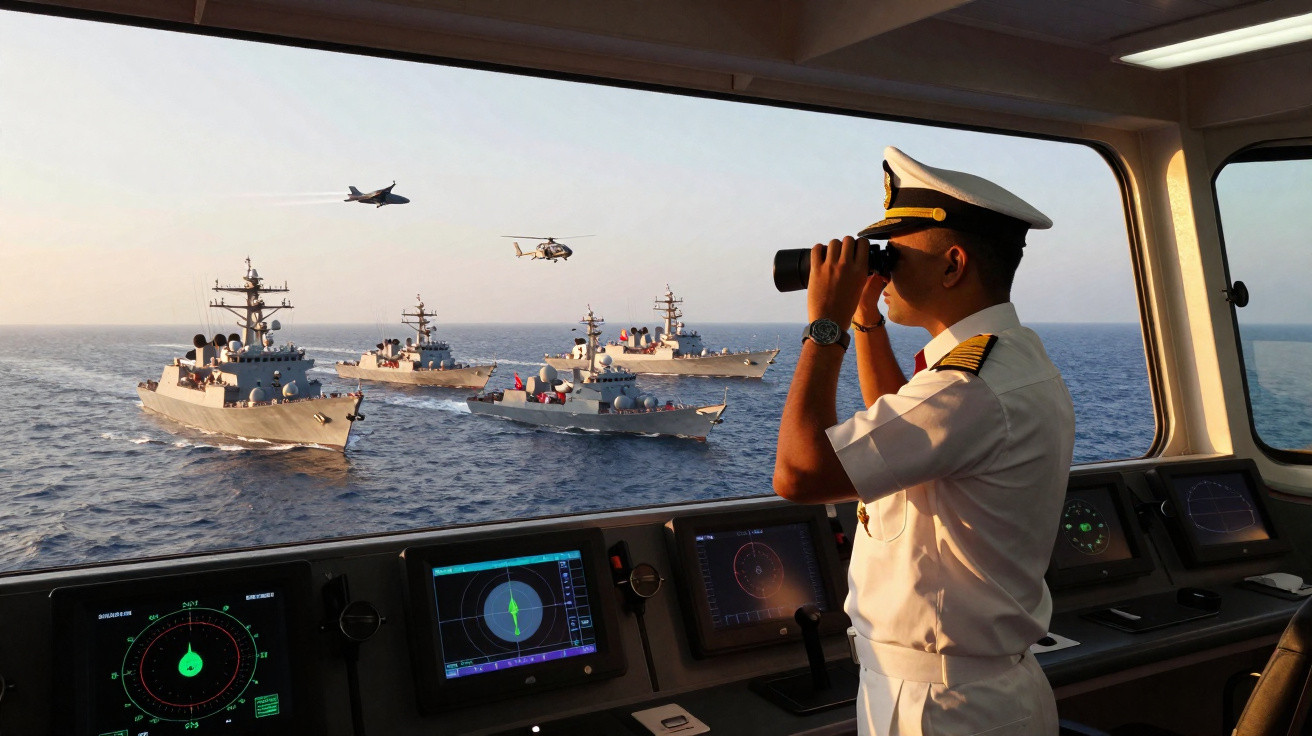
The Indian Navy has officially concluded the multinational MILAN 2026 exercise, one of the largest naval activities organised by New Delhi. This year’s exercise brought together around 60 surface vessels, submarines and aircraft from several Indo-Pacific and other regional navies. The drills took place in Visakhapatnam, in the Indian Ocean, from 15 to 25 February.
As Zona Militar previously reported, the Indian Navy-led exercise was conducted in two separate stages - a harbour phase followed by a sea phase - covering combined anti-submarine warfare, air defence, surface manoeuvres and maritime interdiction drills. According to information released by Indian authorities and local media, the sea phase, which we were able to follow, involved more than 40 warships, several submarines and nearly 30 aircraft, establishing Exercise MILAN 2026 as one of the region’s largest multilateral naval exercises of the year.
MILAN 2026 brings together Indo-Pacific navies
MILAN 2026 brought together navies from Asia, Europe, Africa and Oceania, reinforcing India’s ambition to position itself as a central player in the Indo-Pacific security architecture. Russia was among the most prominent participants, deploying the anti-submarine destroyer RFS “Marshal Shaposhnikov” (BPK 543), alongside other units invited to the International Fleet Review (IFR) and the exercise itself.
Other participating vessels included KD “Sri Indera Sakti”, a multifunctional logistics support ship of the Royal Malaysian Navy, and the UAE corvette “Al-Emarat”. Maritime patrol aircraft from France, Germany and the United States were also in attendance.
Operational scenarios and deployed capabilities
Throughout the sea phase, forces carried out complex manoeuvres, including coordinated anti-submarine warfare operations, air defence exercises in multinational formations, surface manoeuvres and tactical communications, as well as maritime interdiction and boarding actions. Destroyers, frigates, submarines and maritime patrol aircraft supported these drills, allowing participants to rehearse procedures for high-intensity warfare scenarios in a region where naval activity has risen steadily in recent years. The exercise also validated coordination among participating parties, rapid-response capabilities and best practices, in line with the MAHASAGAR vision: Mutual and Holistic Advancement for Security and Growth Across Regions.
India’s maritime security role in the Indian Ocean
The conclusion of MILAN 2026 comes amid intense naval activity across the Indo-Pacific, where China continues to expand its maritime presence through exercises and patrols. Against this backdrop, India is seeking to strengthen its role as a provider of maritime security and a focal point for naval forces seeking to preserve stability and freedom of navigation along the Indian Ocean’s principal trade routes.
You may also be interested in: The Chinese Navy will soon test its new 155 mm naval gun




Comments
No comments yet. Be the first to comment!
Leave a Comment