
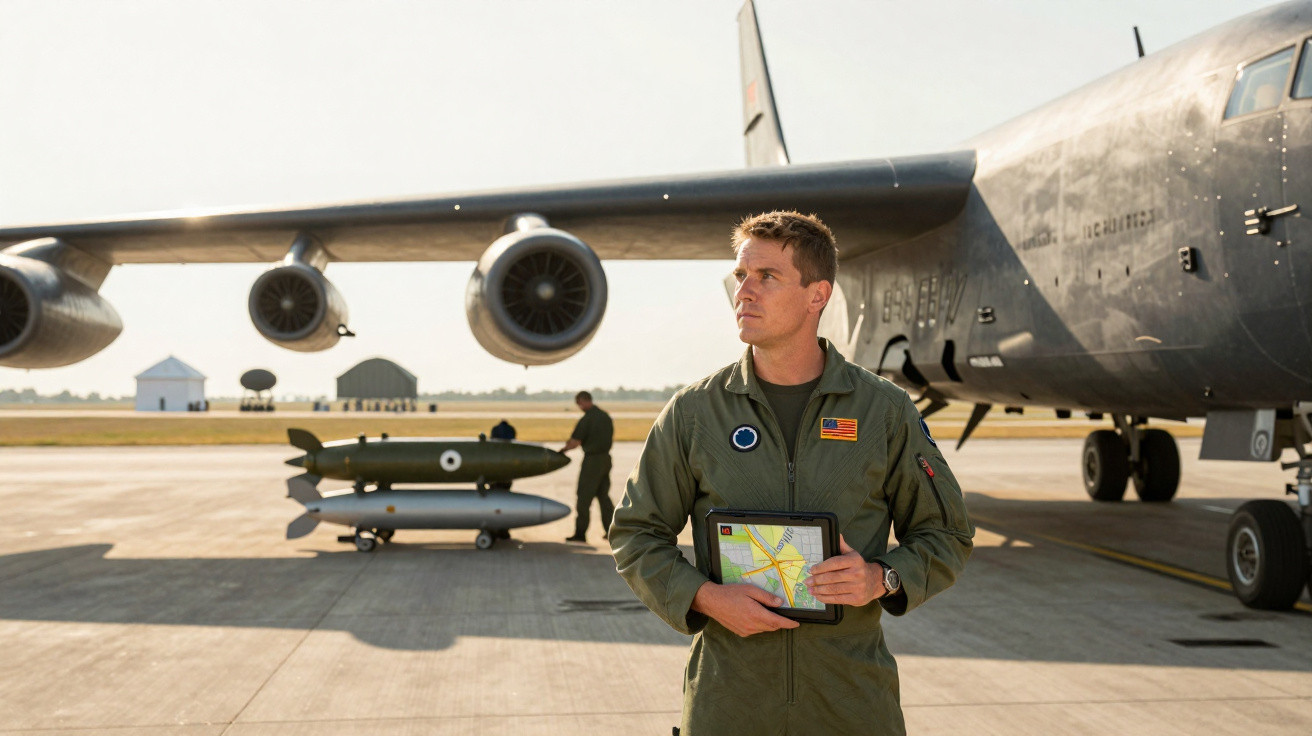
On a wind-scoured runway in North Dakota, a crew chief clears frozen vapour from the flank of an ageing B-52H-the same bomber type his grandfather loaded during the 1960s. Its grey fuselage bears the marks of decades of service, yet newly fitted pylons sit beneath the wings, prepared for weapons that had not been invented when the aircraft first took flight. In the cockpit, a young pilot works through a checklist covering both conventional attack missions and nuclear contingencies. It is one airframe with two purposes, and much less scope for uncertainty.
The picture is at once recognisable and subtly unfamiliar.
The stance of US nuclear power is changing, and the atmosphere on the flight line conveys that shift before any official policy document does.
From quiet deterrence to visible muscle-flexing
For most people, “nuclear posture” sounds like an issue sealed away in a Washington vault. For personnel tending missiles in underground silos or inspecting bomber wings, however, it is an everyday routine-a kind of ritual. Recently, that ritual has begun to change.
The US Air Force has been speaking more openly about “recharging” its intercontinental ballistic missiles and redeploying B-52s for dual roles, allowing them to carry either conventional or nuclear payloads at short notice.
What was once an almost invisible, background threat is returning to public view, like a warning notice repainted in vivid red.
At Minot Air Force Base, where winter brings low temperatures and short tempers alike, missile crews once joked that their task was “to be forgotten until the day we’re not”. Briefings now carry a different tone. Officers discuss readiness schedules, altered alert states and revised instructions concerning how long bombers must be capable of remaining airborne.
The B-52, for so long the ponderous emblem of Cold War deterrence, is being reconsidered. Dual-mission sorties would allow one aircraft to move from a conventional strike assignment to a nuclear mission with less bureaucratic delay and greater operational uncertainty.
That uncertainty is deliberate. It is itself a message.
Strategists have a tidy label for it: signaling. By stating that it can reinforce its posture without a formal new nuclear safeguard agreement, the Air Force is effectively telling rivals that old, predictable routines no longer apply. In the later Cold War, deterrence depended on clear limits and painstaking arms-control negotiations. If one side did X, the other answered with Y, and both understood the script.
That script is now less distinct. Redeploying bombers and “recharging” ICBMs moves deterrence away from a static balance framed by treaties and towards a more fluid position built around readiness.
As several retired officers quietly acknowledge, the danger is that a more adaptable posture may also appear more unstable.
What “recharging” ICBMs really looks like on the ground
When Air Force leaders refer to “recharging” the ICBM force, they do not mean merely replacing batteries in a figurative warhead. They mean intensive maintenance periods, improved command-and-control connections and a drill tempo that takes crews beyond familiar routines.
In Colorado, missileers describe lengthier alert rotations and more regular testing of the communications links connecting silos with regional commands. Engineers describe replacing antiquated parts dating from the Reagan era, enabling launch orders to travel more quickly and to be authenticated through fewer vulnerable links.
Beneath the technical language lies a blunt objective: the land-based arm of the nuclear triad is being pressed to function less like a museum exhibit and more like an active, prepared force.
Consider one recent exercise that officers prefer to cite without identifying it. During a long weekend, crews had to simulate a rapid transition from a peacetime stance to near-war readiness, combining bomber sorties, missile-status inspections and cyber-defence exercises. B-52 pilots flew routes resembling Cold War nuclear patrol patterns, while missileers rehearsed shortened timelines for launch decisions.
No treaty was breached. No warheads were relocated. Even so, the pace alone sent an unmistakable signal to foreign analysts monitoring satellite paths and intercepting communications.
This is what “toughening posture” means today: not additional warheads, but greater speed, flexibility and uncertainty over how-and how rapidly-the US could react.
The reasoning rests on a straightforward assessment. US strategists fear that potential adversaries regard American nuclear forces as slow-moving, politically constrained and limited by domestic pressures. By adapting bombers for dual missions and increasing ICBM readiness, the Air Force wants those adversaries to reassess their chances.
Deterrence once meant, “don’t start, or everyone loses in the end.” It is now moving closer to, “don’t even think about grabbing a quick win, because response will be immediate and tailored.”
It is a nuanced adjustment, yet small changes in nuclear strategy can create a long shadow.
Living with a sharper edge on the nuclear dial
In practical terms, the revised posture requires crews to spend more time practising scenarios they once treated as nightmares. Airmen rehearse launch procedures that they may previously have expected to encounter only on training slides. Commanders visit bomber squadrons and missile wings with repeated messages about “credibility” and “response options”.
One modest but revealing change is the renewed priority given to keeping B-52s ready for rapid nuclear configuration rather than conventional bombing alone. That brings different loading drills, security measures and mental demands for everyone involved.
For those living near bases such as Barksdale or Minot, the increased frequency of flights and the sound of exercises are difficult to overlook.
This is where public anxiety begins to emerge. We have all experienced the moment of realising that events beyond the news feed are moving more quickly than expected. Residents watch contrails overhead and wonder what has altered, even when they cannot fully express it.
Policymakers speak of “extended deterrence” and “assurance to allies”. Local people notice more armed guards at entrance gates and hear rumours of longer deployments. They are concerned about accidents, miscalculation and the extended consequences of escalation that begins with an exercise and finishes somewhere far darker.
Let’s be honest: hardly anyone follows nuclear-posture updates every day. Yet such changes still reach ordinary people, quietly, in the engine noise and behind closed doors.
Within the Pentagon, some officials present this firmer approach as long overdue. Others-often those who remember the hair-trigger pressures of the 1980s-are more guarded. One recently retired commander put it bluntly:
“We spent decades building systems and habits that slowed nuclear decision-making down. Now the pressure is to speed certain things back up, to look more agile, more ready. The question I keep asking is: where’s the brake pedal in this new car?”
The Air Force, for its part, distils those concerns into several key points:
- Dual-mission B-52s: A single platform with multiple functions, intended to complicate an adversary’s planning.
- “Recharged” ICBMs: Modernised infrastructure and training designed to reduce response times without altering warhead numbers.
- Visible exercises: Public drills intended to reassure allies and unsettle rivals without crossing treaty boundaries.
- Flexible deterrence: A move away from rigid, treaty-scripted confrontations towards a range of rapid, calibrated responses.
Between these bullet points and daily lived experience lies a divide that ordinary people sense more readily than they can explain.
When deterrence starts to feel different
The most significant change in this posture is not simply equipment or flight schedules. It is the way deterrence feels for every side involved. For adversaries observing from Moscow, Beijing or Pyongyang, dual-role bombers and “recharged” ICBMs make US forces a more adaptable and less transparent instrument. It becomes harder to judge what sits beneath a B-52’s wings or how quickly an ICBM squadron could react. That uncertainty is intended to encourage caution.
For allies in Europe and Asia, a stronger US position can offer an unusual form of reassurance. It indicates that Washington remains prepared to put steel into the equation, rather than relying solely on language in communiqués. At the same time, it binds their security still more closely to decisions taken in distant command centres.
For everyone else, far from bomber bases and missile fields, the change appears as an underlying strain. There are news alerts about “posture updates”, occasional reports of exercises whose names few can pronounce, and a sense that the nuclear issue-distant for a generation-is moving back into view.
Deterrence once sought to keep nuclear weapons so obscured by treaties and norms that they nearly disappeared from daily thought. As safeguards weaken and postures become firmer, those weapons feel close again-not in quantity, but in public consciousness.
Whether this greater visibility preserves peace or places it under added strain remains the unanswered question behind each low-flying bomber and every quiet improvement within a silo.
| Key point | Detail | Value for the reader |
|---|---|---|
| Redeployed B-52s | Bombers prepared for conventional and nuclear missions alike | Helps explain why more visible flights and drills are taking place |
| “Recharged” ICBMs | Upgrades and intensified training intended to reduce response times | Clarifies what military leaders mean by a firmer nuclear posture |
| Shift in deterrence | A move from rigid treaty-based balance towards a flexible, readiness-driven stance | Provides a way to understand rising nuclear tensions in the news |
FAQ:
- Is the US building more nuclear weapons? Current changes concentrate on readiness, flexibility and upgrades, rather than dramatically increasing the number of warheads.
- What does “dual-mission” B-52 actually mean? It means one bomber can be rapidly configured for either conventional bombing or nuclear tasks, creating ambiguity for any potential adversary.
- Are these posture shifts violating existing treaties? US officials say these measures remain within existing arms-control limits, focusing on operations and modernisation rather than deployments that breach treaties.
- Does a tougher posture make nuclear war more likely? Supporters say it reinforces deterrence by closing “gaps”; critics fear that faster, more adaptable forces could reduce decision time during a crisis.
- Why should ordinary people care about this now? Because even technical changes to nuclear posture quietly influence the risks, alliances and crises that will shape global stability over the next decade.



Comments
No comments yet. Be the first to comment!
Leave a Comment