

The café in Croydon fell quiet for a second as a push notification lit up people’s phones. “Government axes retirement at 67 – new pension age announced.” A woman wearing a hi-vis jacket paused over her bacon roll and blinked as though she had read it wrongly. On the neighbouring table, a grey-haired man fixed his gaze on the screen, silently working through dates in his mind. The atmosphere seemed suddenly heavier: shoulders stiffened, faces tightened and muted swearing drifted above cappuccinos.
Everyone was calculating the same thing.
How many years remained.
What the UK’s new state pension age changes overnight
The government has formally abandoned the move towards retirement at 67, introducing a new state pension age that breaks sharply with the previous timetable. For years, people in their forties, fifties and early sixties had been told that the threshold would keep rising and that longer working lives were unavoidable. After months of speculation, select committee hearings and leaked spreadsheets, the decision has arrived: the increase to 67 has been dropped in favour of a revised age and a more gradual timetable.
On a spreadsheet, it is only a figure.
For real people, it can shake up every plan stuck to the fridge door.
Consider Neil, a 56-year-old delivery driver from Derby who has spent 30 years hauling parcels and battling traffic. He had long assumed he would need to carry on until 67, perhaps beyond, because that appeared to be the direction of travel. He used to joke with colleagues that they would be racing mobility scooters between depots. Once the new pension age was confirmed, his anticipated state pension date moved forward by a period he could genuinely picture: another house repaint, another car and another child through university.
He dug out his old notebook of “retirement sums”, written during late-night tea breaks.
For the first time, those figures no longer seemed imaginary.
At national scale, the sums involved are enormous. More than 12 million people in the UK receive the state pension, and every alteration to pension age affects billions of pounds over decades. The former plan to steadily raise the age was driven by calculations on life expectancy and the burden an ageing population places on public finances. But the tidy charts concealed an uncomfortable reality: on average, a banker in Surrey lives much longer than a former miner in South Wales. A single retirement age of 67 therefore never felt fair to everyone. The revised age and slower increase are being presented as a reset, intended to protect the public finances without wearing people down physically.
Whether that equilibrium lasts is the question attached to every payslip.
How to respond now: practical steps before the headlines disappear
The first useful action is starkly straightforward: check your own new state pension age. Do not rely on a friend’s date or something half-heard on a radio phone-in; find yours. The government’s online checker has already been updated, and requires only two minutes, your date of birth and your postcode. Seeing the date written clearly turns it from an abstract Westminster argument into a fixed point for your financial planning.
Print it out. Put it in your diary.
Then map the years between today and that date as the rungs of a ladder you must genuinely climb.
After that comes the less comfortable task: facing the difference between the state pension you expect to receive and the income you will actually require. Most people misjudge this by a considerable margin. We all recognise the moment of glancing at a pension statement and deciding that Future You can deal with it. For some, the new age announcement may sound like “good news”, but it does not add money to a pension pot. It changes the timing and nothing more.
Let’s be honest: nobody really does this every single day.
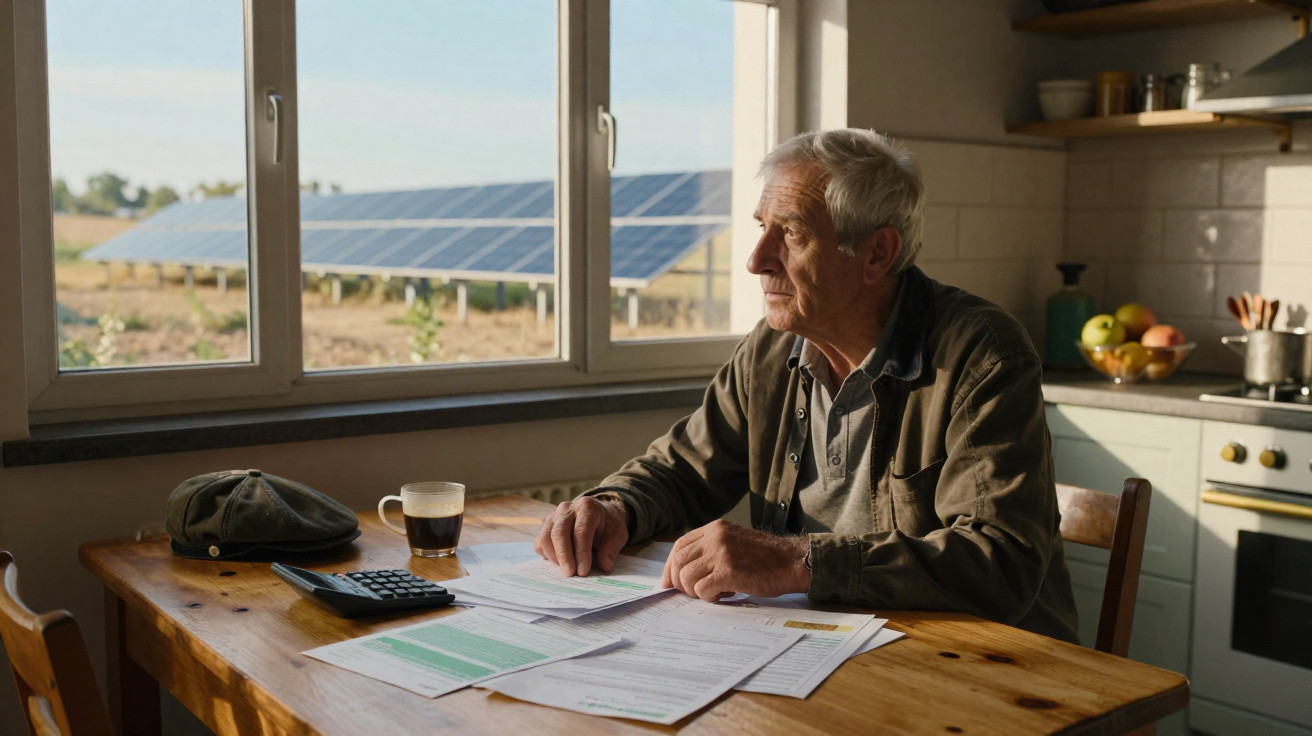
Even so, one evening spent with paperwork, a mug of tea and a notepad can alter the shape of the next 10 years.
“This is the kind of reform that looks generous on the front pages, but the real question is whether people use the breathing space to prepare,” says Sarah Holden, an independent pensions adviser in Leeds. “The state pension is a foundation, not a full house.”
- Set out the income you expect at your new pension age: state pension, workplace pensions, savings and rental income.
- Note your probable monthly outgoings: rent or mortgage, food, energy, transport and debts.
- Mark the gap between those two totals. The number you circle is the issue that needs solving.
- Choose one change to make this year: raise contributions, clear one debt or retrain for better-paid employment.
- Return to the same page every six months. Not daily or weekly, but regularly enough to stop the plan gathering dust.
Beyond the headlines: work, age and dignity in Britain
Scrapping the route to retirement at 67 is more than an administrative adjustment; it captures what Britain was grappling with in 2024. Who is able to rest, and at what point? Who spends their sixties travelling because they want to, and who spends them stacking shelves because no alternative exists? When Westminster changes the retirement age, it is also quietly determining how many more years millions of people will work with aching knees or deteriorating eyesight.
That is why the response is so deeply felt.
This concerns dignity as much as numbers.
In certain workplaces, the announcement has prompted restrained relief. Nurses nearing 60, carers who lift people heavier than themselves each day, and warehouse workers who feel every shift in their lower backs describe the new age as though a heavy box has been moved a few inches from their chest. For others, particularly people with strong private pensions or highly paid roles, it is simply another consideration within a wider life plan. The class divide sits at the centre of this reform, even if the official statement does not use that term.
One figure.
Completely different lived experiences.
There is a further concern: the unspoken fear of becoming “unemployable” before reaching pension age. People in their early sixties understand how quickly CVs may be passed over once grey hair is visible at interview. A higher pension age once meant a longer period in limbo, too young to claim but perceived as too old to recruit. The new timetable reduces that pressure for some people, yet it does not remove ageism from the jobs market or resolve the patchwork of insecure contracts. A fair pension age doesn’t fix an unfair labour market.
That strain will frame the next political battle long after this week’s news cycle has moved on.
The government’s choice to halt the march towards retirement at 67 and establish a new state pension age will be debated on talk shows and in think-tank reports for months. Its true significance, however, will be felt in much smaller settings: a WhatsApp group in which siblings argue about who can afford to care for Mum; a kitchen late at night where a couple quietly reconsider their dream of buying a campervan; or a staff room where a 59-year-old realises, perhaps for the first time, that they may be able to ease back before their body gives out.
This reform does not offer anyone a flawless future.
It gives them a somewhat different set of years, along with a limited opportunity to use them more effectively.
What people do with that opportunity - demanding safer work, planning more honestly and insisting on dignity after decades of labour - will determine whether this upheaval becomes a moment of progress or merely another footnote in Britain’s long history of austerity and adjustment.
| Key point | Detail | Value for the reader |
|---|---|---|
| New pension age confirmed | The government has stopped the route to retirement at 67 and introduced a revised state pension age and timetable | Helps readers understand when they can truly claim and how this differs from previous plans |
| Personal impact varies | Differences in life expectancy, occupation and private savings mean the reform affects classes and regions differently | Encourages readers to assess their own circumstances rather than depend on broad rules of thumb |
| Action now, not later | Check your new pension age, map expected income and costs, then alter contributions or career plans | Gives readers a practical method for turning a political announcement into a personal strategy |
FAQ:
- Question 1 What precisely has changed under the UK retirement age decision?
- Question 2 How can I check my new state pension age following this reform?
- Question 3 Does this mean I may stop working earlier than I expected?
- Question 4 Will the state pension provide enough for a comfortable life at the new age?
- Question 5 What should I do immediately if I am in my fifties and concerned about retirement?





Comments
No comments yet. Be the first to comment!
Leave a Comment