
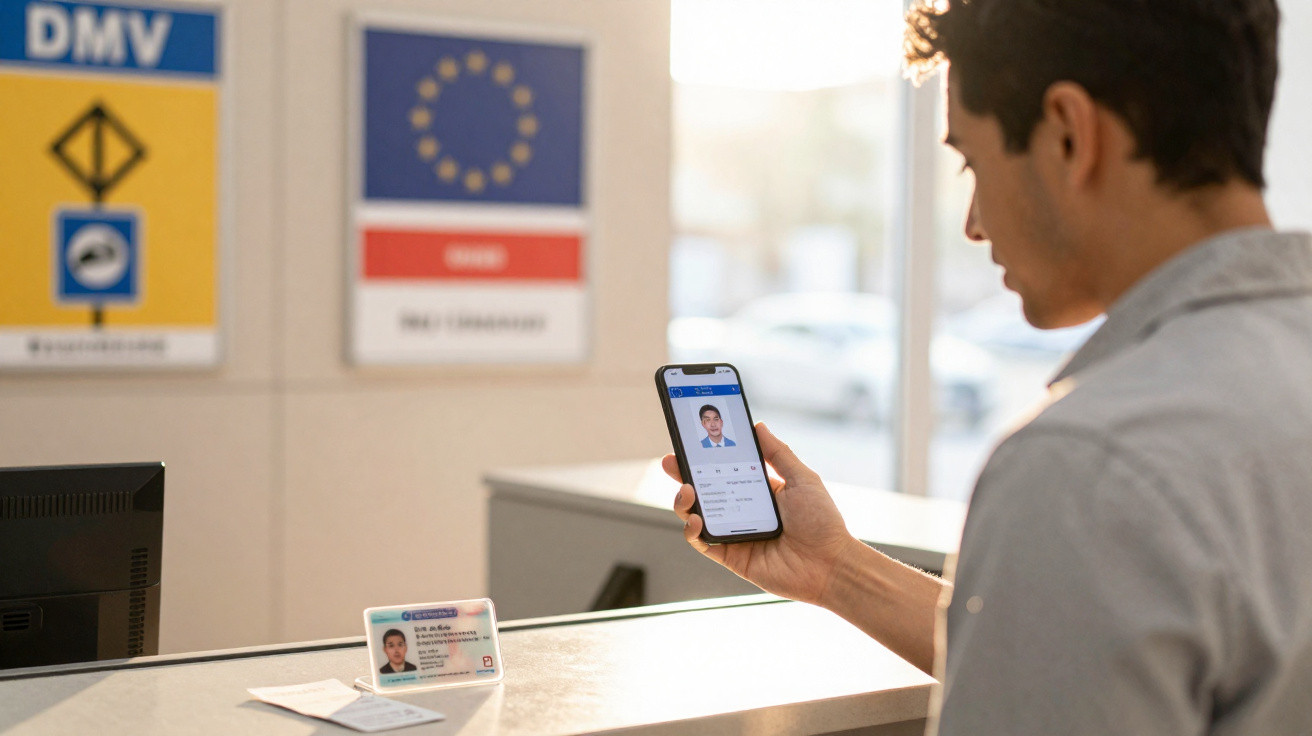
The European Union (EU) is seeking to overhaul (almost) everything connected with driving licences. Under a provisional agreement between the European Parliament and the Council of the European Union, young people could be allowed to obtain a driving licence from the age of 17, provided their Member State permits it. This change would, however, come with specific conditions.
Although the statement does not mention it, the proposal put forward in 2023 indicated that, during the probationary period, 17-year-olds would only be permitted to drive with an experienced driver sitting in the passenger seat.
The agreement also leaves open the possibility of allowing them to drive lorries or vans within their own country, as long as the same requirement is met.
Part of a wider package from the European Commission to amend and modernise driving licence rules, the measure would also lower the minimum age for driving lorries from 21 to 18, and for buses from 24 to 21.
The aim is to align legislation and address driver shortages, particularly in road freight and passenger transport.
Less bureaucracy, greater flexibility
The agreement includes another change: the introduction of a digital driving licence that can be accessed on a mobile phone. The intention is to make the process simpler, more flexible and less reliant on paper documents.
Nevertheless, physical licences will not be phased out. Member States will still be required to offer them, particularly for people without a smartphone or those who favour the traditional format. From the date the measure takes effect, countries will have five and a half years to prepare for the transition.
Changes to learning to drive
The new rules also alter the compulsory training required to obtain a driving licence. Learner drivers will need to be taught how to deal with real-life situations and particular hazards, including the dangers of using a mobile phone at the wheel, driving in snow or icy conditions, the operation of driver-assistance systems, blind spots, and even the proper way to open vehicle doors.
A possible reduction in driving licence validity was also discussed. For motorcycles and cars, the period will remain 15 years, but it could be cut to 10 years if the licence is used as a national identity document.
Driving licences for lorries and buses, meanwhile, will have to be renewed every five years, as is already the case in Portugal. Drivers aged 65 or over could have the validity period of their licences shortened. In Portugal, licences must be renewed every two years from the age of 70.
Stricter rules for new drivers
Another significant change is the introduction of a mandatory two-year probationary period for every new driver. During that time, offences involving alcohol or drugs, failure to wear a seat belt, or carrying children without appropriate restraint systems will be treated more strictly.
The European Parliament is also calling for a zero-tolerance policy on alcohol and drugs for all drivers, rather than only younger or less experienced motorists.
Portugal already has a compulsory probationary period of three years.
It is worth noting that driving licence rules currently differ from one Member State to another, despite the EU having established general guidelines.
Young Portuguese drivers will have to wait
This remains a preliminary political agreement. It must still receive formal approval from the Council and the European Parliament. Once that happens, Member States will have four years to amend their national laws and implement all of these changes.






Comments
No comments yet. Be the first to comment!
Leave a Comment