
NASA broadens its contractor base as the commercial station market enters open competition
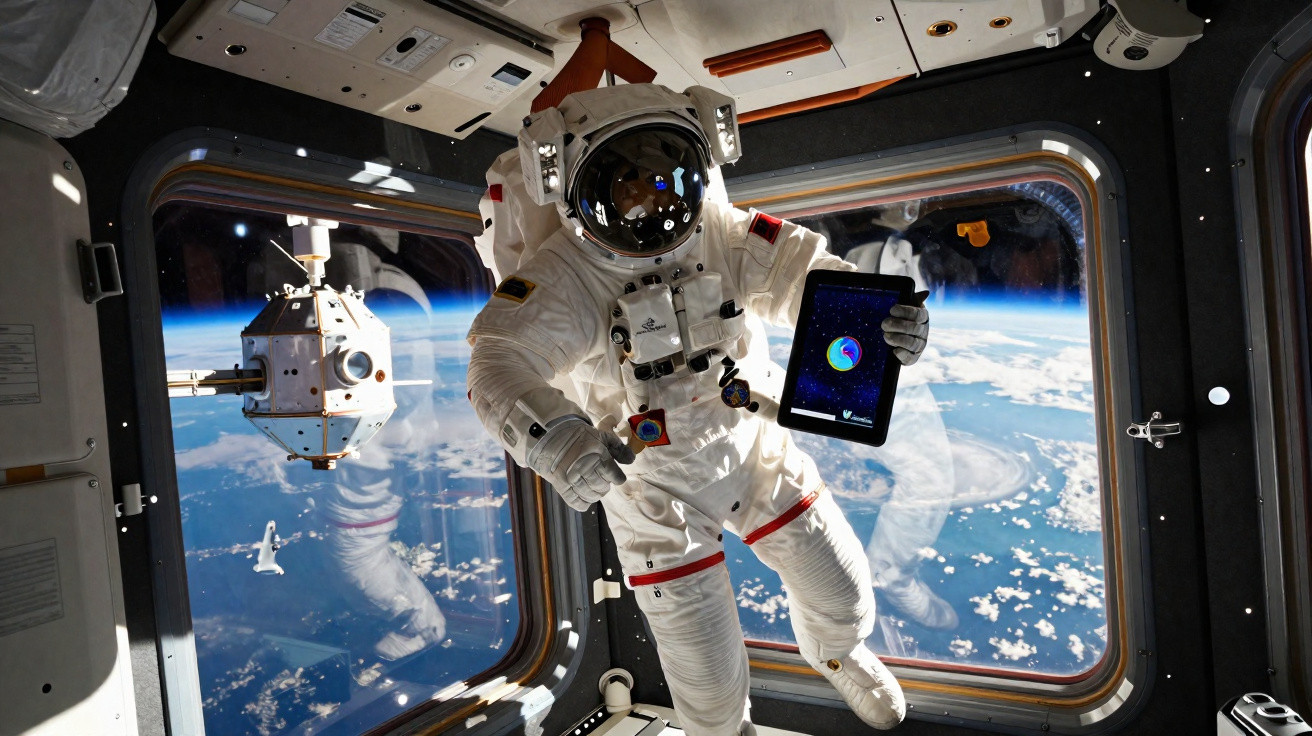
Voyager Technologies has secured its first NASA contract to conduct a private crewed mission to the International Space Station (ISS). The flight is scheduled for no earlier than 2028 and will be the agency’s seventh mission of this kind, but Voyager’s first.
The launches fall under the Private Astronaut Missions (PAM) programme, through which private astronauts travel to the ISS on a commercial basis. Until recently, this market was effectively dominated by Axiom Space, which received NASA’s first five contracts for such missions.
Private Astronaut Missions open up to new providers
The landscape began to shift in 2026. In February, Vast won a contract for its own mission, with a launch planned for summer 2027. Voyager has now joined the field. This creates a group of three major participants, each of which is developing its own commercial orbital station while also gaining access to crewed ISS missions.
Voyager chief executive Dylan Taylor said that “the contract reflects decades of partnership with NASA and validates the company’s strategy: infrastructure in low Earth orbit is viewed as the foundation for future deep-space missions”.
Commercial LEO Destinations programme under review
The award comes as NASA reconsiders its Commercial LEO Destinations (CLD) programme, intended to establish commercial stations to succeed the ISS. The agency has proposed revising its model: rather than supporting several entirely independent stations, it would fund at least two while retaining a central module to which commercial segments could be attached.
The industry, however, has responded critically to the proposed changes. Companies argue that existing private astronaut missions have already demonstrated a viable business model capable of supporting the development of commercial stations without a further redesign of the architecture.
Voyager’s contract therefore represents more than a single mission; it also signals the market’s move towards genuine competition. Where access to the ISS through private missions was previously controlled by one company, NASA is now effectively building a multipolar ecosystem in which several businesses are simultaneously developing orbital transport, infrastructure and commercial services.





Comments
No comments yet. Be the first to comment!
Leave a Comment