
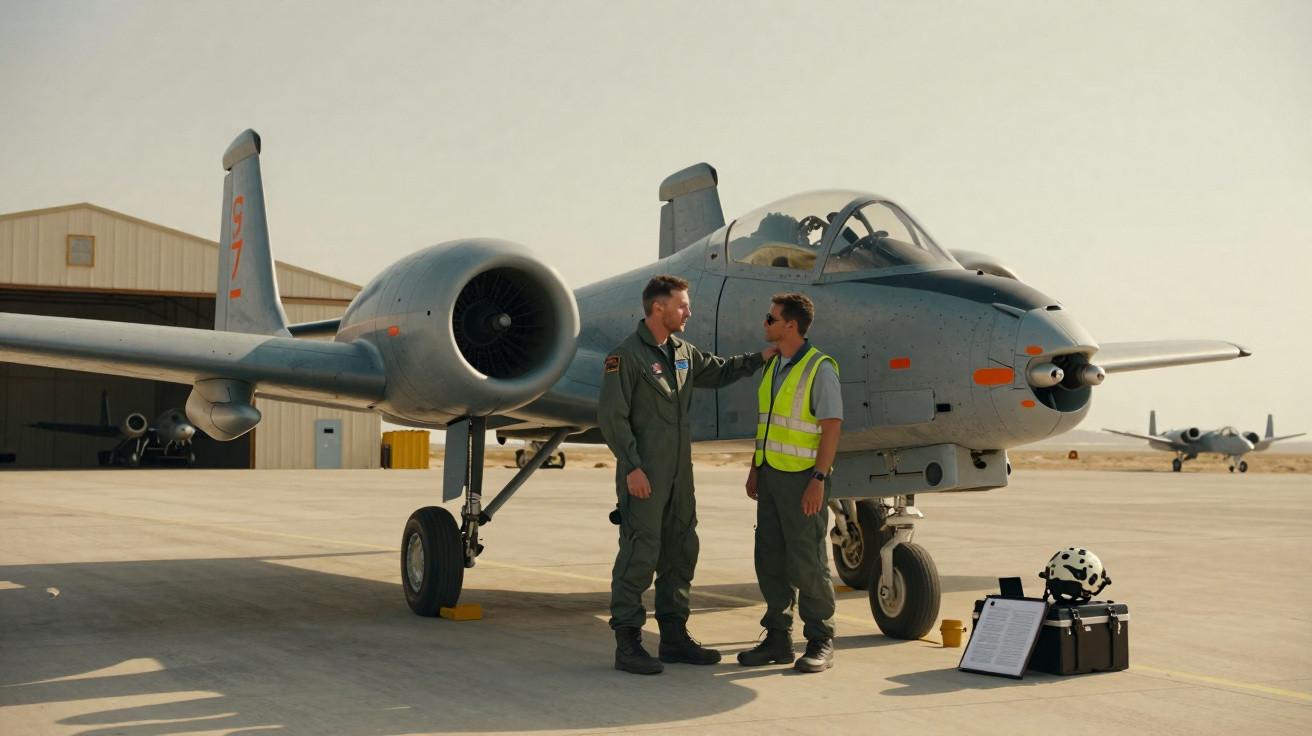
USAF A-10 retirement and the deactivation of Detachment 1
As it takes another step towards retiring its A-10 aircraft fleet, the U.S. Air Force has announced the deactivation of a key unit involved in the platform’s technological development: Detachment 1 of the 40th Flight Test Squadron. Following a formal ceremony held in early December, the service said the move is consistent with the divestment process affecting the aircraft, which will no longer receive further upgrades.
The ceremony brought the work of a detachment with a lengthy record of milestones in developing the A-10 as an attack platform, as well as the flight procedures associated with it, to an end. Its achievements include trials involving small-diameter bombs, certification of target-designation pods, and aerial refuelling procedures involving KC-30 and KC-46 aircraft, among others.
In the words of Major Jordan Ziegler, who served as Detachment 1’s final commander before its deactivation: “The detachment will be remembered for planning, executing and reporting high-calibre, safe, effective and efficient flight tests that benefited the entire Air Force community. Our tests have given deployed airmen the confidence and capability to fight effectively, survive and better protect the 18-year-old on the ground with a rifle, as well as to conduct combat search-and-rescue operations so that U.S. service members can return home to their families.”
Congress delays the retirement of the A-10 fleet
It is worth recalling that, although the USAF is seeking to quietly press ahead with the retirement of its A-10s, the aircraft are expected to remain in service for several more years. This is due to the U.S. Congress’s decision to defer the Air Force’s plans to carry out the move this year. As we reported in December, this reflects both the need to modernise attack fleets and the difficulties of acquiring a viable next-generation replacement and uncrewed alternatives, particularly given the repeated delays and cost increases seen in the F-35 programme.
In this context, the U.S. Air Force began the year with a fleet of around 162 A-10 aircraft, still a substantial number for close air support missions in low- and medium-intensity environments. Washington’s political establishment does not want to lose this capability without a direct replacement in place. This remains the case even though, in the USAF’s view, retirement would allow available resources to be redirected towards more forward-looking programmes and sustaining current fleets.
A-10 combat deployments in the Middle East
Finally, while the political debate continues, A-10s have already proved useful in deployments to modern combat environments. In particular, the platform was deployed to the Middle East last year, where it took part under CENTCOM command in missions to intercept and shoot down drones launched by terrorist factions in the region against Israel and maritime traffic.
Beyond its success in these operations, the platform also proved less expensive to operate than its fifth-generation counterparts, while offering a greater payload capacity and longer endurance. It does, however, sacrifice speed and manoeuvrability.
Images used for illustrative purposes




Comments
No comments yet. Be the first to comment!
Leave a Comment