
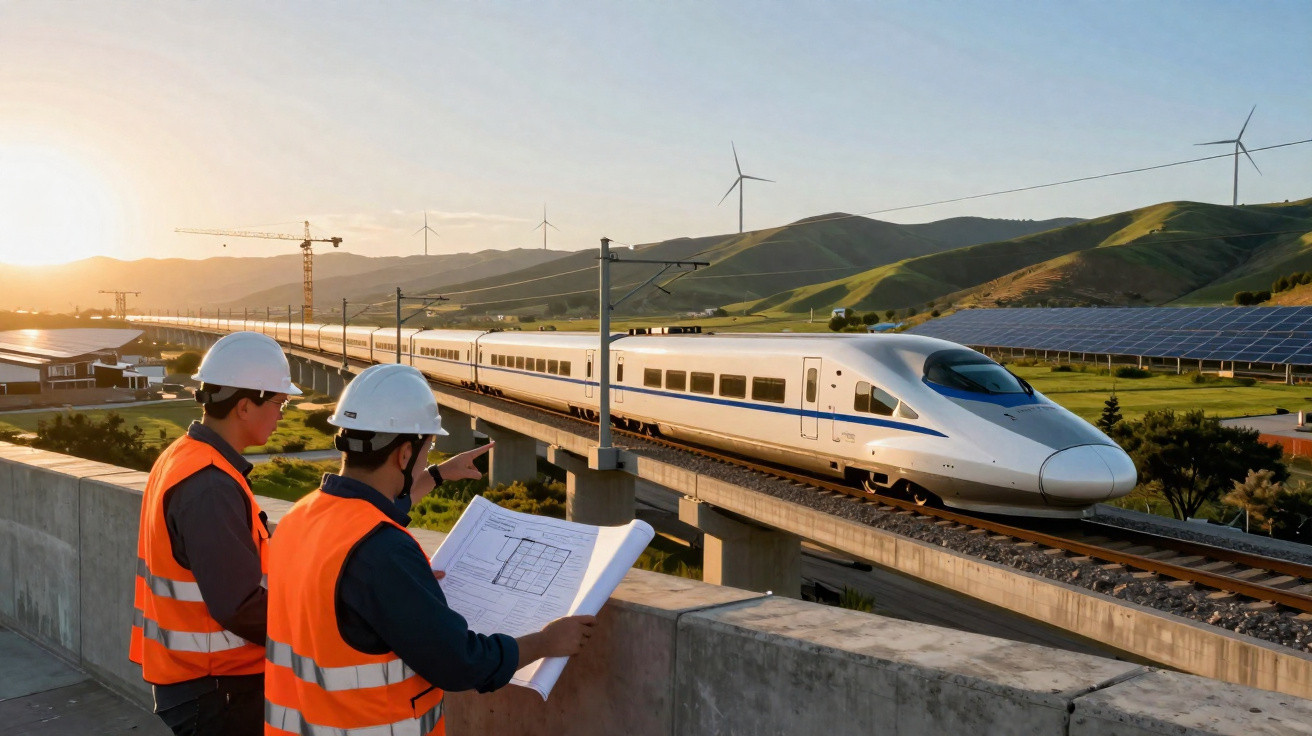
A far-reaching rail blueprint points towards a radically different future.
Released this week by the governor’s office, the 25-year programme sets out a statewide, zero-emission rail network intended to connect cities, airports and employment centres. Its cost would be enormous, but it promises quicker journeys, cleaner air and less time spent in road congestion.
What the plan proposes
Announced on 7 January, the “State Rail Plan” outlines an overall investment package of approximately $310 billion (around €301 billion). It envisages an integrated, frequent rail network covering more than 805 km, running from the north to the southern border and branching towards the coast and desert. Its map connects Chico with San Diego, serves major metropolitan areas including San Francisco and San Jose, and incorporates a Las Vegas link through the California–Nevada corridor.
Its stated aim is simple: to make rail the sensible alternative to driving or taking short-haul flights. The system would operate entirely on electricity and allow easy interchange with regional rail, metro systems, bus rapid transit and airport shuttles. Integrated fares and coordinated timetables would reduce waiting times and make multi-stage journeys easier.
$310 billion over 25 years. A statewide, zero-emission rail network. Backers say it could rank as the second-costliest civil project ever attempted.
- A planned transfer of almost 200 million passenger-miles each day from roads to rail and public transport, easing congestion.
- As many as 900,000 jobs throughout the programme’s lifetime in construction, manufacturing and operations.
- An anticipated 18% increase in rail use among California residents against today’s baseline.
- Integration between intercity, regional and local networks to reduce the inconvenience of changing services.
- Fully electric operations intended to lower carbon and particulate emissions in constrained transport corridors.
Why it matters for the economy and climate
Traffic delays, freight bottlenecks and unpredictable commuting times cost California’s economy billions. Additional rail capacity could make peak-time journeys more dependable and widen employers’ access to potential workers. Development around stations-including homes, workplaces and services-could concentrate around dependable train frequencies, strengthening local tax bases while limiting urban sprawl.
The environmental benefit is equally straightforward. Electric trains eliminate exhaust-pipe emissions in heavily used corridors, while a cleaner electricity grid would increase those gains over time. Passenger and freight rail could take journeys currently made by car or short-haul aircraft, offering an important tool as the state works towards its clean-air goals.
The plan banks on fewer car miles and fewer short-haul flights-an everyday emissions cut that compounds year after year.
Where construction stands
California’s high-speed rail spine between San Francisco and Los Angeles has progressed from plans into construction. Work continues in the Central Valley, while the complete Bay Area–Los Angeles route could cost as much as $100 billion. Elsewhere, a separate San Bernardino County corridor is due to start passenger services later this year, providing extra regional rail capacity. The electrified San Francisco–San Jose route opened last September, upgrading a crucial commuter connection and preparing the corridor for more frequent, cleaner trains.
Key California rail corridors and milestones
- Central Valley high-speed section: construction is under way, with guideway and structural work advancing across several packages.
- Bay Area electrification: now open, allowing quicker, cleaner regional services and future through-running trains.
- Inland Empire service: scheduled to begin this year, improving frequency and reliability east of Los Angeles.
- Vegas connection: planning is being coordinated to connect with the Las Vegas route through the California–Nevada line.
How the costs compare globally
Set against the world’s most expensive civil projects, California’s rail programme would rank close to the top. Looking at historic comparisons provides context for both the price and the scale involved.
| Project | Jurisdiction | Estimated cost (EUR) | Status |
|---|---|---|---|
| U.S. interstate highway system | United States | ~422 billion | Completed (multi-decade) |
| California state rail plan | United States | ~301 billion | Programme announced |
| International Space Station | International | ~138 billion | Operational |
| British high-speed rail (HS2) | United Kingdom | ~126 billion | Scaled and ongoing |
| Kashagan oil field | Kazakhstan | ~107 billion | Operational |
| Grand Mosque expansion | Saudi Arabia | ~92 billion | Ongoing |
These projects span different periods, accounting methods and types of asset, yet the comparison underlines one point: transforming a network at this scale costs substantial sums, but can repay that investment through decades of use, improved safety and avoided congestion.
How the plan could be funded
Funding for the programme would probably combine several sources. State-authorised bond issues could support initial construction, while cap-and-trade income could help finance lasting, verifiable emissions reductions. Federal grants created through recent infrastructure and clean-energy legislation could reduce major capital costs and fund expensive structures and systems. Private investment could be attracted through station-area development and concessions. Value capture around busy stations-using additional property taxes and air rights-could pay for last-mile connections and station improvements.
The order of delivery will be important. Initial sections that produce obvious gains, such as shorter commutes, clean services and dependable timetables, could build public confidence and make subsequent funding allocations easier to secure.
Risks, bottlenecks and workarounds
Rising costs remain the central concern. Buying rights of way, moving utilities and building complex viaducts near densely populated areas can all inflate budgets. Planning approvals and legal disputes may delay construction, while demand for skilled workers can intensify during periods of peak building activity.
There are tools to reduce those risks. Standardised designs can limit bespoke engineering, and long-lead materials can be secured early. Contracts can be structured to balance competition with confidence in delivery. Progressive design-build arrangements can keep scope risks shared and transparent. Matching schedules to manufacturing increases for trainsets and signalling can prevent idle periods, while coordination with freight rail operators and local transport agencies can make outages more efficient.
What riders can expect on day one
On dedicated stretches, high-speed services are intended to cruise at more than 322 km/h (200 mph). Once the full spine is open, the journey between the Bay Area and Los Angeles could take less than three hours. Regional routes would feed into the main line with turn-up-and-go frequencies. Trains would use clean electricity and offer onboard Wi-Fi, level boarding and quiet carriages. Stations would link with cycle routes, buses and airport people movers, cutting overall door-to-door travel times.
A quick reality check with numbers
Take the plan’s target of moving nearly 200 million passenger-miles a day away from roads. At an average of roughly 404 grams of CO₂ per mile for a typical US passenger vehicle, equivalent to about 251 grams per km, this shift would prevent around 80,800 metric tonnes of CO₂ every day. Over a year, that equates to almost 29 million metric tonnes. Even if only half of the intended shift is achieved, the reduction in emissions would still be substantial. Energy costs, passenger demand and the electricity mix will determine the eventual total, but the climate potential is evident.
What to watch next
Two developments this year merit particular attention: the launch of passenger services on the new Inland Empire corridor and visible advancement of the Central Valley high-speed guideway sections. Together, they will indicate whether the state can maintain its timetable while expanding its workforce and supply chains.
For households and firms, the practical outcomes matter most: shorter journey times, reliability during peak periods, fare integration between agencies, and the ability to park once and reach jobs, schools and leisure destinations. Should the first sections deliver those essentials, political support for the remaining €301-billion buildout could extend much further.
Source: California High-Speed Rail Authority; State of California






Comments
No comments yet. Be the first to comment!
Leave a Comment