
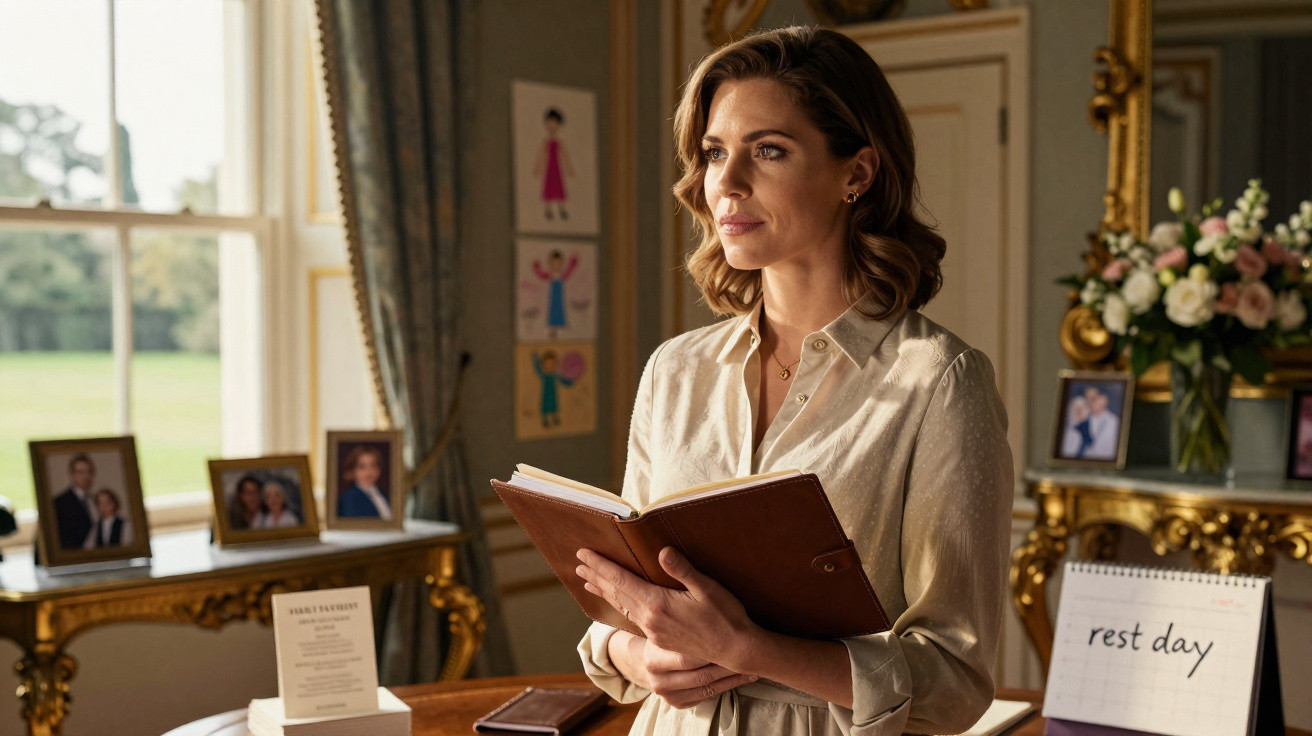
On a crisp, sunlit morning in Windsor, cameras picked up on a change that was easy to overlook. The Princess of Wales emerged from the car with her immaculate blow-dry and familiar polished smile, but her presence seemed altered. She appeared less rushed, less like someone mentally racing through an unseen to-do list. Instead, she looked like a woman who had firmly decided that certain doors would no longer be opened.
For years, Catherine was the royal who seemed unable to decline an invitation. Her diary was packed with consecutive engagements and constant travel, while school runs were fitted between charity visits and tiara-filled evening events. Then a health scare brought the whole routine to a halt.
Since that point, each public appearance has seemed to carry an unspoken message.
She has learnt her lesson.
The end of the ‘never say no’ Princess of Wales
People who followed Catherine before her illness will remember the speed at which she worked. She might attend three engagements in one day, heels striking gleaming floors, briefly consulting aides as she got into the car before heading immediately to another ribbon-cutting, speech or smiling photograph. She always appeared to be moving forwards, almost ahead of her own pace, as though trying to catch up with the diary.
Now, there is room around her when she attends an event. There is room in her timetable, her physical manner and the way she gives attention to those standing before her. Her engagements may be less frequent, but they feel more meaningful. Without needing to say it loudly, the message is clear: the Princess of Wales will not return to her former rhythm.
A royal aide reportedly summed up the difference through a simple comparison: “Before, we’d build the programme, then fit her into it. Now, we build the programme around her.” It may sound like a minor adjustment, but within the royal operation it represents a dramatic change.
Catherine’s former schedule could carry her through the day like an assembly line. A youth charity in the morning, veterans at lunchtime, then an evening under chandeliers in a gown. Travel, briefing, smiles, and repeat. Even supposedly “quiet” days involved calls, private appointments and planning meetings for the next tour.
Her staff now speak openly about “recovery windows” and “protected days”. Engagements are scheduled with gaps between them, allowing time for rest, treatment and, a word not traditionally embraced in royal circles, saying no.
There is a practical reason for this change that extends beyond headlines about her health. The monarchy has historically depended on visibility: additional walkabouts, visits and photographs, all demonstrating that the Crown is fulfilling its role. But that relentless cycle can wear down even the most committed person.
Catherine’s illness revealed something that had quietly been developing over many years. Her present role involves far more than opening buildings or cutting ribbons. It is long-term strategic work connected to early childhood, mental health, addiction and, increasingly, the emotional wellbeing of her own children. No one can be everywhere while doing everything. This time, it was the speed of the work that had to change, rather than the woman carrying it out.
A new royal rule: protect the centre, not the schedule
The change began with an uncompromising medical fact: listen to your body, or sooner or later it will make itself heard more forcefully. Doctors, family members and aides arrived at the same conclusion. For Catherine to be well not merely next month but in ten years’ time, the system itself needed to be different.
A quieter new approach therefore emerged. There would be fewer vast, draining engagements and more appearances that were carefully selected and thoroughly prepared. Rest days would be included before and after emotionally demanding visits. Overseas tours would be restricted while treatment and recovery continued. This is not a sign of weakness; it is a strategy.
Anyone returning to work after serious illness will understand the pull of doing too much too soon. You feel well for a week, begin agreeing to things again, watch the calendar fill, and before long find yourself back at the beginning. Senior royals are no less vulnerable to that pattern.
Behind palace doors, difficult lessons had been absorbed from earlier generations who carried on until collapse forced a decision upon them. Catherine’s revised approach appears strikingly modern for such an old institution. She may lead fewer events, but she spends more time working with specialists, studying briefings and developing projects designed to endure beyond a photo opportunity. Let’s be honest: nobody really does this every single day.
Her inner circle’s line is consistent: “She will come back, but she will not come back at the old pace.” That phrase has slipped into briefings, comments, quiet conversations with journalists. It’s less a warning, more a boundary.
- Time with her children will not be given up simply to plug gaps in the diary.
- Her health will not be regarded as an inconvenience to the rota.
- Projects will be selected for their impact rather than their optics.
- Her “off days” will be valued as highly as days spent in public.
This is the straightforward reality of royal life in 2026: the Princess of Wales is safeguarding the centre - her health, family and essential work - while allowing everything else to be organised around those priorities.
What Catherine’s new rhythm tells us about our own
There is a restrained acknowledgement in the way Catherine now goes about her days. She understands that the crisis has already taken place and that the warning has already been delivered. She does not need to demonstrate that she is “back” by overfilling her diary once more. Instead, the evidence lies in what she is prepared to turn down.
There may not be cameras waiting beyond your front door, but the cycle will be recognisable. You keep pushing until something gives, tell yourself that you will slow down, then gradually drift back into the same old pace. Seeing a future queen publicly claim a right to move more slowly resonates because it reflects what so many women, particularly mothers, are privately attempting to do.
There is also the difficult guilt attached to leaving the fast lane. Catherine will be familiar with that feeling: the wish to be present at the King’s major occasions, the sense of duty when charities seek her help, and the self-doubt prompted by headlines questioning her absence.
Many of us experience a smaller version of the same guilt. It can mean refusing extra hours, declining a “great opportunity” that would exhaust us, or opting for a calm evening rather than another social commitment. We have all faced that point when we realise that our former selves would have said yes - and then choose not to. That tiny rebellion is where a new pace is born.
One palace source described her mindset simply: “She is thinking in decades, not days.” That single sentence unlocks much of what we’re seeing.
- Thinking in decades means putting health before short-term visibility.
- Thinking in decades means embracing a smaller number of carefully selected projects.
- Thinking in decades means recognising periods of life when capacity is reduced.
- Thinking in decades means refusing to apologise for maintaining boundaries.
For Catherine, this means fewer walkabouts and more carefully considered interventions with significant impact. For everyone else, it could mean planning lighter weeks after demanding ones, or finally viewing rest as part of the work rather than a reward for completing it.
The lesson behind the palace gates
For all its splendour, the palace remains a workplace where people spend long days carrying expectations they did not create themselves. Catherine’s altered pace reveals something stark beneath the royal sheen: even at the very top, the old expectation of limitless productivity is beginning to fail.
She will continue to work. She will attend engagements, speak, listen and lend her public profile to causes that need support. What she will not do is accept another diary that disregards the boundaries of a recovering body and an involved mother. There is a calm determination in that choice which many women will understand.
This is not truly a story about a princess vanishing from public life. It is about an influential woman deciding what kind of visibility has value: the sort that shines intensely and briefly, or the sort that lasts long enough for her to watch her children grow up from the front row while still having the energy, in twenty years’ time, to care about the stories of strangers.
| Key point | Detail | Value for the reader |
|---|---|---|
| New pace of royal work | Catherine is reducing engagements and building recovery time into her schedule | Normalises stepping back from an unsustainable workload after illness |
| Boundaries as strategy | Fewer, deeper projects focused on long-term impact rather than constant visibility | Encourages readers to choose depth over speed in their own lives |
| Thinking in decades | Shifting from proving yourself daily to protecting health and family over years | Offers a mindset shift for anyone torn between ambition and wellbeing |
FAQ:
- Is the Princess of Wales reducing her workload permanently? All current signals from the palace suggest her old, high-intensity schedule will not return. The aim is a sustainable level of work that respects her ongoing recovery and family life.
- Does working less mean she is stepping back from royal duties? Not stepping back, but working differently. Her focus is shifting to fewer, more strategic projects that can have long-term impact rather than a constant stream of public appearances.
- Why is there so much emphasis on her pace of work? Because royal visibility is part of how the monarchy justifies itself. A change in rhythm from a senior royal signals a wider cultural shift inside the institution towards wellbeing and sustainability.
- How does this affect Prince George, Princess Charlotte and Prince Louis? It broadly means more consistent presence from their mother at home, and fewer periods where she is pulled away for long stretches of engagements or tours.
- What can ordinary people take from Catherine’s new approach? The reminder that health crises can be turning points, not just interruptions. Slowing down doesn’t have to mean giving up ambition – it can mean protecting it for the long run.






Comments
No comments yet. Be the first to comment!
Leave a Comment