
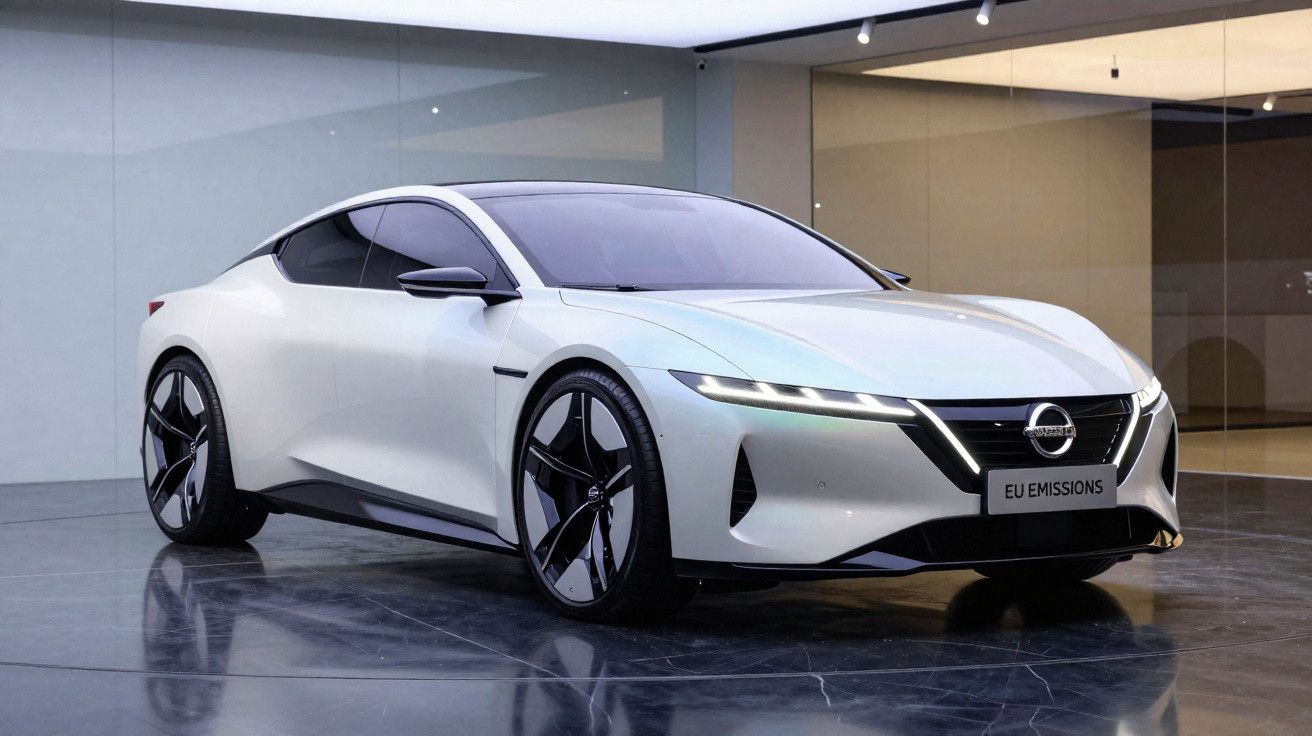
Nissan and BYD emissions pool
The European Union (EU) emissions targets for 2025–2027 are putting every car manufacturer under pressure, and Nissan is no exception.
To avoid fines for failing to comply, the Japanese manufacturer has decided - like many others - to pool its emissions with another car maker.
Unlike in previous years, when it joined the Renault Group and Mitsubishi, its Alliance partners, Nissan has now opted to join China’s BYD, according to a document revealed last week.
BYD is an easy choice to understand: the Chinese manufacturer sells only electric cars and plug-in hybrids in Europe, creating surplus carbon credits that can be traded. By August this year, BYD had sold 95,473 vehicles, with around 60% being electric models and the remainder plug-in hybrids.
“After a careful assessment of potential partners, BYD was selected because of its credit availability and overall competitiveness,” a Nissan spokesperson told Automotive News Europe. “This agreement allows us to move forward sustainably in our transition to zero emissions,” they concluded. The Nissan and BYD pool applies for the current year (2025).
Emissions targets
In March, the EU announced a change to the rules for calculating CO₂ emissions, giving manufacturers three years to meet the target. While the 93.6 g/km CO₂ (WLTP) average had initially needed to be achieved by the end of this year, it will now be assessed across the average for 2025, 2026 and 2027.
Even so, the target leaves several manufacturers at risk of non-compliance. We explain everything involved in episode 71 of Auto Radio:
Should they fail to comply, manufacturers must pay 95 euros for every vehicle and for each gram of CO₂ above the limit set by the EU. This is why an increasing number of car makers are seeking alliances.
According to ACEA (the European Automobile Manufacturers’ Association), fines resulting from emissions non-compliance - before the calculation rules were changed - could have reached 15 billion euros.
How emissions pools work
Emissions pools are a mechanism made available by the EU to help manufacturers meet their emissions targets and avoid substantial fines.
In practice, this allows a manufacturer at risk of non-compliance to join another that is not, so that the emissions of both can be calculated together.
Other emissions pools
In addition to Nissan and BYD, several other manufacturers have already announced emissions pools. In January, it emerged that Stellantis, Toyota, Ford, Subaru and Mazda intended to join Tesla. Mercedes-Benz also announced that it would join Volvo.
More recently, KG Mobility (formerly SsangYong) stated that it would pool with Chinese electric-vehicle manufacturer XPeng in order to comply with the emissions targets. Any future agreements between other brands must be finalised by 31 December 2025.
This is not the first time it has happened. Manufacturers also formed pools in 2020/2021 to comply with the targets in force at the time. The most notable case involved the former FCA (Fiat Chrysler Automobiles), which joined Tesla for its emissions calculations. The amount paid by the former to the latter helped fund the construction of Tesla’s factory in Germany.





Comments
No comments yet. Be the first to comment!
Leave a Comment