
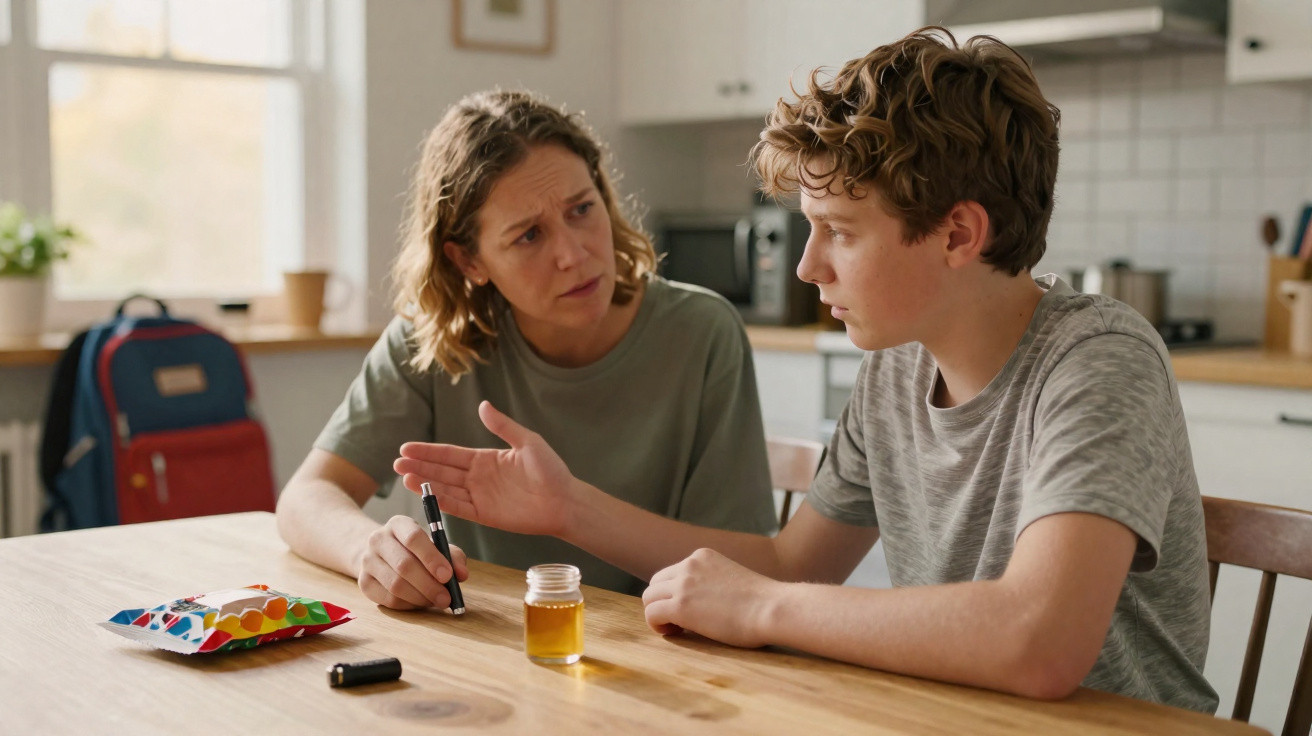
Eventually, most adults arrive at the point when they recognise that they have lost touch with people much younger than themselves.
A pop-culture reference may be what brings this home. For me, it happened in my late 20s, while I was working with teenagers in schools to support them in stopping smoking. When other drugs came up from time to time, I found that I did not understand some of the slang they used. Many people may now feel the same way when cannabis is discussed, particularly its newer and varied forms.
As a psychology professor, my research examines substance use among adolescents and young adults. One major development during my research career has been the legalisation of cannabis and the sharp growth in its availability throughout the US.
There are cases both for and against broader legal access to cannabis for adults in the US. Yet greater availability of legal cannabis may also bring unintended effects for adolescents. The growing strength of certain cannabis products adds to those concerns.
A changing cannabis landscape
I use the term 'cannabis' because it describes the plant from which these drugs originate. It is also a broad term for substances containing chemical compounds from cannabis plants, and avoids the concerns linked to the word marijuana, which has long-standing racist associations.
Cannabis is now sold in a much wider range of forms than in the past. For many people over 40, cannabis brings to mind dried material that is smoked. This type was not especially potent: cannabis seized by the Drug Enforcement Agency averaged a THC concentration of 4 percent in 1995, compared with roughly 15 percent in 2021.
Alongside smoked cannabis, some people may recall edible products, commonly baked into desserts such as brownies, or hashish, which is made from more potent parts of the cannabis plant.
Today, many cannabis concentrates contain high THC levels, usually between 40 percent and 70 percent and, in some instances, above 80 percent, depending on the extraction technique used.
They include oils that can be vaporised using vape or dab pens, wax-like materials and even powders.
How cannabis derivatives affect the brain
THC and cannabidiol, known as CBD, are the two most common chemicals in cannabis. They affect the brain differently and consequently produce different effects as experienced by users.
CBD does not cause the same "high" as THC. Cannabidiol may be useful as a medicine for severe epilepsy and may have other medical applications, although these have not yet been proven. THC and CBD differ because of the way they act on cannabinoid receptors - proteins in the brain and body to which these drugs bind.
However, CBD may also cause drowsiness, produce unintended changes in mood and upset the stomach. Never use a CBD product without consulting a physician.
The evolving forms of cannabis products
THC is the chemical most closely linked with the high produced by cannabis. Concentrated products, by raising the amount of THC, can cause THC blood levels to increase more quickly and more intensely than non-concentrated products, such as traditionally smoked cannabis.
Cannabis concentrates are available in numerous forms, from creamy or waxy substances to hard, brittle products. Their production methods vary and can involve dry ice, water or flammable solvents including butane.
The large number of names for cannabis concentrates can be difficult to follow. These include "budder," a yellowish paste resembling icing; "shatter," which is produced in a similar way to budder but has a thin, brittle and translucent form; "wax" or "crumble," which, confusingly, is not waxy and instead resembles a powdery or grainy material; and "keef" or "kief," a powdery substance taken from the cannabis plant's most potent parts. It is similar to hashish.
These terms change regularly and may differ between guides or individuals. Rather than pretending to know every term, it is better to ask what one means with openness and curiosity.
Many concentrates are vaporised and inhaled. Vaporising differs from smoking because it heats a concentrate until it turns into a gas that is inhaled. Smoking burns the compound to create an inhalable gas.
People who vaporise concentrates often refer to the practice as "dabbing." The name describes the dab of concentrate that is heated, vaporised and inhaled.
Cannabis concentrates can also be vaporised with a vape pen. Depending on local terminology, vape pens may also be called dab pens.
Cannabis use among adolescents
Young people may be attracted to these products because vaping or dabbing concentrated cannabis makes use easier to conceal. Vaping cannabis does not produce the usual smell associated with weed.
A 2021 systematic review reported that past-year cannabis vaping among adolescents almost doubled between 2017 and 2020, rising from 7.2 percent to 13.2 percent. A newer study across five north-eastern US states found that 12.8 percent of adolescents had vaped cannabis in the previous 30 days. This narrower timeframe suggests use may be increasing. In addition, a 2020 study found that one-third of adolescents who vape use cannabis concentrates.
Cannabis use by adolescents is concerning because it may change how their brains develop. Research indicates that the brains of adolescents who use cannabis are less ready to adapt in response to new experiences, an essential aspect of adolescent development. Adolescents who use cannabis are also more likely to have symptoms of schizophrenia, find school more difficult and take part in other risky behaviours.
Concentrates create even greater risks because of their high THC content. This applies to adolescents and adults alike, with increased risks of schizophrenia symptoms, including hallucinations and delusions, mental health symptoms and more severe cannabis use.
A useful comparison is alcohol. Most people understand that 355 ml of beer is far less potent than 355 ml of vodka. Smoked cannabis is more comparable to beer, whereas a concentrate is more like vodka. Neither is safe for an adolescent, but one presents still greater danger.
These risks make it critically important to speak with children early about cannabis and cannabis concentrates. Research repeatedly finds that when adults express disapproval of drug use, adolescents are less likely to begin using drugs.
Begin these discussions early - ideally before secondary school. Helpful online resources are available to support the conversation.
Although these discussions may feel uncomfortable and may make you seem like the out-of-touch adult, they can be an important step in preventing adolescents from using cannabis and other drugs.
Ty Schepis, Professor of Psychology, Texas State University
This article is republished from The Conversation under a Creative Commons licence. Read the original article.





Comments
No comments yet. Be the first to comment!
Leave a Comment