
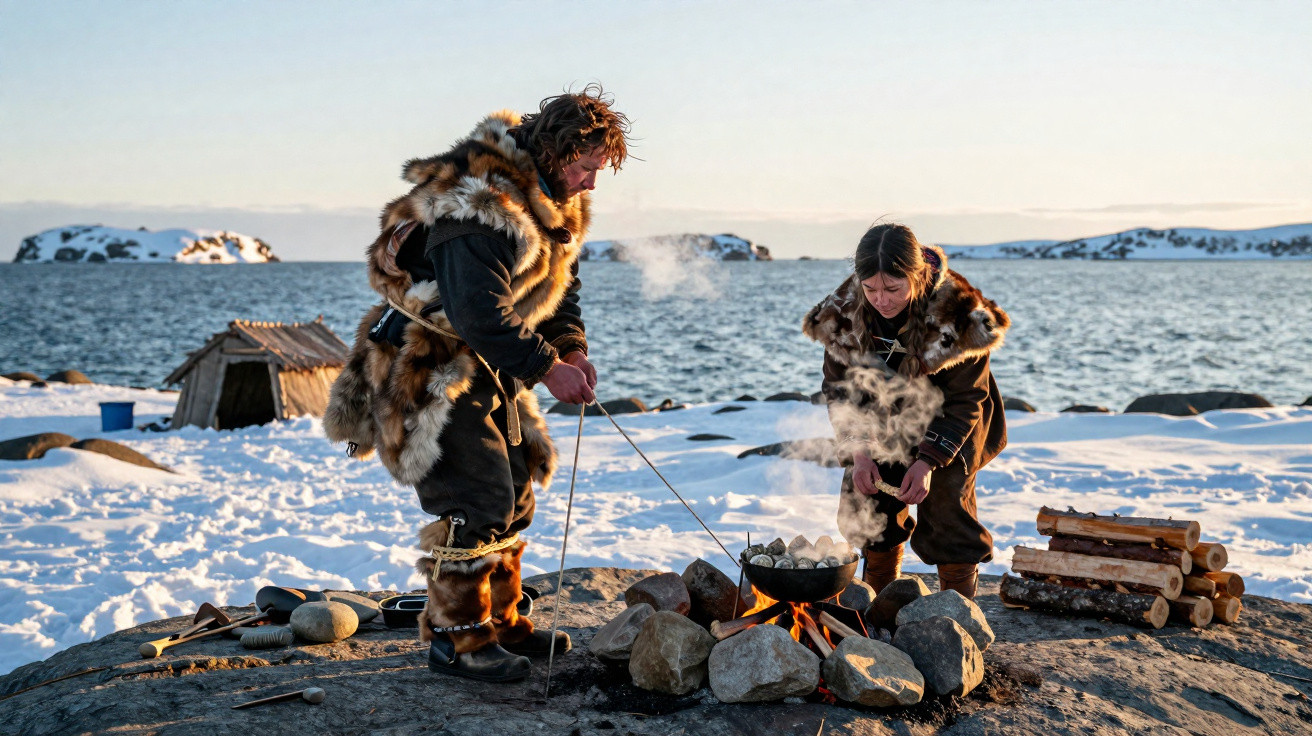
It is remarkable, on reflection, that humanity has endured at all.
Across the past several hundred thousand years, the world has transformed dramatically, at times in ways evolution might appear unable to match quickly enough.
Nevertheless, our species has proved exceptionally resilient, repeatedly discovering ways to withstand shifting conditions through culture, technology, and even genetic change.
Humans are continuing to evolve. New genetic research led by Yusuke Watanabe and Yoshiki Wakiyama at the University of Tokyo suggests that the genetic flexibility enabling us to flourish across the world today may also have aided our earlier successes.
The team examined the genomes of 42 Jomon hunter-gatherers from the Japanese archipelago and identified several genetic signals consistent with their far older ancestors having adapted to cold conditions.
"Our study provides one of the first paleogenomic frameworks for investigating ancient adaptations in Upper Paleolithic East Eurasians," the researchers write in a paper published in Science Advances, "revealing an evolutionary legacy from a colder past in present-day humans."
Jomon genomes preserve an ancient genetic archive
The Jomon culture occupied the Japanese archipelago between roughly 16,000 and 3,000 years ago, making it an especially valuable source of genetic evidence.
Its ancestral lineage is believed to have diverged from continental East Eurasian populations about 27,000 to 19,000 years ago, near the close of the last glacial period. Later isolation within the archipelago meant Jomon genomes retained genetic signals from this ancient lineage, for which other genomic evidence is limited.
The scientists sequenced DNA from the remains of 25 Jomon people dated to approximately 5,400 to 2,300 years ago. They then combined these data with 17 genomes previously published from locations throughout the Japanese archipelago.
Although this covers a considerable period, the Jomon maintained distinctive inherited genetic features from their much older forebears, producing what the researchers call a "genetic archive of Upper Paleolithic East Eurasia".
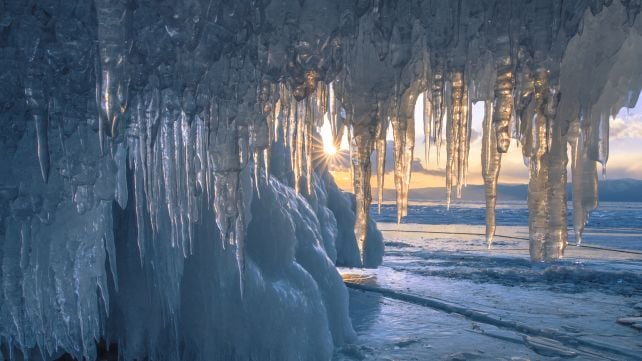
An estimated quarter of Earth's land area was covered by ice during the peak of the last glacial period. (Chalermkiat Seedokmai/Moment/Getty Images)
As ancient genomes are frequently damaged and incomplete, the team imputed the absent genetic data with a reference panel containing 9,290 present-day Japanese genomes. In other words, they used genetic information from living people to statistically reconstruct missing portions of the ancient genomes.
Armed with this dataset, Watanabe and colleagues compared the Jomon genomes with those of other groups, searching for signatures of positive natural selection: locations where certain gene variants seem to have been favoured and grown more common.
A number of these signals emerged, collectively pointing to a clear pattern.
Cold adaptation in Jomon hunter-gatherers
Several variants found in the Jomon concerned nonshivering thermogenesis: the technical term for keeping the body warm without shivering. This process occurs mainly in brown fat.
One variant previously connected experimentally with heat generation in brown fat had an allele frequency of about 73 percent among the Jomon, versus only 17 percent in present-day East Asians.
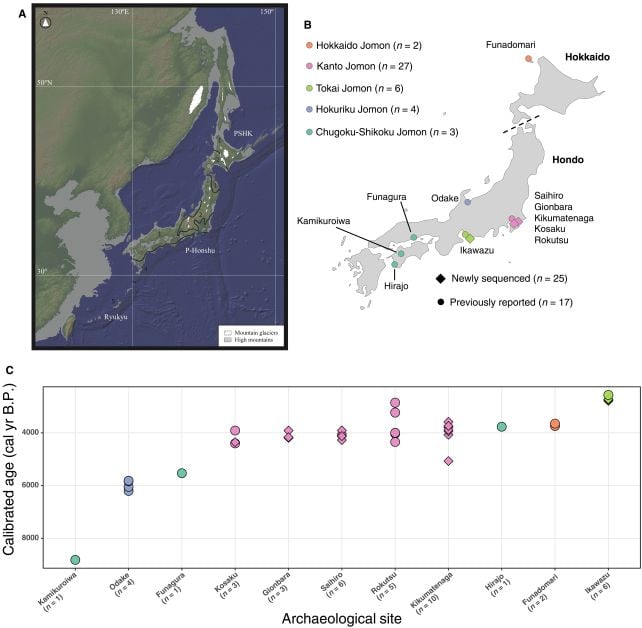
A map of the distribution of the 42 genomes in space and time. (Watanabe et al., *Sci. Adv., 2026)*
The team also identified signs of selection acting on gene variants linked to body mass and to the metabolism of fat circulating in the bloodstream.
This may seem counterintuitive: retaining additional fat can help maintain warmth, but fat can also be burnt by the body to produce heat, the researchers explain.
In combination, these adaptations may have enabled the body to store energy while making it more accessible to brown fat, which could burn it to create heat. This may in turn have made maintaining body temperature easier in freezing environments.
Notably, the Jomon were not alone in evolving in this way.
When the researchers investigated a genomic region connected with fatty-acid processing, they found that the Jomon were significantly more similar to Greenlandic Inuit than to present-day East Asian populations.
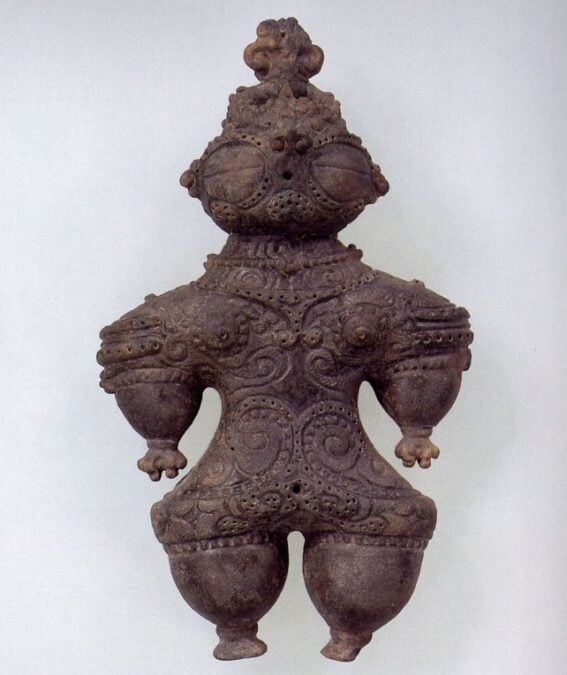
The Jomon left behind a rich material record, including elaborate pottery and distinctive clay figurines known as dogū. (Bigjap/Wikimedia Commons, CC BY-SA 3.0)
The researchers consider this an instance of convergent evolution, in which separate populations independently acquire similar adaptations when facing comparable environmental pressures.
Evidence for a gradual response to the Ice Age
Watanabe and colleagues argue that archaeological evidence supports this interpretation.
Early Jomon pottery contains evidence that aquatic resources formed an important dietary component. Both archaeological and genomic evidence indicate metabolic adaptations to a high-fat, high-protein diet in a cold setting, resembling those of the Inuit.
But how can genetic changes observed in considerably younger Jomon remains be followed back to the ice age?
Here, the researchers took advantage of the fact that Jomon genomes spanned several thousand years. Using the ages of the remains and their genetic relationships, they reconstructed changes over time in the frequency of one cold-adaptive variant.
Their results indicated that natural selection affected this variant more strongly in the last glacial period than in the period after glaciation.
Further evidence indicated that adaptation to cold did not occur in a single step. Some cold-linked variants already existed in populations related to the Jomon's more southern ancestors, whereas others became widespread specifically within the Jomon lineage.
The researchers consequently propose that cold adaptation developed incrementally, as further adaptations accumulated while Jomon ancestors travelled north into ever colder conditions.
Related: Human Evolution May Be Undergoing a Major Shift Right in Front of Our Eyes
The team stresses that many of its interpretations are still speculative. Reconstructing the physiology of people who lived thousands of years in the past is challenging, especially because their diets and environments differed so greatly from those of people alive today.
Even so, the results provide an insight into how natural selection may have enabled ancient humans to endure some of the most severe conditions encountered by our species.
"Our findings illuminate how ancient populations adapted to extreme environments, and how these adaptations may continue to shape present-day variation in health-related traits, highlighting the broader relevance of paleogenomics to human biology and public health," the researchers write.
The findings were published in Science Advances.
This article was fact-checked and edited by Peter Dockrill. Although we take pride in our process, we are only human. If you notice an error, please tell us.






Comments
No comments yet. Be the first to comment!
Leave a Comment