
The familiar claim that “history is written by the victors” is not invariably correct.
Even so, it can mean that accounts and family lines unfavourable to those who seize power – perhaps through questionable methods – disappear. The written records they sponsor may conveniently leave out the violent, Hollywood-worthy episodes of imperial and dynastic plotting.
A striking example has emerged: three previously unknown Assyrian kings have surfaced from cuneiform clay, revising a royal lineage thought complete for more than a century.
Assyriologists Alexander Johannes Edmonds of Germany’s University of Münster and Eckart Frahm of Yale University identified and described these overlooked Neo-Assyrian kings, who ruled between roughly 1000 and 609 BCE, in a recent examination of ancient cuneiform tablets.
The results, published in the Journal of Cuneiform Studies, “came as a surprise – no one expected there would be room for any new and unknown rulers during this time,” says Frahm.
“But as Edmonds and I demonstrate in our research, three such rulers have been hiding in the shadows, in some poorly preserved cuneiform documents published some time ago but not properly understood.”
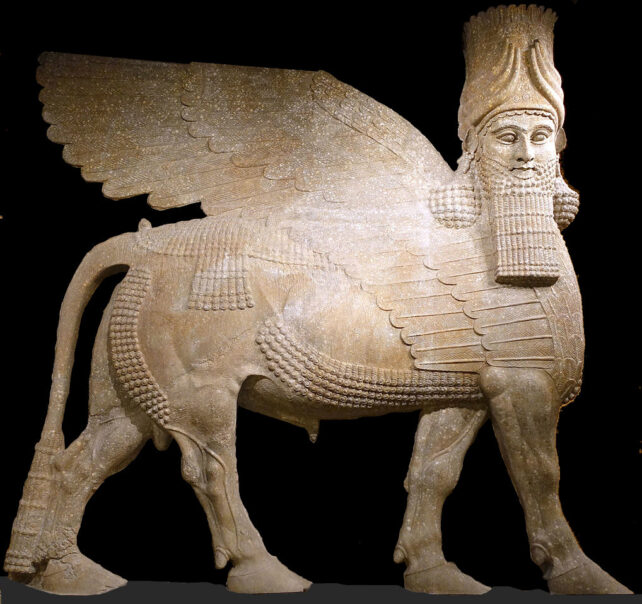
The protective deity known as a lamassu, often commissioned by Assyrian kings, guarded palaces and gateways. (TYalaA/Wikimedia Commons/CC BY-SA 4.0)
The three newly recognised Assyrian kings
The three rulers have several features in common.
All were enthroned at the Assyrian capital of Aššur (Ashur). Each may also have enjoyed substantial backing from Assyrian elites during a reign of under two years, before being overthrown and partly removed from the historical record.
The first newly identified monarch is Tiglath-pileser, whose reign from 763 to 762 BCE occurred in unusually rebellious circumstances.
The evidence is a badly damaged cuneiform tablet unearthed at Nineveh, published more than 125 years ago and previously studied by Frahm.
It documents a royal land grant and names Tiglath-pileser.
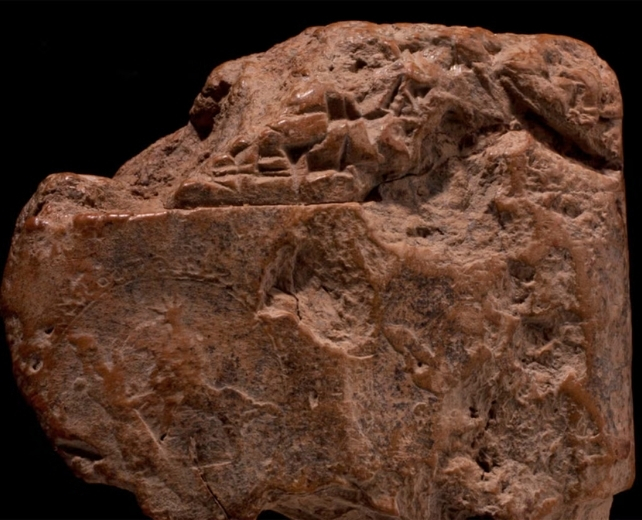
A poorly preserved tablet bearing the royal grant that helped reveal the first unknown king, Tiglath-pileser. (The British Museum and the Cuneiform Digital Library Initiative)
It had, however, been incorrectly attributed to Tiglath-pileser III, who ruled decades afterwards. By convention, many kings adopted the names of their most forcefully prominent predecessors.
A separate source reports an uprising in this period, preceded by a plague and a highly ominous eclipse. These events probably prompted Tiglath-pileser to revolt against and reign alongside his nephew Aššur-dān III, who occupied the ‘official’ throne.
The second king now recognised retrospectively, Shalmaneser, was sovereign from 747 to 745 BCE.
Having identified the first ruler, the researchers revisited further evidence, among it a disputed stela – an inscribed stone marker – found in Iraq in 1894.
The stela bears the name Shalmaneser, although the king’s name was overwritten by that of his successor, Tiglath-pileser III.
The obscure and brief rule of this Shalmaneser – another repeatedly used royal name – fits the turbulent period, marked by political instability, plotting vassals and nomadic raids.
Contemporary dating systems, combined with the rapid succession of monarchs, may have misled later scholars compiling accounts of royal reigns.
The last king, Aššur-uballiṭ, ruled only briefly between 913 and 912 BCE before he was usurped, defaced and erased from history.
One tablet recounts that he provided silver to restore a libation vessel containing premium beer, used to honour the national deity Aššur. It may have been refurbished to celebrate a rising Assyrian empire.
A ruined monument, perhaps a colossal statue depicting Aššur-uballiṭ, had its head removed and was stripped of its arms and royal symbols.
It was remade as a stela proclaiming the greatness of the usurping, illegitimate prince, who “had no interest in indicating that he had ascended to the throne under somewhat shady circumstances,” Frahm says.
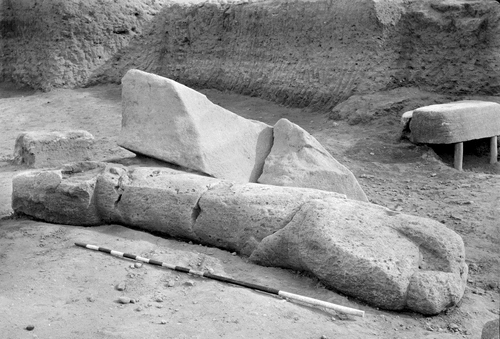
The stela concerned lies flat beneath the remains of a second stela. (Edmonds & Frahm, *J. Cuneif. Stud., 2026)*
What the Assyrian King List leaves out
The research shows that Neo-Assyrian history was less orderly than the unequivocally titled Assyrian King List suggests.
Created by ancient Assyrians using their own historical materials, the list presents a sequence of peaceful, orderly transfers of power from fathers to sons.
Related: ‘Barbarians’ Have Been Misunderstood For Centuries, Researchers Explain
As Frahm explains, “the Assyrian King List seems to provide an idealized version of Assyrian kingship in which all unrest, everything unstable, is essentially erased from the record.”
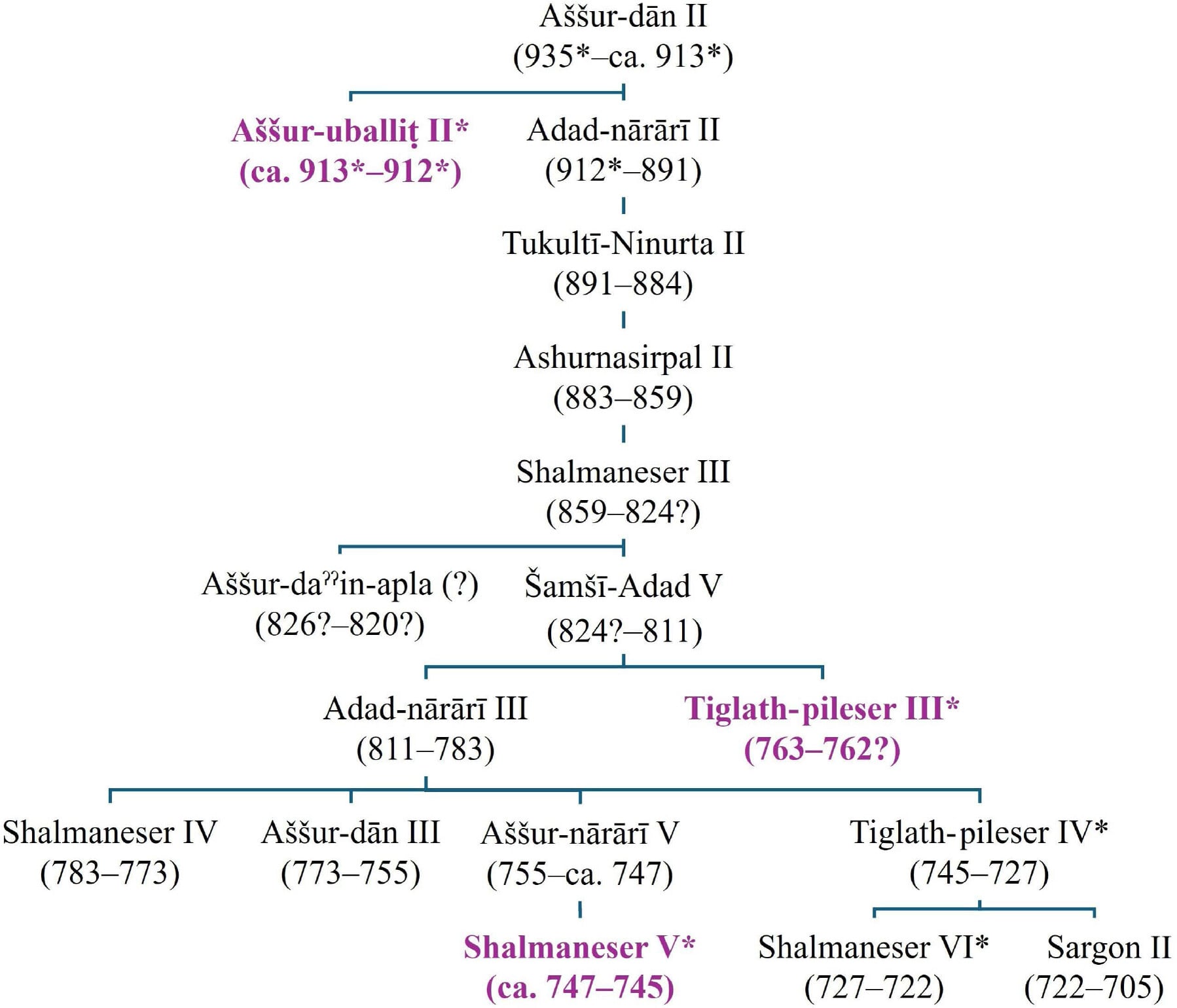
The royal timeline, revised by Edmonds to include the newly recognised kings. (Edmonds & Frahm, *J. Cuneif. Stud., 2026)*
Lastly, the study draws attention to history’s cyclical character.
“The result of all this – pandemic, climate change, succession crises, and even, for good measure, a solar eclipse and the rise of a new class of oligarchs – was not political collapse but Assyria's transformation into a predatory empire of proportions unseen before,” Frahm concludes.
“A scenario that resonates in some respects with global events of our own times.”
This research appeared in the Journal of Cuneiform Studies.
This article was fact-checked by Rachel Garner and edited by Rebecca Dyer. Although we take pride in our process, we are only human. If you notice an error, please let us know.






Comments
No comments yet. Be the first to comment!
Leave a Comment