
Plastic is found in our clothing, cars, mobile phones, water bottles and food containers. However, recent research is adding to mounting worries about the effect that tiny plastic particles may have on human health.
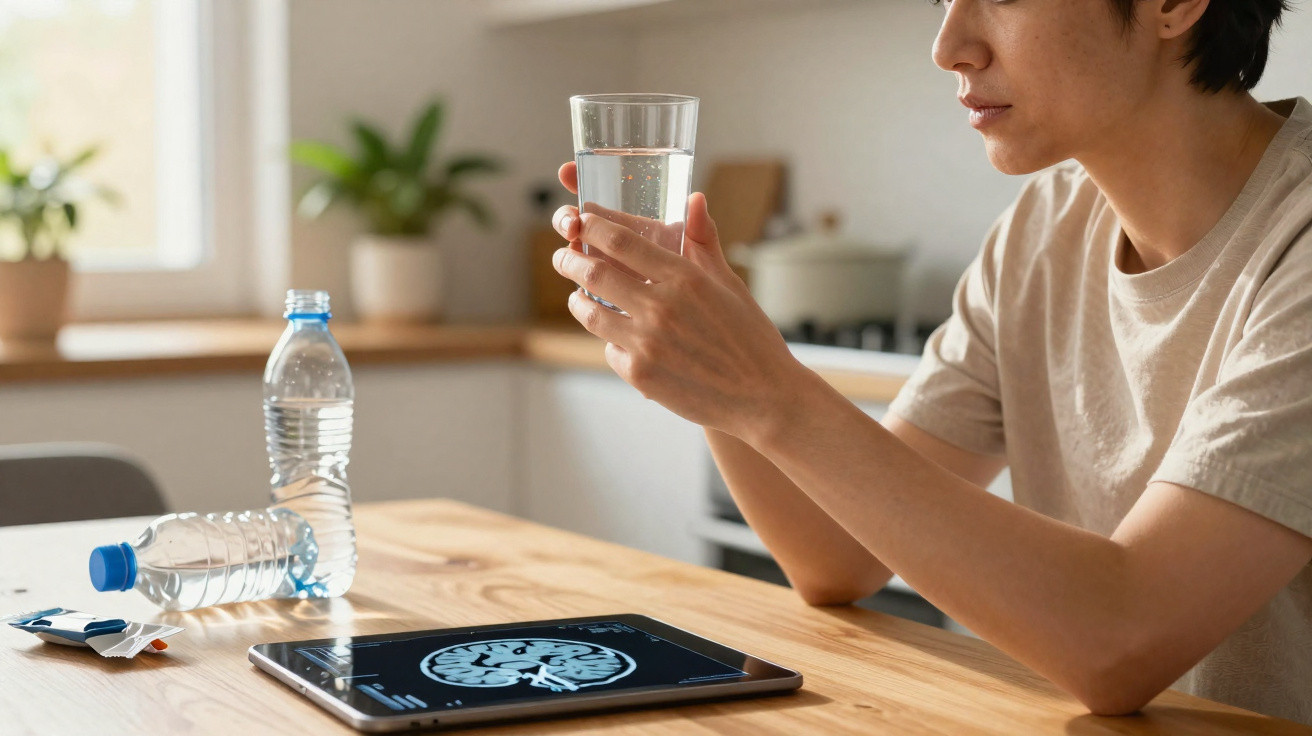
For the first time, a United States study has detected microplastics in human brains. The research has not yet been independently confirmed by other scientists, but media reports have labelled the findings scary, shocking and alarming.
So, what are microplastics? What could they mean for our health, and should we be worried?
What are microplastics? Can you see them?
Plastic products are often thought of as indestructible, yet they eventually fragment into smaller pieces. Although definitions differ, microplastics are generally considered to be particles measuring less than five millimetres.
Some are therefore too small to detect with the naked eye. As a result, many images used by the media in articles about microplastics can be misleading, because they depict far larger pieces that are plainly visible.
Microplastics have been identified in numerous drinking-water sources and commonly eaten foods. This means our diet exposes us to them continually.
This extensive and chronic, or long-term, exposure makes microplastics a potentially important issue for human health. Research into the possible health risks they present remains limited, although the evidence base is expanding.
What did the latest microplastics study find?
The study assessed microplastic concentrations in 51 samples from men and women collected during routine autopsies in Albuquerque, New Mexico. The samples came from the liver, kidneys and brain.
Because these particles are so small, they are challenging to examine even using powerful microscopes. Instead of attempting to view them directly, researchers are increasingly using sophisticated instruments that determine the chemical makeup of microplastics within a sample. This was the method used in the study.
The researchers were surprised to detect up to 30 times more microplastics in brain samples than in samples from the liver and kidneys.
They suggested this might result from the brain’s high blood flow, which could carry plastic particles into it. Another possibility is that the liver and kidneys are better equipped to manage external toxins and particles. The brain also undergoes less cellular renewal than other body organs, which may allow plastics to remain there for longer.
The team additionally found that the quantity of plastic in brain samples rose by roughly 50% between 2016 and 2024. This could reflect increasing plastic pollution in the environment and greater human exposure.
Most microplastics detected in the study consisted of polyethylene. It is the world’s most widely manufactured plastic and is used in many everyday items, including bottle caps and plastic bags.
This is the first report of microplastics being identified in human brains, making it significant. However, the study is a "pre-print", meaning that independent microplastics researchers have not yet reviewed or validated it.
How do microplastics reach the brain?
Microplastics commonly enter the body through polluted food and water. They may disturb the gut microbiome, the community of microbes living in the gut, and trigger inflammation. Through the immune system and the complex two-way communication network connecting the gut and brain, this can affect the entire body. This gut-brain axis is involved in many areas of health and disease.
Airborne microplastics can also be inhaled. After entering the gut or lungs, these particles may pass into the bloodstream, enabling them to travel throughout the body and into different organs.
Research has identified microplastics in human faeces, joints, livers, reproductive organs, blood, blood vessels and hearts.
They have also been found to move into the brains of wild fish. Studies in mice show that ingested microplastics can be absorbed from the gut into the blood, enter the brain and become trapped in other organs along the way.
To enter brain tissue, microplastics need to pass through the blood-brain barrier, a complex cellular layer intended to prevent substances in the blood from reaching the brain.
While this is worrying, it is not unexpected. Microplastics must pass through comparable cellular barriers to enter urine, the testes and the placenta, all of which are places where they have already been detected in humans.
Are microplastics in the brain a health concern?
The effects of microplastics in the human brain are still unknown. Some laboratory studies indicate that they may increase inflammation and cell damage in the brain, alter gene expression and change brain structure.
Beyond the possible effects of the particles themselves, microplastics could create further risks by transporting environmental toxins or bacteria into and around the body.
Chemicals from plastics may also leach from microplastics into the body. These include the well-known hormone-disrupting chemicals called BPAs.
However, microplastics and their effects are difficult to investigate. Their tiny size is only one issue: the environment contains many different kinds of plastic. More than 13,000 chemicals have been identified in plastic products, and additional ones are developed every year.
Microplastics are also altered by environmental weathering and digestion, processes that are difficult to replicate in laboratory settings.
One aim of our research is to establish how these factors affect the behaviour of microplastics in the body. We intend to examine whether strengthening the gut barrier through diet or probiotics can stop microplastics being taken up from the gut into the bloodstream. This could effectively prevent particles from circulating through the body and becoming lodged in organs.
How can I minimise my exposure?
Microplastics are widespread throughout the environment, so avoiding exposure is difficult. We are only beginning to understand the ways in which they may influence our health.
Until stronger scientific evidence is available, the best approach is to reduce exposure to plastics where possible and generate less plastic waste, so that less reaches the environment.
A straightforward starting point is to avoid food and drink sold in single-use plastic packaging or reheated in plastic containers. We can also reduce exposure to synthetic fibres in our homes and clothing.
Sarah Hellewell, Senior Research Fellow, The Perron Institute for Neurological and Translational Science, and Research Fellow, Faculty of Health Sciences, Curtin University; Anastazja Gorecki, Teaching & Research Scholar, School of Health Sciences, University of Notre Dame Australia, and Charlotte Sofield, PhD Candidate, studying microplastics and gut/brain health, University of Notre Dame Australia
This article is republished from The Conversation under a Creative Commons licence. Read the original article.






Comments
No comments yet. Be the first to comment!
Leave a Comment