
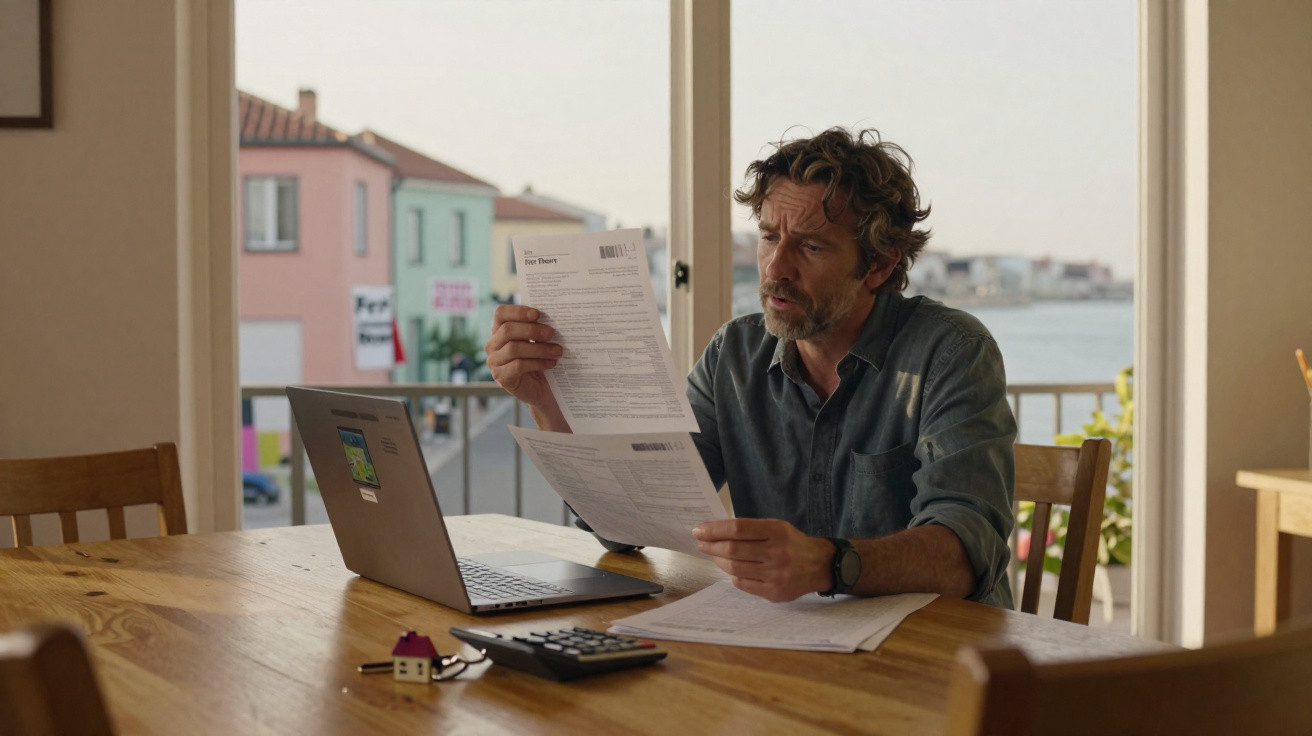
The post is sitting on the kitchen table, between an abandoned mug and the keys to the holiday home. Many owners know this brief moment of uncertainty: the second home has not changed, its shutters are still blue and the view is identical… yet the residence tax bill may have moved in a very different direction. In some communes, a locally approved surcharge can increase the bill by anything from 5% to 60%. Paris led the way with the maximum rise, and other tourist destinations or areas with acute housing pressure are following suit. The dream of having a place away from home can suddenly become far more expensive. Yours may be affected.
Why some towns are sharply increasing tax on second homes
Residence tax has been abolished for main homes, but it still applies to properties used only occasionally. In communes located in high-pressure areas, local elected representatives may impose a surcharge of between 5% and 60% on the residence tax for second homes. The aim is straightforward: to return homes to the market in places where local people struggle to find somewhere to live all year round. In town-centre streets, entire buildings can sometimes have their windows shuttered for ten months out of twelve, while long-term rentals become increasingly scarce. This measure is intended to address that imbalance, which is often highly visible locally.
Paris has become the most prominent example. From 2024, the capital introduced a 60% increase, the highest level permitted by law. For an owner whose residence tax previously came to €1,000, the surcharge alone can therefore add €600, excluding any additional taxes. Other communes may opt for a more limited increase of 10%, 20%, 30% or 50%. The final amount is determined by the property's cadastral rental value and the rates approved locally. As a result, two similar flats just a few kilometres apart can produce very different tax notices.
The scheme applies to towns within continuously urbanised areas of more than 50,000 inhabitants where there is a significant imbalance between housing supply and demand. The list has expanded in recent years and now includes many coastal communes, major urban areas and tourist regions. However, eligibility does not mean that a commune automatically applies the maximum surcharge: it must approve it through a formal resolution. There are therefore two lists to watch: the communes allowed to introduce the surcharge, and the towns that have actually decided to use it. That is where the unexpected cost can arise.
How to check whether your commune levies a second-home surcharge
The most practical first step is to examine your latest residence tax notice. A separate entry may refer to a “second-home surcharge” or to an additional charge for furnished accommodation not used as a main residence. If the document is unclear, the tax website, your personal tax account or the public finance office can confirm why the amount has been charged. It is also worth reading the municipal council resolutions, which are often published on the town hall's website. A decision approved in the autumn can have a very real impact on the notice received the following year.
Many owners only notice the increase when the payment deadline is approaching. That is understandable: a second home may be used for only a few weekends, inherited, or jointly owned by brothers and sisters, while administration takes a back seat. Let us be honest: nobody spends their holiday reading every municipal council resolution. Even so, checking the declared status of the property can prevent mistakes. A home occupied as a main residence, even for part of the year, must not be declared in the same way as a pied-à-terre used solely for leisure stays.
There are also circumstances in which an exemption or tax reduction may be requested, particularly where the owner is required to live elsewhere on a long-term basis for work or health reasons and cannot occupy the property. The criteria are strict, and supporting evidence matters.
“A surcharge is not an unavoidable administrative outcome: it must reflect the actual circumstances of both the property and the taxpayer.”
- Check the address and declared use of the property in your personal tax account.
- Compare the notice you have received with the previous year's notice, item by item.
- Read the municipal resolution that sets the surcharge rate.
- Submit a claim within the applicable deadline if your circumstances have been assessed incorrectly.
Second-home tax and the housing crisis
Behind the percentages lies a less abstract reality: in some towns, residents spend months searching for a flat while thousands of homes are occupied for only a few weeks each year. Local representatives view the surcharge as a means of applying pressure, although its effectiveness remains debated. Some owners will accept the increase in order to retain a family home. Others may consider letting it on a long-term basis, selling it or changing how it is used. Each commune sets its own approach, according to its needs, its electorate and the housing pressure felt day to day.
The issue does not concern only well-off households. It may involve a small inherited coastal house, a studio flat kept near a child at university, or a retirement flat bought before prices soared: the circumstances vary widely. That is also why the subject is so sensitive. A 60% surcharge may seem justified to some in neighbourhoods crowded with empty furnished properties; it may feel harsh to people already managing a mortgage, renovation work or complicated family co-ownership. The balance between tackling shortages and attachment to a place remains fragile.
Before assuming the worst, it is better to check the figures, the precise commune and the local decision currently in force. Rates can change from one year to the next, as can the map of high-pressure areas. Speaking to neighbours, calling the town hall or comparing tax notices will often clarify what has genuinely changed. A second home is no longer simply a weekend retreat: in several areas, it has become a very tangible issue in local politics.
| Key point | Detail | Value for the reader |
|---|---|---|
| Possible surcharge | From 5% to 60% of residence tax on second homes | Quickly assess the risk of an increase |
| Communes affected | Communes in high-pressure areas that have approved a formal resolution | Avoid assuming every town applies the same rate |
| Useful response | Check the notice, the property's status and any possible appeals | Do not pay an unjustified surcharge without challenging it |





Comments
No comments yet. Be the first to comment!
Leave a Comment