
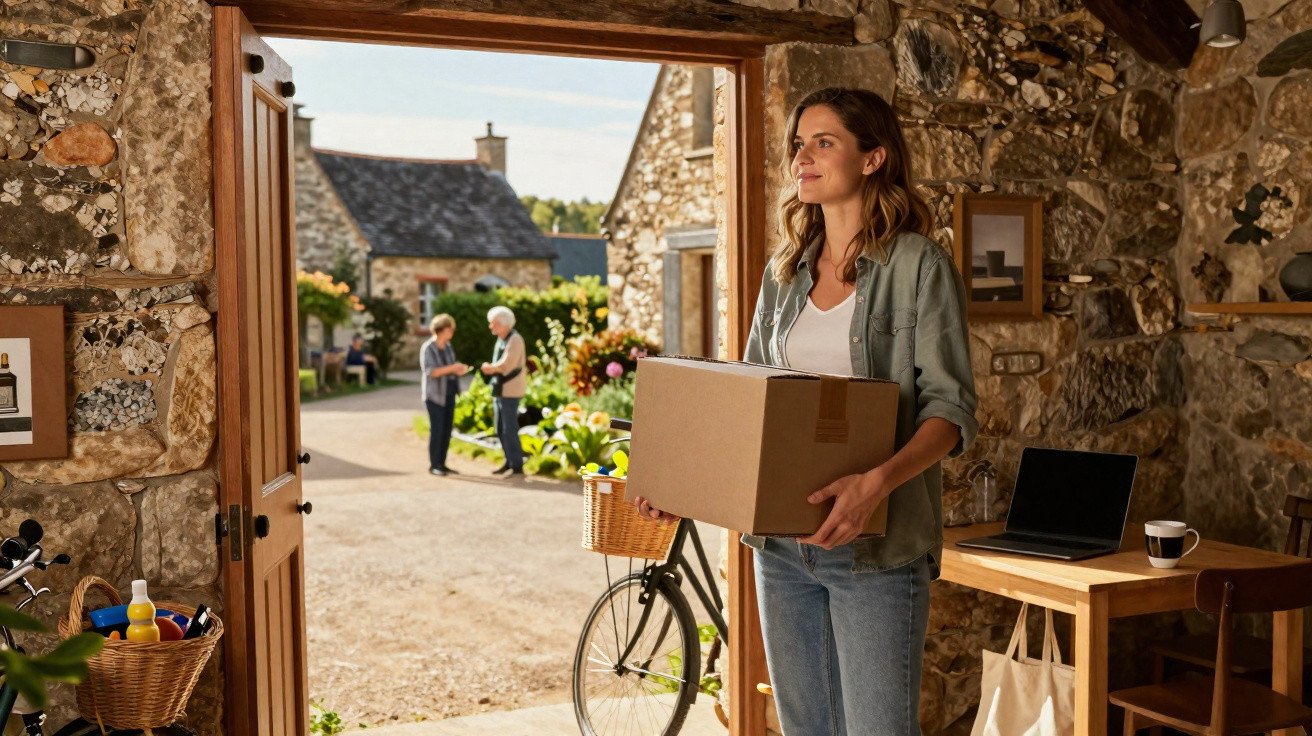
At 27, Léa decided to leave the bustle of city life for a tiny parish, where everyday reference points quickly shift.
The decision may seem surprising at a time when major cities still draw people in for study, work and social life. Léa, however, took the opposite route. Having spent several years in the city, she moved to a village with just 80 residents. It was a dramatic change of scenery, but also a new way of arranging her time, relationships and spending.
A carefully considered decision away from the noise
Leaving a city means more than simply changing address. For Léa, it involved giving up a number of everyday habits: having a coffee on a terrace at any time, shopping without planning ahead, going to the cinema on impulse, or meeting friends a few public transport stops away.
City life gave her a great deal, but it also demanded a lot of energy. Commuting, constant noise, high rents and the feeling of always rushing eventually became burdensome. In her new village, her days are less broken up. Distances are measured in kilometres of road rather than Underground stops.
“In a parish of 80 residents, peace and quiet is not the promise of a holiday: it becomes the ordinary setting of daily life.”
Léa has had to learn to plan in advance. Forgetting an item on a shopping list cannot always be solved by popping down the street. She may need to drive, check the opening times of the nearest shop or wait for the next market day. While this pace might put off some city dwellers, it has now become part of her balance.
Living in a village also means being noticed
In a small parish, anonymity quickly fades away. Newcomers are seen, greeted and often asked questions out of curiosity. Léa realised this within her first few weeks. Encounters happen by the letterbox, on a walk, along a lane or at an event held in the neighbouring parish.
This closeness can be reassuring. If someone is unexpectedly absent, has car trouble or needs occasional support, a neighbour may be more likely to offer help. It can also take time to adjust to. People know one another’s routines, notice changes of vehicle, ongoing building work or the arrival of a new pet at a house.
Relationships built differently in Léa’s village of 80 residents
Léa is not trying to recreate her previous life exactly. In a village of 80 residents, connections may form more slowly, yet they can be more practical. People help one another, swap useful information and meet through local activities, sometimes in a parish a few kilometres away.
- taking part in a village fête or a community meal;
- visiting the weekly market nearby;
- joining a sports, cultural or walking club;
- offering help to neighbours or asking them for advice;
- getting to know local producers and craftspeople.
This local network matters greatly to people who arrive on their own. It does not replace long-standing friends, but it helps prevent isolation. Interactions are also more direct. A neighbour is not merely someone encountered in a block’s corridor: they may be the person who lends a tool, keeps an eye on a house while someone is away or recommends the right garage.
The budget changes, but not every expense disappears
Moving to a rural area is often motivated by housing costs. Depending on the area, it may be possible to find a larger home or outdoor space for less than the cost of a city flat. That difference can provide breathing room for a life project, especially for young professionals.
However, the calculation does not end with rent or the purchase price. A car often becomes essential. Fuel, insurance, servicing, tyres and, in some households, a second vehicle all need to be budgeted for. Journeys to work, healthcare appointments and shops can place a considerable strain on monthly finances.
“Cheaper housing does not necessarily mean a less expensive life: the kilometres travelled become an expense in their own right.”
For Léa, organisation has therefore become central. Combining shopping trips, planning appointments and avoiding unnecessary journeys help to keep costs down. This lifestyle also encourages certain habits: cooking more, keeping a stock of basic supplies, repairing rather than replacing, and using outdoor space when the season allows.
Remote working: a useful option, but not a universal answer
Remote working has made this kind of move more realistic for some employees. Working from home can cut travel and make it possible to live far from large urban areas. Léa still needs a reliable connection, a quiet workspace and a clear division between her working hours and personal life.
In rural areas, mobile and internet network quality remains a practical point to check before moving. Coverage can differ greatly between villages, and sometimes even from one street to the next. A viewing is not always enough: it is better to test the mobile signal inside the house, ask about fibre broadband and speak to residents about how they deal with any outages.
Questions to ask before leaving
- How long does it take to reach work, a GP and the shops?
- Are there a school, school transport or family services?
- Is the internet coverage sufficient for working from home?
- What budget should be set aside for a car and regular travel?
- Where can you meet people once the first few days have passed?
A slower daily life, without standing still
The countryside is not an unchanging postcard. It comes with very real constraints: reduced opening hours, services that are far away, reliance on a car and, at times, difficult access to healthcare. Winter can heighten the sense of distance, especially when darkness falls early and the roads become quiet.
In return, Léa benefits from a calmer environment. Her days have regained a sense of continuity. Morning silence, the paths around the village and the chance to live with more space have taken on particular value after years in a densely populated city.
This choice also requires remaining alert to isolation. Keeping in touch with loved ones, arranging outings and not waiting until things are difficult before asking for help all remain useful. Life in a very small village is particularly suited to those willing to take at least some part in local life, without expecting every urban service to be only a few minutes away.
For Léa, this move does not feel like an escape. Instead, it is more of an adjustment. At 27, she has wagered that a village of 80 residents can offer more than simple quiet: a more deliberately chosen pace, more visible relationships and a daily life that requires her to slow down.




Comments
No comments yet. Be the first to comment!
Leave a Comment