
+ ADD ZONA MILITAR TO YOUR FEED
Why add us? Get the latest from Zona Militar in your Google feed.
Join our official WhatsApp channel and receive the news as it happens.
While the arrival of the F-16AM/BM under the Peace Condor programme has drawn much of the attention surrounding the recovery of Argentine Air Force capabilities, other systems essential to the institution’s day-to-day operation and development face an uncertain present and future. Among them is the TC-12B Huron fleet, whose situation once again highlights the difficulties caused by acquisition programmes that did not properly account for long-term sustainment.
👉 Read more: Navantia UK has laid the keel of the first of the Royal Fleet Auxiliary’s new logistics vessels
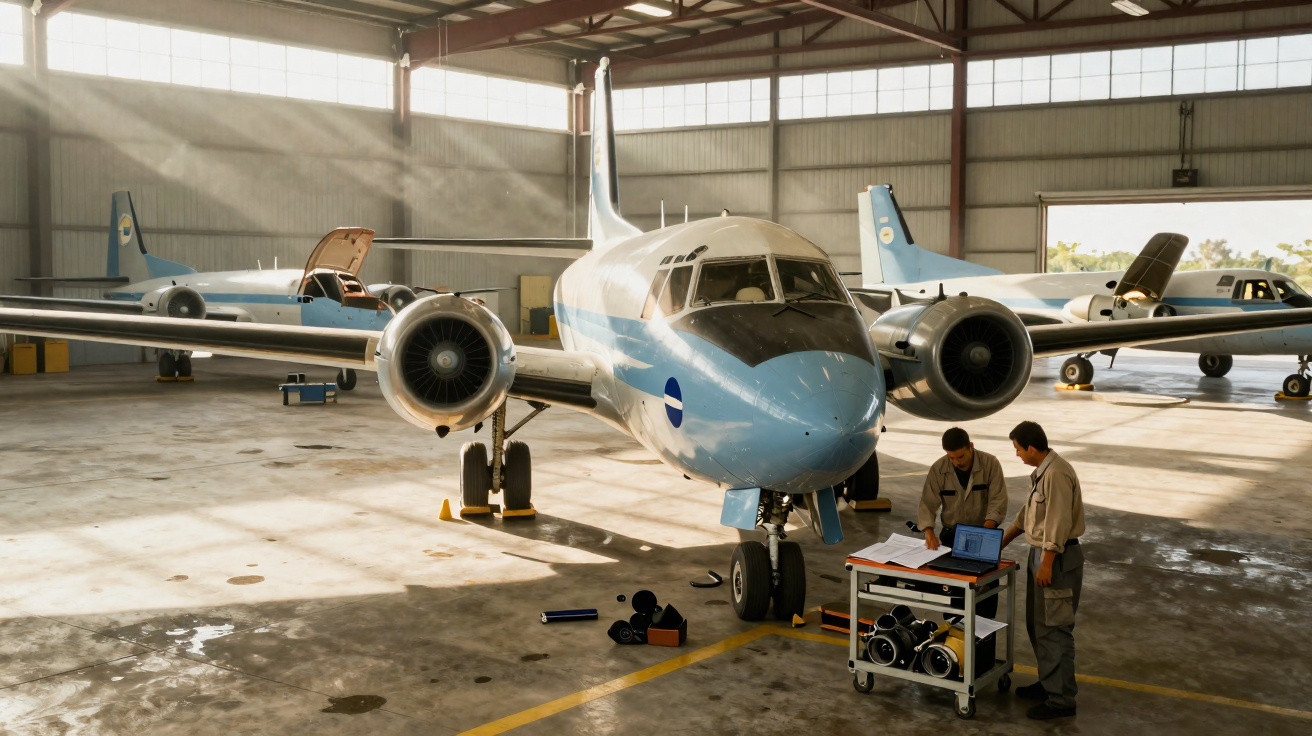
TC-12B Huron and Argentine Air Force transport capability
The TC-12B Huron was acquired to reinforce light transport and liaison capabilities, while also supporting the training of transport-specialist pilots. Its introduction was also intended to gradually restore a capability that had suffered major losses, particularly after the withdrawal of the IA-50 Guaraní II and, later, the Aerocommander 500U.
The programme was also designed to re-establish liaison capability between the various air brigades. In this way, the Huron could support an arrangement under which units would once again have their own assets to meet operational requirements, partly reviving an approach that had characterised the Argentine Air Force at earlier stages.
📌 You may be interested in:
- The Government reallocated more than US$ 140 million in funding to the Ministry of Defence and the Armed Forces
- British aircraft carrier HMS Queen Elizabeth returns to service to lead a three-month deployment in Northern Europe
Sustainment issues affecting the Huron fleet
However, the results fell short of initial expectations. According to information gathered at the time, the Hurons were received in a condition that involved significant difficulties, while the supply of spare parts and the lack of an adequate logistics support framework became some of the main obstacles from the outset to maintaining availability in line with anticipated requirements.
These problems had already been identified. In 2023, Zona Militar reported the operational issues affecting the system, including the absence of a logistics support arrangement capable of ensuring the supply of components needed for the relevant inspections and maintenance work. This particularly affected one of the principal roles envisaged for the Hurons: training new pilots.
In this respect, the issue was especially significant because the TC-12Bs were expected to progressively replace the DHC-6 Twin Otters on the Transport Pilot Course (CEPAT), allowing the latter to be principally reserved for Líneas Aéreas del Estado (LADE) operations in Patagonia. The Hurons’ limited availability, however, ultimately restricted the achievement of that objective and required a reassessment of how the available aircraft were used.
Six TC-12B Huron aircraft and an uncertain future
Despite these challenges, the acquisition process continued until the Argentine Air Force had received six aircraft, out of the twelve originally planned. Once the delivery of the aircraft had concluded, the TC-12B Hurons were concentrated at II Air Brigade, based in Paraná, where the system was intended to take on a central role in training transport pilots and restoring the institution’s liaison capabilities.
The core issue, however, is not solely that the Argentine Air Force received only half the aircraft initially envisaged, but also its actual ability to sustain those that were acquired. Experience to date shows that obtaining platforms without simultaneously ensuring the availability of spare parts, maintenance and an appropriate logistics structure can turn a programme intended to restore capabilities into a system with limited availability.
The matter is even more relevant given that the Huron acquisition had been presented as part of the Argentine Air Force’s transport aviation recovery process. Yet the lack of certainty over their sustainment, together with the condition in which the aircraft were received, ultimately constrained the availability of a system meant to meet specific needs and free up other assets for their respective missions.
Under these circumstances, the Argentine Air Force will have to reassess the future of the Transport School and the availability of assets intended for liaison between its various units. Ultimately, the TC-12B Huron situation is another warning that acquisition programmes must consider not only the arrival of equipment, but also strategic planning that ensures its sustainment throughout its operational life, preventing the restoration of a capability from once again being limited by a lack of foresight.
Photographs used for illustrative purposes.
Comments
No comments yet. Be the first to comment!
Leave a Comment