
[+ Add Zona Militar to Google]
Why add us? Get the latest from Zona Militar in your Google feed.
[Join the WhatsApp channel]
Join our official WhatsApp channel and receive the news immediately.
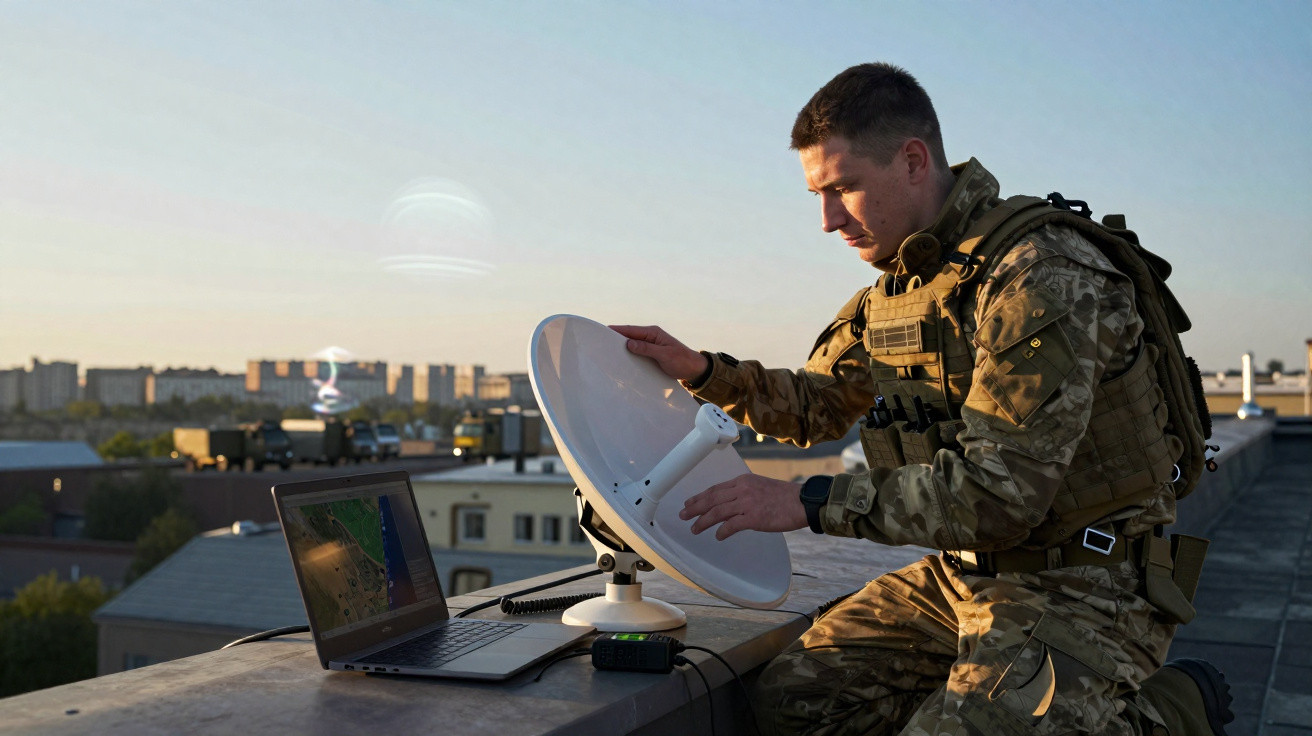
Industry sources have told state media that Russia has begun mass production of its new electronic warfare system, specifically developed to disrupt and counter Ukraine’s use of the Starlink satellite network. Currently known as Volna Kupol Garant, the system’s large-scale introduction and longer-term effectiveness remain uncertain. Nevertheless, it represents a significant Moscow initiative to deny Kyiv one of the principal tools that has enabled it to conduct long-range strikes inside Russian territory.
👉 Read more: Navantia UK lays the keel of the first of the Royal Fleet Auxiliary’s new UK logistics vessels
Citing some of the statements made by those sources to the Russian outlet TASS: “The Volna Kupol Garant system has proven effective, and we have begun producing and deploying it on a larger scale. Quantity has now turned into quality, and we have virtually blocked Starlink airspace wherever we needed to (...) Today, Volna has become a factor affecting not only the special military operation zone, but also has global influence.” The source added that, in its view, this amounts to a “devastating blow” to Ukrainian forces.
How Russia’s Volna Kupol Garant works
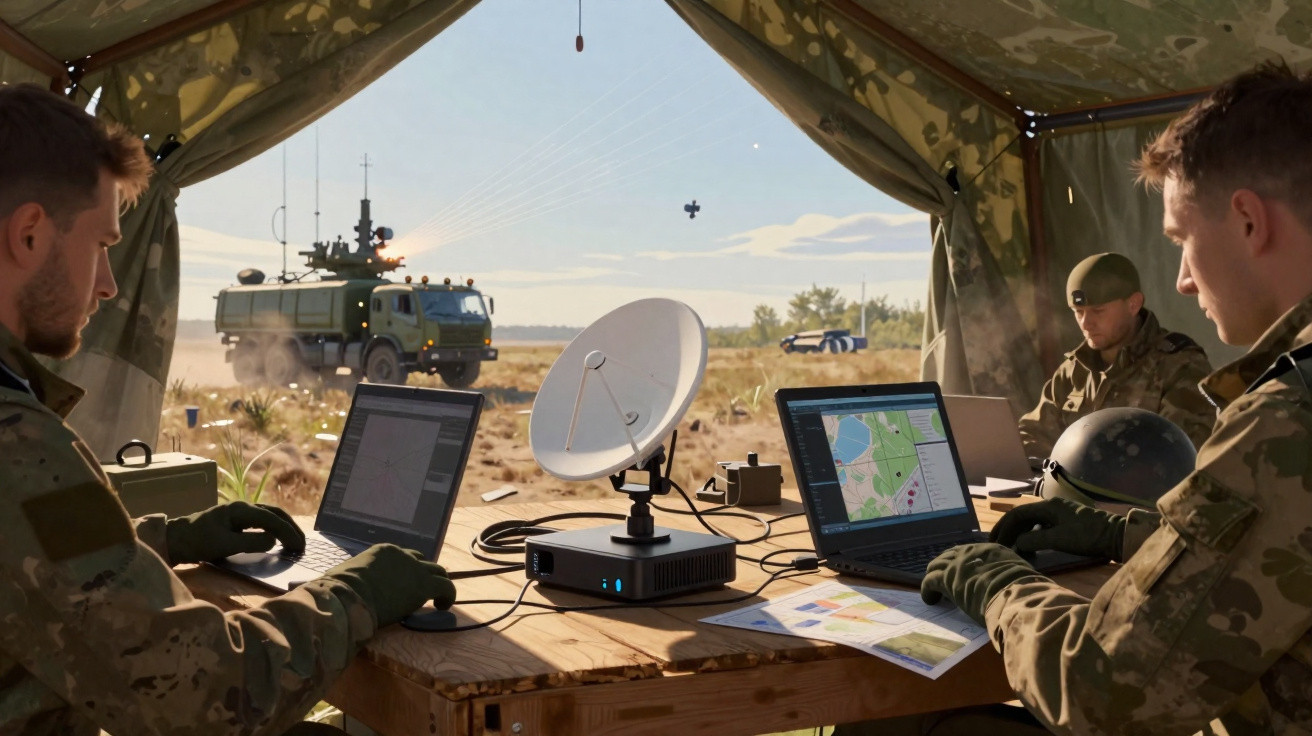
In a brief account of how the new Volna Kupol Garant systems operate, Russian experts describe equipment able to produce a powerful narrowband radio signal intended to “blind” the receiving antennas connected to Starlink satellites. This is designed to trigger different malfunctions and, consequently, prevent connections with troops on the ground. Although they did not specify them, the Russian defence industry stated that the system has received a number of improvements since the prototype phase, drawing on lessons learned in the field.
📌 You may be interested in:
- After 34 years of service, the USAF’s final EC-130H Compass Call electronic warfare aircraft completes its last flight
- British aircraft carrier HMS Queen Elizabeth returns to service to lead a three-month deployment in Northern Europe
Providing further detail, Ukrainian reports state that this electronic warfare system can generate interference across multiple data-transmission bands, ranging from 14 to 14.5 GHz, each with a bandwidth of 62.5 MHz. To do so, it employs a system comprising around eight directional phased-array antennas, which are aimed at the satellite being targeted before being activated to transmit the aforementioned radio signal across different bands.
In addition, it has been suggested that each system could disrupt signals at distances of between 16 and 20 kilometres, across a 360-degree azimuthal plane. In the words of the same sources consulted by Russian media: “Several devices can cripple an entire region. Dozens of devices activated simultaneously could cause a temporary disruption to Starlink operations (...) Elon Musk has got himself into a mess. If Starlink does not stop supporting terrorism, Russia will have to decide whether to block it only on our territory or worldwide.” This latter claim continues to raise doubts about its feasibility.
What responses could Ukraine take?
As noted at the outset, no details have yet been provided on how many electronic warfare systems of this kind will be manufactured for subsequent field deployment, or how Russia’s armed forces would employ them. However, Ukrainian analysts appear to have already identified several vulnerabilities worth considering.
More specifically, Volna Kupol Garant’s operation itself requires it to emit radio signals that can quickly be identified by Ukraine and other allied nations with their own satellites, as well as by SpaceX, the manufacturer of Starlink. Put another way, once switched on, the systems become considerably easier to detect and therefore to target for neutralisation. According to reports from Kyiv, this would oblige Moscow to manufacture a large number of systems in order to establish a genuine defensive capability against drones and missiles; each unit is estimated to cost around 150 million roubles.
Against this backdrop, Ukraine states that the Army’s 422nd Unmanned Systems Regiment and the Security Service of Ukraine’s (SBU) Special Operations Centre “A” were already able to neutralise one jamming station in mid-June last year. On that occasion, a series of images was released showing strikes against at least six targets, including damage to other assets located nearby.
Meanwhile, Kyiv continues to strengthen its links with SpaceX
While Russia makes these announcements regarding its new systems intended to interfere with the Starlink network, Ukraine continues to explore expanding the use of its terminals to improve communications between forces at the front and with their respective chains of command. As a symbolic demonstration of this, the Ukrainian government awarded Elon Musk, SpaceX’s founder, the Order of Freedom, a decoration recognising his “personal contribution to the protection of human life and freedom, and to the development of relations between the peoples of Ukraine and the United States.”
It should be remembered that SpaceX has not only enabled the use of its Starlink network to support Ukrainian units in the field and help them conduct long-range drone strikes, but has also agreed to block its use by their Russian counterparts. Today, Zelensky’s administration is seeking permission to use those satellites orbiting over Russian territory as well. This still appears difficult to achieve, as Musk considers it a measure that would escalate tensions with Moscow, which are already strained.
As the Russian sources cited by TASS put it: “This award found its hero precisely because of his resistance to terrorist attacks against Russia and its citizens. In fact, Musk explicitly prohibits the use of Starlink over Russia, while freely allowing it to be hacked and installed on long-range attack drones of the Ukrainian armed forces. This constitutes direct complicity in the killing of Russians.”
Images used for illustrative purposes


Comments
No comments yet. Be the first to comment!
Leave a Comment