
Add Zona Militar on Google
Why follow us? Receive the latest updates from Zona Militar in your Google feed.
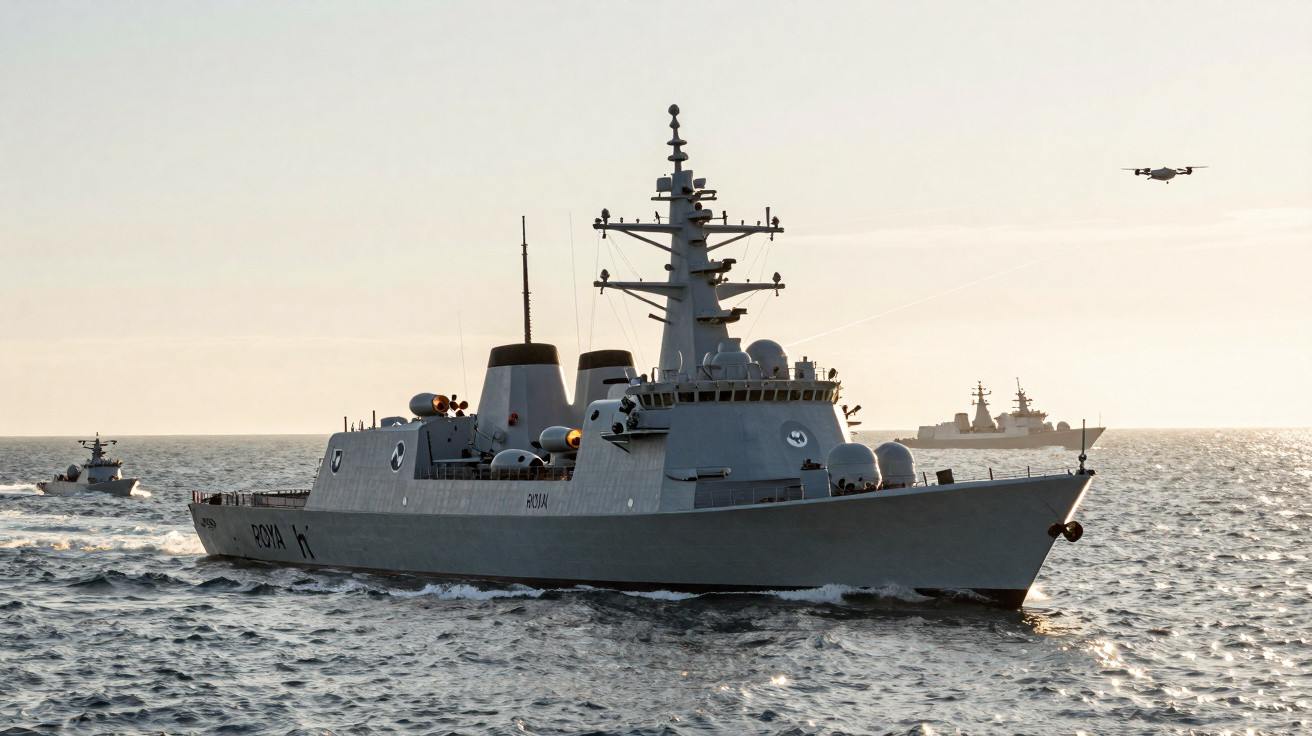
Just two months after signalling that its Type 45 destroyers would be withdrawn from service, the United Kingdom is now weighing up an extension to the operational life of the Royal Navy’s air-defence warships beyond 2035. London is revising its future surface-fleet plans after cancelling the Type 83 destroyer programme, which was abandoned over cost concerns and a wider move towards a different force structure. Defence Minister Luke Pollard revealed the review in answers to questions from Conservative MP James Cartlidge.
👉 Read more: U.S. Air Force Declares Initial Operational Capability for New MH-139A Grey Wolf Helicopter to Strengthen Nuclear Arsenal
Type 45 destroyers and the planned capability review
Pollard explained that the Defence Investment Plan has set aside funding in the current parliamentary term for a study into moving from the Type 45 fleet to a future hybrid naval maritime air-defence capability. This work will also consider whether the destroyers must stay in service longer than first envisaged. The minister stated that the assessment is due to be undertaken in the 2027-28 financial year. His answer does not indicate that a life-extension programme has been authorised; instead, the government will formally assess whether it is required and practicable.
The assessment is directly linked to Royal Navy efforts to define the requirements for its next generation of air-defence platforms. Under the proposed “hybrid force” model, British planners are placing growing emphasis on incorporating uncrewed systems into the future fleet, both to lower costs and ease the strain caused by ongoing recruitment difficulties. Keeping the Type 45s in service could consequently give British industry more time to develop new designs, trial emerging concepts under operational conditions and establish whether those alternatives can properly replace the capabilities now supplied by the destroyers.
📌 You may also like
- UK conducts military exercises in the Falkland Islands with Royal Navy patrol vessel HMS Medway and RAF A400M
- The U.S. Air Force deploys B-52H bombers to Australia to reinforce the Indo-Pacific
Uncrewed systems and the future Royal Navy fleet
UK analysts have identified several issues that must be evaluated before this transition can be regarded as credible. These include how resilient new platforms and uncrewed systems would be against electronic attacks, especially communications jamming, and whether they could remain effective in large-scale combat operations. Prolonging the Type 45s’ service could offer the Royal Navy greater room for manoeuvre as these questions are resolved and industry develops a more mature replacement architecture.
Type 45 upgrades, DragonFire and Common Combat Vessels
Any outcome must also take account of upgrade programmes already approved for the Type 45 fleet. British media reports suggest that the current modernisation work may not finish before 2032. It involves substantial changes to the ships’ propulsion arrangements, replacing the original gas turbines and expanding onboard electrical-generation capacity to support the installation of further equipment. The United Kingdom is also advancing plans to fit 24 new vertical-launch cells to each destroyer, alongside the 48 already installed, thereby increasing the number of CAMM (Common Anti-Air Modular Missile) weapons they can carry. Meanwhile, the Sea Viper command-and-control system is being upgraded, and London has provided funding to MBDA for the integration of ASTER 30 Block I missiles into the ships’ arsenals.
The Royal Navy is additionally preparing to introduce the DragonFire directed-energy weapon, a laser system designed particularly to counter aerial drones. The initiative seeks to address the increasing cost disparity between low-cost uncrewed threats and the missiles conventionally used to destroy them. The first systems are anticipated next year, following investment of more than £316 million to support MBDA’s integration of DragonFire on board the Type 45 destroyers.
Looking beyond the present fleet, London has set out plans for six new Common Combat Vessels (CCVs), which are ultimately intended to replace the Type 45s. Instead of adopting the approach of a conventional destroyer, the CCVs are envisioned as future command nodes for the Royal Navy’s uncrewed systems, including Type 91 launchers and Type 94 radar posts. An extended transition would therefore allow the service extra time to refine a workable design around this new operational concept, while retaining the air-defence capacity currently delivered by the Type 45 fleet.
Images used for illustrative purposes.



Comments
No comments yet. Be the first to comment!
Leave a Comment