
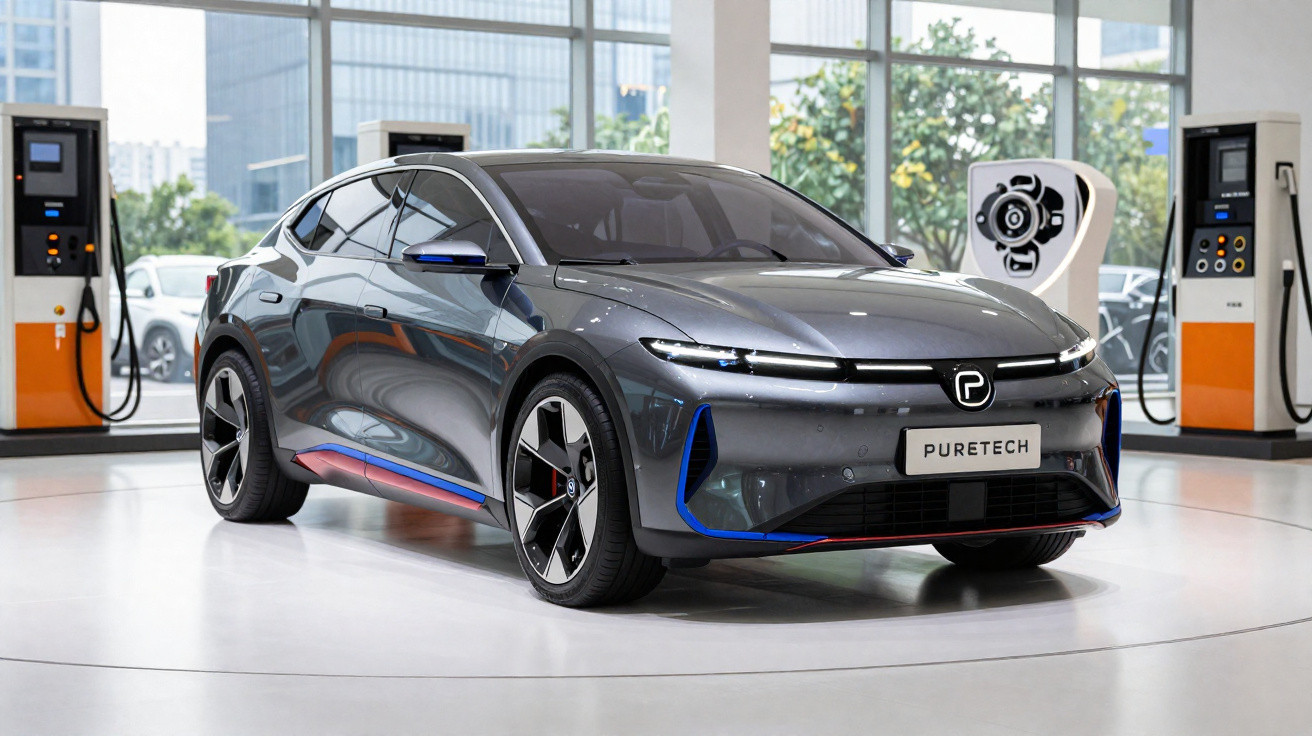
Something significant is changing behind the industry curtain.
Stellantis has indicated a broad move towards its PureTech three-cylinder petrol engine range in major models, backing a leaner, more economical combustion approach just as EV growth collides with cost pressures.
A decisive technology shift for Stellantis PureTech
Formed from PSA and Fiat Chrysler, the group is committing to small turbocharged petrol engines on a large scale, with PureTech central to the strategy. This compact, lightweight package integrates readily with mild-hybrid or plug-in hybrid systems. The combination is intended to deliver lower CO2 for every pound spent, dependable range and a quicker manufacturing ramp-up than dedicated battery platforms in price-sensitive sectors.
Stellantis is betting that efficient small petrol engines, aided by smart electrification, buy time and loyalty while battery costs settle.
The PureTech formula explained
PureTech engines combine three cylinders, direct injection and a compact turbocharger to extract more energy from every drop of fuel. The engine block can be installed transversely in vehicles ranging from city cars to compact SUVs. Outputs generally stretch from everyday 100 hp versions to more spirited 150+ hp models. A 48V belt-starter generator and e-DCT options can be fitted without substantial bodyshell alterations. Engineers point to faster catalyst light-off, reduced pumping losses and shorter warm-up routes as measures that reduce cold-start emissions.
- Downsized turbo petrol delivering strong low-rev torque
- Compatible with 48V mild-hybrid and PHEV architectures
- Compact layout that releases space for crash structures and the cabin
- Reduced weight to support ride, handling and braking performance
- Engineered to meet current Euro standards, with scope for updates
Market response and the EV story
Investors view the move as a practical one. Demand for EVs continues to rise, but affordability remains a barrier in many markets. Buyers are looking for range, value and confidence in charging provision. Fleet operators focus on total cost of ownership rather than badges. PureTech is intended to fill that space with WLTP figures that help contain tax bands and real-world fuel economy that does not collapse on motorway journeys.
A quick pivot to familiar petrol tech could stabilise volumes in the £20k–£30k band while next-gen EVs get cheaper, lighter, and faster to build.
Competitors are monitoring the UK and EU carefully. Euro 7 proposals that proved less demanding than feared have softened the immediate compliance cliff. This creates space for another combustion-engine optimisation cycle. Meanwhile, ZEV mandates continue to tighten across Europe, meaning Stellantis has to strike a balance: retain profitable ICE volumes while progressively increasing its EV share.
What drivers can expect
British buyers are likely to encounter more mild-hybrid badges on small crossovers and family hatchbacks. Test drives may reveal sharper low-rev response, more refined restarts and quieter operation in town. Drivers covering long distances may value petrol's rapid refuelling and consistent winter efficiency. Company-car users will continue to benefit from PHEV and BEV tax advantages, while private buyers may find the initial cost of PureTech models more manageable.
Reliability concerns that persist
PureTech has previous issues to overcome. Early wet timing-belt versions developed a reputation for deterioration in difficult oil conditions. Numerous owners reported noise, debris blocking oil circuits and costly repairs. Stellantis responded with revised belts, updated oil recommendations and altered service intervals. Garages were given inspection and replacement procedures. The key test now comes beyond 100,000 miles: will the revisions endure UK stop-start traffic, short journeys and E10 petrol?
Reliability will decide the narrative: if updated belts and oil strategies last, buyer trust returns; if not, the debate roars back.
Checks to make before buying
- Service documentation confirming the correct oil grade and prompt oil changes
- Proof of timing-belt inspections or replacements on higher-mileage vehicles
- Warranty conditions covering the timing system and oil-pump circuit
- Any software or hardware updates completed by franchised dealers
- Cold-start performance and idle smoothness during an extended test drive
Pricing, tax and supply-chain considerations
By reusing established engine plants and tooling, PureTech allows Stellantis to maintain list prices. Batteries remain the principal cost variable for BEVs and PHEVs. Petrol components are still cheaper to expand production and transport. That is important while lithium, nickel and logistics costs fluctuate. For taxation, private UK buyers concentrate on VED bands and fuel costs; PureTech seeks to keep CO2 sufficiently low to prevent steep increases. Fleet choices are driven more by Benefit-in-Kind, where BEVs and many PHEVs retain an advantage. Stellantis is therefore expected to direct fleets towards PHEVs and BEVs, while giving PureTech a stronger role in retail sales.
| Powertrain | Indicative CO2 (WLTP) | Running efficiency | Typical purchase price | Maintenance |
|---|---|---|---|---|
| PureTech petrol (MHEV) | ~110–140 g/km | 45–55 mpg (UK), steady on motorway | Lower than PHEV/BEV in same segment | Regular servicing; belt inspection critical |
| PHEV | ~20–50 g/km (lab) | Very cheap if charged daily; mixed if not | Higher; incentives vary by market | ICE plus high-voltage system complexity |
| BEV | 0 g/km tailpipe | ~3.0–4.0 mi/kWh; depends on weather and speed | Highest today; falling with newer platforms | Fewer wear parts; tyre and brake care still key |
Implications for the wider industry
Should Stellantis meet its targets, small turbo petrol engines with light electrification could recover momentum. Rivals would be under pressure to refine their own three-cylinder ranges, reduce friction losses and cut weight. The move would also support suppliers: turbo manufacturers, injection specialists and aftertreatment companies would all gain a steadier flow of orders, smoothing the EV transition rather than creating a cliff edge.
Policy will continue to determine the outcome. Clean-air zones favour low-emission vehicles, but charging infrastructure remains limited in many postcodes. Families unable to install home charging will continue to consider petrol models. Fleet electrification is still advancing, largely because of tax. This two-speed market leaves Stellantis room to pursue a dual strategy without losing direction.
Indicators to watch next
- Independent high-mileage durability findings for revised PureTech belts
- The real-world difference between WLTP mpg and mixed British driving
- UK pricing for PureTech MHEV against entry-level BEV trims
- European factory allocations between ICE, PHEV and BEV production
- Any Euro 7 calibration revisions and their effect on drivability
Useful context and definitions
A mild hybrid (48V) uses a compact electric motor and small battery to support the petrol engine when under load, recover braking energy and refine stop-start operation. It cannot provide extended electric-only driving, but it reduces fuel consumption in traffic and helps the catalyst warm up more quickly.
Wet timing belts operate inside the engine in its oil. They can be quiet and produce little friction. However, they require the correct oil chemistry and regular servicing. Should belt material break away, debris can affect oil pumps and galleries. Revised materials and stricter service schedules are intended to avoid that outcome.
A brief ownership calculation
Consider a 12,000-mile annual commute made up of 70% motorway driving. A PureTech MHEV achieving 50 mpg would consume about 240 gallons annually. At £6.50 per gallon, the fuel cost would be near £1,560. A BEV using 3.5 mi/kWh would require ~3,430 kWh. At a home electricity rate of 30p/kWh, energy would cost near £1,029. Public rapid charging can increase that total quickly. Your tariff, access to a driveway and driving pattern matter more to the result than the brochure figure.
Buying used? A concise checklist
- Look for complete dealer history and invoices rather than stamped service books alone
- Request timing-belt inspection records and any replacement part numbers
- Check for software updates connected with emissions and idle quality
- Verify cold and warm starts, then carry out a sustained hill-climb test
- Allow for preventative belt servicing if the records appear incomplete





Comments
No comments yet. Be the first to comment!
Leave a Comment