
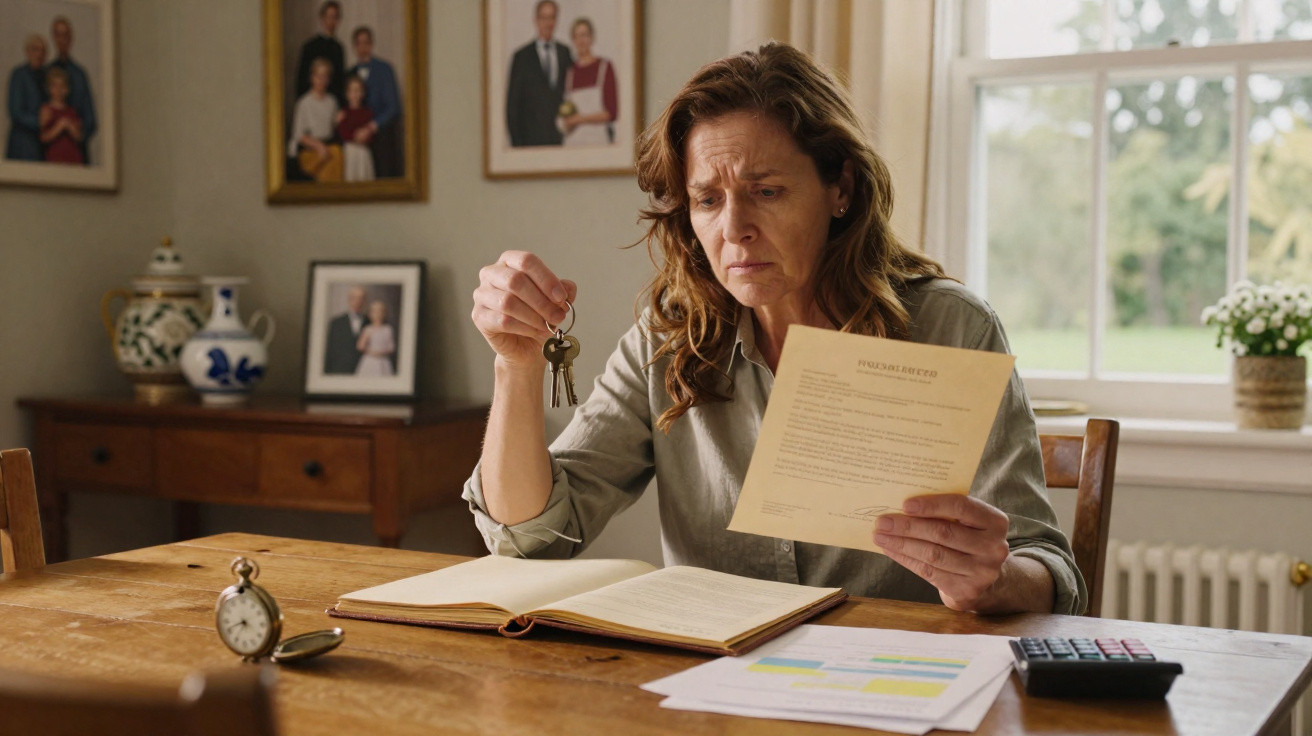
The email arrives on a quiet Tuesday morning in January, shortly after the festive break, while the house still carries a faint scent of pine and wintry air. Its subject line says, “Updated inheritance rules effective 1 January”, wedged between promotional offers and a dentist appointment reminder. Initially, it seems like dry administrative clutter: the sort of message most people glance at before deleting. But then certain terms stand out: revised tax bands, revalued properties, and thresholds discreetly reduced.
Across the country, households that spent decades paying for an unassuming home are finding that their family property is now being classed as a luxury asset. What took a lifetime to save is being reframed as a taxable gain.
On social media, one word keeps appearing: attack.
Why the January inheritance overhaul feels like a broken promise
To many families, the inheritance rules introduced in January do not sound like impartial “reforms”. They feel more like a ruling against them. People in their sixties and seventies, raised to see home ownership as a responsible choice, are watching their bricks-and-mortar security become a prospective tax charge for their children. Official papers use neat, impersonal language about “redistribution” and “harmonisation”.
Around kitchen tables, however, the discussion is far more personal. Families are asking whether they may have to sell the house simply to meet the tax bill. There is also an increasing sense that the State is moving into the most personal of exchanges: the final gift one generation leaves to the next.
Consider Lucia and Marco, both teachers, who purchased a modest semi-detached home on the edge of a medium-sized city in 1998. Over weekends, they renovated it gradually with their own hands, one room at a time. There is no pool or fashionable fitted kitchen, only a comfortable mortgage-free home that hosted birthdays, exam worries and late-night conversations. Under the earlier inheritance rules, its value remained safely beneath the principal tax threshold.
This January, a revised valuation arrives after years of rising house prices. Nothing about the home has changed, including its creaking staircase, yet it now exceeds the updated threshold. Their two children make rough calculations on a notepad and realise that, if they do not have sufficient cash available when the time comes, selling the property may be the only practical choice. The “family home” they believed could be handed down has become a paper liability.
For many, the greatest shock is not solely the figures but the story used to justify them. The overhaul is presented as a means of taxing the “unproductive wealthy” and recovering funds from major estates and inherited dynastic wealth. Yet increasing valuations are quietly drawing ordinary houses into its reach. That gap between political language and daily life is where much of the resentment lies.
In effect, the new rules can make years of patient, disciplined saving appear to have been a mistake. Policymakers speak of eliminating loopholes; families hear that their prudence is being penalised, and that a lifetime of sacrifice now leads to a higher tax band rather than gratitude. This is the point at which policy ceases to feel theoretical and begins to seem like a verdict on someone’s character.
How families are scrambling to protect a lifetime of work
Since the January overhaul, financial advisers have reported a rise in urgent, often anxious enquiries. People who never considered themselves “estate planners” are arranging meetings with folders containing mortgage paperwork, bank statements and calculations scribbled on napkins. One of the first options many investigate is an early transfer: gifting a share of the property during the parents’ lifetime and spreading ownership over a number of years to lessen the tax effect.
Others are considering life insurance policies specifically intended to meet future inheritance tax bills, creating a financial safeguard against heirs having to accept a forced sale. Some households are also reviewing wills word by word, changing the division of assets not according to affection but according to anticipated tax exposure. It can seem impersonal, but also oddly essential, much like fixing a roof before the storm arrives.
The emotional weight of such conversations is frequently overlooked. For many parents, “optimising” the handover of their home conflicts with everything they were taught to value. They did not purchase a property as an investment vehicle; they bought a place where their children could return for Sunday lunch. Older owners sometimes admit quietly to advisers that they feel guilty, even embarrassed, for failing to foresee the new rules. As though anyone reasonably could have done so.
We have all experienced the moment when the system changes the rules while we were busy following them. Some respond with spreadsheets and calculators, while others retreat into quiet resignation. Experts say the most serious error is allowing discomfort to lead to inaction. Delaying matters “until things are clearer” can mean missing the limited opportunities still available to reduce the impact. Let’s be honest: nobody really reads tax law updates over breakfast every single day.
“People come in saying, ‘I’m not rich, I just have a house,’” says one estate lawyer. “They feel like accidental targets, not the intended ones. The word I hear most this year is betrayal.”
A practical checklist is gradually taking shape in many homes around these concerns:
- Review the revised tax bands and the current property valuation for the family home.
- Speak to siblings early about who wishes to retain the property and who would prefer a cash share.
- Look at phased gifts or partial transfers while parents are still alive instead of one substantial inheritance.
- Examine life insurance, savings and pension arrangements specifically in relation to future inheritance tax.
- Put wishes, agreements and contingency plans in writing, so relatives are not forced to negotiate later while grieving and under pressure.
A deeper rift over what “family property” really means
Behind the legal terminology and the spreadsheets, the January inheritance overhaul has uncovered something more fundamental: a conflict of values between generations and between the public and the State. For decades, older people were told that dignity followed a simple route: work hard, buy a modest home, repay the loan, and give your children a head start. Younger adults, dealing with higher rents and insecure employment, viewed that home as their one meaningful defence against an unstable economy.
When revised tax rules enter that arrangement, they do more than generate revenue. They redefine the boundary between property regarded as a collective social resource and that regarded as deeply private, even sacred. That is why critics use the word “attack” so regularly. Tax itself is not new; what feels different is that it has entered the sitting room, taken a place on the sofa and begun attaching price labels to the family photographs.
| Key point | Detail | Value for the reader |
|---|---|---|
| Rising property values expand the tax net | Ordinary homes can be pushed above new inheritance thresholds despite no increase in household income | Helps readers understand why they might suddenly be affected despite not feeling “wealthy” |
| Early planning may lessen the impact | Phased gifts, revised wills and carefully targeted insurance can reduce the likelihood of forced family-home sales | Provides practical routes to protect family property and lifetime savings |
| Open discussion can prevent family disputes | Frank conversations about who can afford to retain or sell inherited property | Lowers the risk of resentment and rushed choices at times of grief |
FAQ:
Does the January inheritance overhaul affect everyone or only the very rich? Many measures are described as targeting substantial fortunes, but rising property prices mean middle-class homeowners may now exceed tax thresholds that were previously beyond their reach. In some areas, even one fully paid-off family home can be sufficient to trigger the new rules.
Can I avoid my children having to sell the house just to pay inheritance tax? There is no magic trick, but combining early gifting, life insurance set aside for tax costs and clear arrangements between heirs can lower the risk of a forced sale. A tailored appointment with a notary or estate planner often pays for itself through mistakes avoided.
Is transferring property while I’m alive always better than leaving it as inheritance? No. An early transfer may reduce future tax, but it can also involve surrendering some control and may create difficulties if you later need to sell or downsize. Every household must strike its own balance between security, autonomy and tax efficiency.
What if my siblings and I disagree about what to do with the inherited home? Under pressure, disagreements can quickly become entrenched. Recording parents’ wishes in a detailed will, discussing possible outcomes beforehand and, where necessary, using mediation can avert years of unspoken resentment. Clear figures on paper are often more reassuring than vague assurances.
Is there any chance the rules will be softened after public backlash? Public pressure can sometimes result in changes, particularly if middle-class families become vocal and organised opponents. At present, the safest approach is to plan according to the current framework while keeping up to date with any political effort to reconsider or adjust the overhaul.






Comments
No comments yet. Be the first to comment!
Leave a Comment