
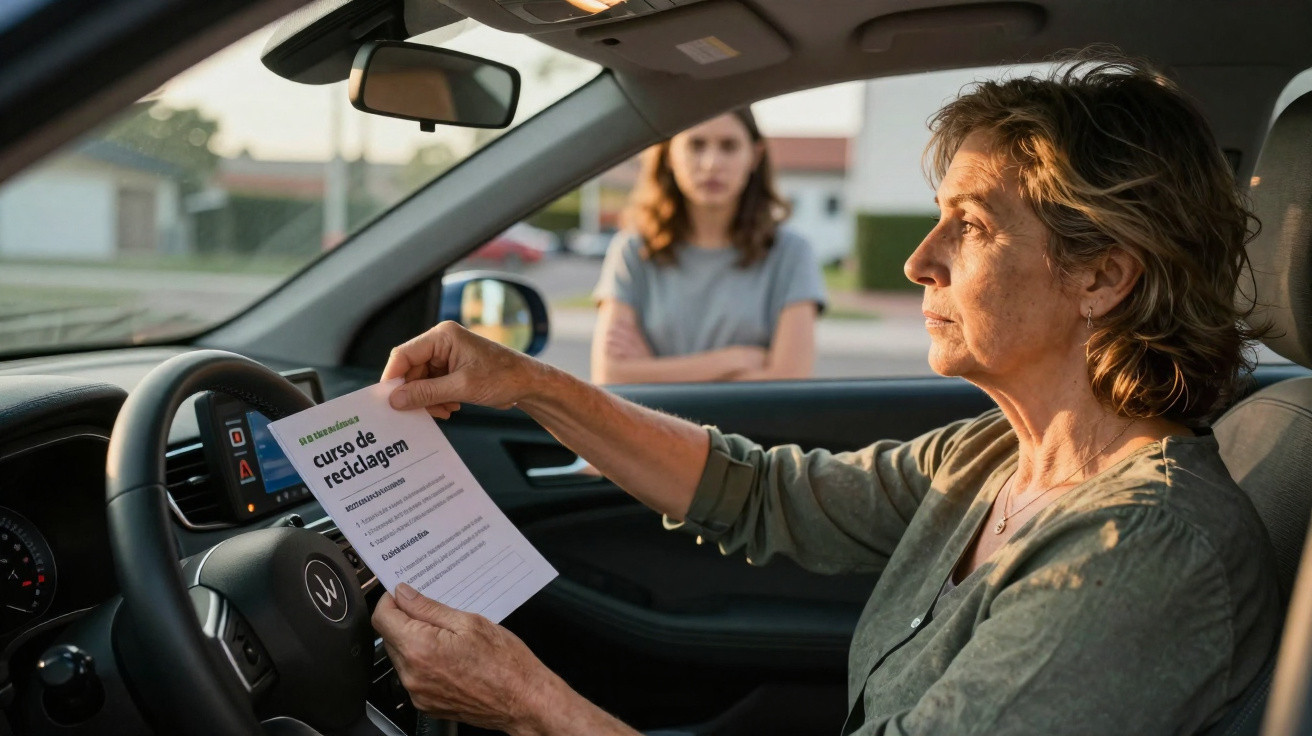
Across Europe, an increasing number of motorists are reaching retirement with many years of driving experience and firmly held views about being behind the wheel.
For many older drivers, a car represents independence, dignity and a way of maintaining everyday routines. The key dividing line is no longer a particular birthday, such as 70 or 80, but a harder question: “Am I still fit to drive safely?”
Age is not the cut-off: what French law actually says
Despite a common assumption, French legislation does not require motorists to surrender their licence at 70, 75 or even 80. The Code de la route sets no maximum age for driving. A person's legal entitlement to drive is determined by medical fitness rather than their date of birth.
In France, a 40‑year‑old with serious health issues can lose the right to drive, while a sharp 88‑year‑old can legally stay on the road.
Under the present rules, authorities may limit or remove a driving licence if a medical issue makes driving unsafe. This may result from a medical examination, information provided by a doctor or, in certain situations, a serious motoring offence. The assessment is based on risk rather than age bands.
European bodies did, however, place renewed pressure on national governments in 2024. The European Commission and French road-safety officials raised the prospect of a dedicated monitoring system for drivers over 70, involving more regular reviews or personalised assessments. France has not introduced such an arrangement, and it is absent from the official road-safety plan for 2025.
For the time being, the position is straightforward: ageing alone does not create a legal point at which a driver must return their licence.
Not a number, but a capacity: how ageing affects driving
The evidence gives a more nuanced answer than the idea that “old equals unsafe”. Older people do not automatically have more collisions than younger motorists. Indeed, men in their twenties remain at the top of many risk statistics. With age, the issue is how extensive experience is balanced against gradual physical and cognitive changes.
Geriatric experts often note that older drivers tend to adjust naturally. They may stick to familiar journeys, stay off the roads at peak times, drive during daylight and travel more slowly. In some circumstances, these cautious habits compensate for slower reactions or less physical strength.
The real issue is not the date of birth, but the trio of vision, cognition and mobility – and how they evolve for each person.
However, adaptation can only go so far. Eventually, even careful route choices may fail to overcome problems at complicated junctions, on fast dual carriageways or in crowded urban traffic. At that stage, an honest evaluation is essential.
Warning signs that should trigger a reality check
Doctors and driving assessors regularly identify the same warning signs. Individually, they do not establish that someone is unfit to drive. Taken together, though, they indicate that it may be time to stop and review the situation.
- Near misses on roundabouts, at junctions or while changing lanes
- Fresh dents or scratches without a clear recollection of what happened
- Becoming disorientated in unfamiliar places, even when using sat-nav
- Greater anxiety about driving at night or in poor weather
- Other motorists sounding horns or flashing lights after uncertain manoeuvres
- Struggling to read road signs or respond to traffic lights quickly enough
- Remarks from passengers who feel unsafe or travel sick
Ageing may lengthen reaction times and reduce the ability to deal with multiple sources of information simultaneously, including pedestrians, traffic lights, cyclists and signs. Eyesight commonly declines, particularly in dim conditions or bright glare. A stiff neck or shoulders can also narrow a driver's view, enlarging blind spots and making reversing more dangerous.
Hearing impairment can mean that approaching emergency vehicles are missed. Aching joints or weak muscles may make emergency stops and rapid steering adjustments harder. In addition, widely used medicines for sleep, pain, anxiety or blood pressure can affect alertness.
The warning symbols on pill boxes in France are not decoration; they signal a real risk of drowsiness, blurred vision or delayed reactions at the wheel.
From 70 to 75: shifting from denial to self-assessment
While legislation sets no age threshold, many specialists regard the early seventies as a significant moment. It is not a point for automatic licence withdrawal, but one for a considered and structured review.
A useful first step is a brief but candid self-check, including questions such as:
| Situation | Question to ask yourself |
|---|---|
| Urban driving | Do busy town centres or multi-lane roundabouts leave me exhausted or confused? |
| Night and weather | Do I now avoid rain or darkness because I no longer feel safe? |
| Orientation | Have I started to lose my way on routes I have known for years? |
| Recent incidents | Have I experienced a “near crash” that shook me more than I admitted at the time? |
Where the answers create concern, doctors advise arranging a medical review promptly instead of waiting for a serious event. A discussion with a GP can identify eyesight difficulties, early cognitive conditions, mobility problems or medicine interactions that reduce alertness.
In France, some motorists are referred to a certified medical commission, for instance after a seizure or with certain heart conditions. Others choose to seek this assessment voluntarily for an impartial view and individual advice. The result is sometimes a restriction rather than a prohibition: no driving at night, a shorter licence period or an obligation to use adapted equipment.
Refresher courses and new tech: modern tools for older drivers
A large number of older motorists took their theory test decades ago. Since then, road designs, signs and rules governing cycling infrastructure have altered considerably. Refresher sessions, frequently provided by insurers, local authorities or driving schools, aim to address this gap.
These courses generally explain current rules on roundabouts, cycle lanes, speed limits and low-emission zones. They also revisit safe following distances, joining motorways and using newer digital signs. For some older people, only a few hours in dual-control vehicles can rebuild confidence and correct unsafe habits developed over the years.
Technology fitted to cars has advanced just as quickly. Driver-assistance functions on mainstream models can genuinely reduce the demands of driving:
- Reversing cameras and parking sensors lessen the strain of manoeuvring.
- Blind-spot monitoring provides support when turning or moving between lanes.
- Lane-keeping systems guide the vehicle back if it begins to drift.
- Adaptive cruise control regulates speed and distance on motorways.
Assistive systems offer extra protection, but they remain helpers, not pilots. Over‑trusting them can itself create danger.
Experts encourage older motorists to understand exactly how every system operates and not let the dashboard become a distracting display of lights. The purpose is to make driving simpler, rather than introduce further confusion.
Choosing when and where to drive, not just whether to drive
Many older people retain their licence while deliberately reducing their driving “territory”. Managing risk becomes more about location and timing than giving up driving altogether.
Several straightforward measures can already lower the collision risk for older drivers:
- Planning journeys for daylight hours, particularly during winter
- Staying away from city rush hours and school-run periods
- Choosing quieter, familiar roads rather than quicker bypasses
- Taking a brief break every hour or two during longer trips
- Delaying journeys during storms, fog, snow or heatwaves
Preparation makes a difference too. Looking up roadworks, ensuring a phone is charged, entering the destination into a sat-nav and identifying possible places to rest can all reduce pressure at the last minute. For some people, this change means travelling shorter distances and at lower speeds, while leaving a clear buffer for tiredness and unexpected situations.
Family, tensions and the “silent” last trip
Discussions about handing over the keys can become highly charged within families. Many parents interpret it as a loss of standing or a judgement on whether they can continue living independently. Their adult children, meanwhile, worry about receiving a police call after a major collision.
The emotional charge around the final years of driving often rivals the debate over care homes or inheritance.
Specialists recommend moving away from blame and towards practical answers. Rather than repeatedly saying “You’re dangerous”, relatives can help arrange alternatives: lift-sharing, combining medical appointments and shopping into one daytime journey, arranging grocery deliveries or helping with applications for assisted transport schemes.
A phased reduction is usually more effective than an abrupt halt. Some families settle on rules such as “no more motorways” or “no more driving after 8 pm”, then revisit the arrangement every six months. Others contribute towards a taxi budget for the most stressful journeys, including hospital visits at night.
A debate spreading across Europe
France is not the only country confronting this issue. Governments throughout the EU and the UK are trialling a range of approaches.
Certain countries impose regular medical assessments from a specified age. Others require only a self-declaration when licences are renewed, while applying tougher sanctions where drivers provide false information. Pilot schemes are considering online self-tests, cognitive screening methods and subsidised refresher courses for older motorists.
Despite national disagreements, European policymakers are converging on the same principle: preserve mobility for as many older people as possible without compromising road safety. This involves rejecting blunt age limits in favour of individual reviews and tailored assistance.
Looking ahead: practical ideas for the coming decade
As populations grow older, the number of drivers over 75 will rise sharply. Areas already poorly served by public transport will come under additional strain. A practical response could combine several measures: flexible on-demand buses, community car-sharing, reduced-cost ride-hailing for medical appointments and structured driving assessments for people wishing to retain their licence for longer.
Vehicle adaptation is one developing area. Modest changes, including pedal extensions, raised seats, steering wheel knobs and automatic gearboxes, may allow people with arthritis or reduced strength to keep driving for a few additional years without raising risk. Insurers and governments could begin to connect premium reductions or tax incentives to these adaptations, or to voluntary medical assessments.
At present, French motorists face an unambiguous legal position: their licence carries no date that compels them to stop driving at 70 or 80. The responsibility, as well as the opportunity, rests largely with individuals, families, doctors and local authorities to make that legal freedom compatible with safe, dignified mobility in later life.






Comments
No comments yet. Be the first to comment!
Leave a Comment