
“The 68-year-old pushes his glasses up his nose and reads it twice. ‘Does this mean they want to get me back into the workshop?’ he mutters.” Across the table, his daughter and her husband are debating whether Grandma would still have time to collect the grandchildren. Somewhere in between sit quiet anxiety and a measure of anger. We know this feeling: politics suddenly arrives in people’s living rooms. And nobody invited it.
Retirement suddenly means work again
On paper, the proposal sounds like a friendly arrangement: from 2026, pensioners would be able to earn extra income tax-free through an “Active Pension”. It sounds like freedom, choice and the promise that anyone who wants to can. Listen more closely, though, and it sounds more like the labour market’s loud cry for help. As the baby-boom generation retires, care, skilled trades and service industries are short of tens of thousands of workers. All at once, later life is being presented as a labour reserve again - like a workbench that can simply be switched back on.
You can already see it in smaller towns. Grey-haired workers are back behind bakery counters. Pensioners explain the aisles in DIY stores, while grandparents step in as “temporary staff” at nurseries. Officially, it is all voluntary. Unofficially, it is often driven by a skewed assumption: anyone who is healthy and sitting at home is quickly seen as no longer “properly participating in life”. The figures reveal the tension. According to the Federal Statistical Office, almost one in five people aged between 65 and 69 already continues working - out of interest, certainly, but also because their pension does not stretch far enough. The new Active Pension adds further pressure to precisely this mix.
The thinking behind it is fairly transparent. The state saves money when pensioners remain in work for longer: more contributions come in, while there is less need for costly structural reforms that would genuinely tackle the underlying problems. Rather than discussing wealth taxes, fair pay or reliable basic pensions, a reward for extending people’s working lives is being sold. It is a temporary tax exemption that could disappear without fuss in two or three years. By then, however, people will already be back in the routine: return to the workbench once, and remain available forever. Suddenly, what was advertised as an opportunity becomes a quiet form of compulsion.
When Grandma becomes cheap labour
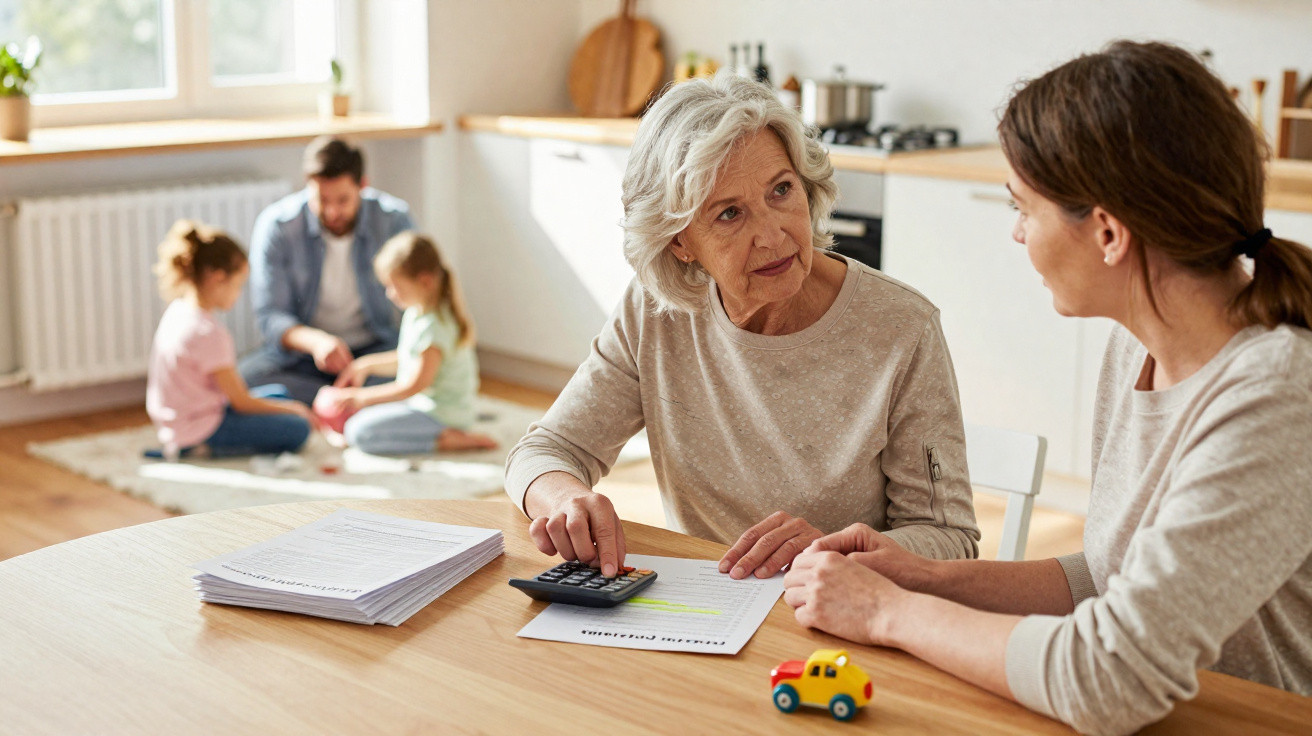
To understand the Active Pension, you do not need to read the legislation; you need to look in people’s kitchens. Families like Anna’s are sitting there: she is 34 and has two children. Her mother, Brigitte, is 66, newly retired and only just beginning to reshape her life. Then her former manager from retail calls: “Brigitte, I’m sure you’ve heard about this new Active Pension. We could really use you for 15 or 20 hours. It’s tax-free, and you won’t lose anything.” It sounds tempting. Then the question suddenly becomes: grandchildren or customers? Family time or the till?
The resulting conflicts are not theoretical. Some family WhatsApp groups are already erupting: “You’d rather go back to work than look after your grandchildren?” Or, from the other side: “I have worked all my life; I am not full-time childcare.” The new rule creates an invisible competition between emotional labour and paid work. And because many pensioners already have to watch every penny, they often choose the job. Who could blame them? Let us be honest: nobody saves money every month so that they can later say “no” with dignity.
Politicians have commented on the whole issue with striking coolness. They speak of “dormant potential” and “untapped labour reserves”. People who have worked for decades, raised children and cared for relatives are turned into assets in a spreadsheet. In this way, a stage of life once intended as a well-earned retirement drifts towards becoming a cheap flexible labour pool for sectors that have spent years cutting costs at workers’ expense. When work in later life is rewarded through the tax system while ordinary pensions are increasingly taxed, the message is clear: rest costs money, work pays. To many, that sounds like a cold bargain.
How families can find their own Active Pension arrangement
There is a distance between a political headline and real life, and every family has to travel it for itself. A first step is to say aloud everything that would otherwise remain an unspoken feeling in the room. Why does Grandma or Grandad want to work again? Is it for money, recognition or routine? Or do they feel inwardly obliged to “give something back to society”? The younger generation can be equally clear about what it needs: help with the children, emotional presence, perhaps financial support too. Only when these motivations are openly laid out does the Active Pension avoid automatically turning into family drama.
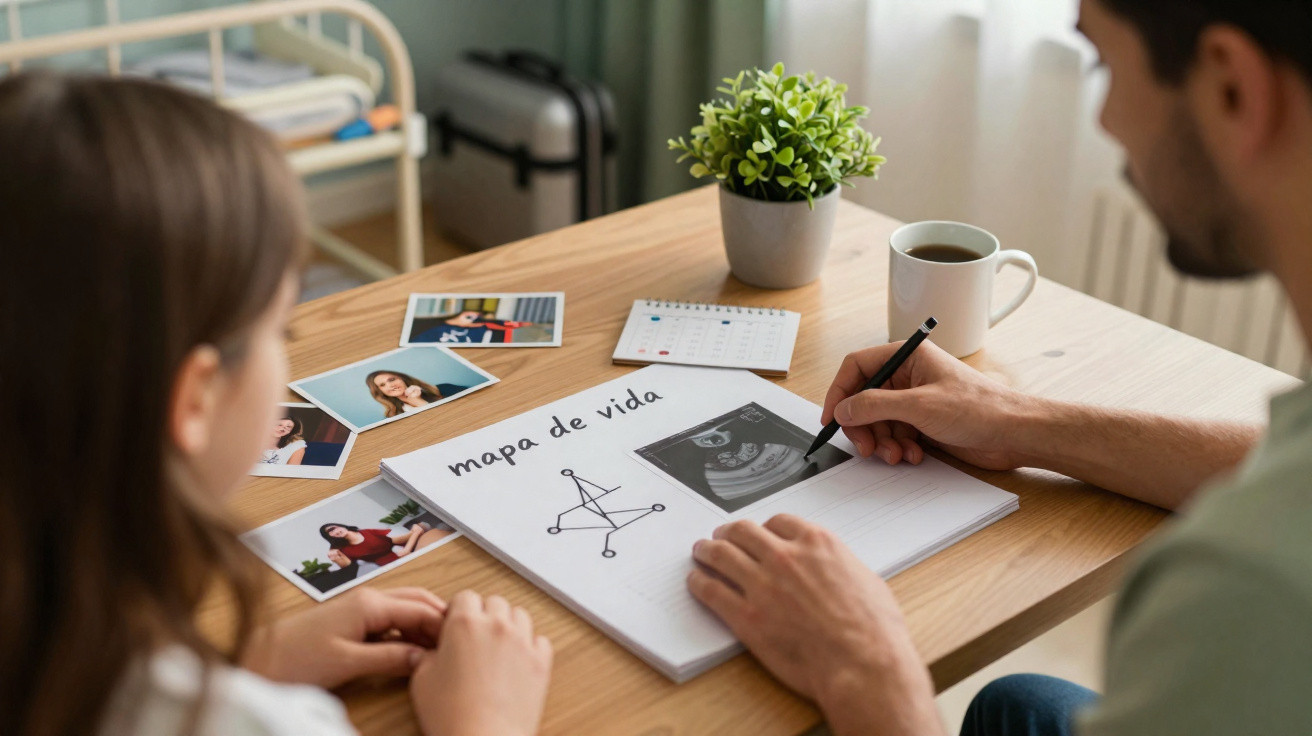
A second vital issue is setting the framework. How many hours are realistic before life starts to tip out of balance? Which boundaries are non-negotiable - fixed grandparent days with the grandchildren, for example, or personal hobbies that will not be moved aside? Many people fall into the trap of agreeing to “just a few hours” at first, only to be gradually drawn back into a proper job. A clear plan written on a sheet of paper may seem old-fashioned, but it protects people from feeling that they are simply being swept along.
Sometimes the toughest question is this: am I allowed to say no, even when I genuinely need the money? This is where the emotional layer enters, the one hardly anyone likes discussing. Guilt, loyalty and fear of loneliness. A sentence such as “I am happy to help you - but not at the cost of my strength” can change an entire family system. It also creates space to discuss alternatives: sharing housing costs, cutting expenditure or looking for support together. Someone working in care put it like this recently:
“We are sending older people back onto shifts because we previously pushed them into a pension system that does not provide enough at the end. Then we call it freedom. I call it politics born of embarrassment.”
- Speak clearly: Name motivations, boundaries and expectations within the family before making commitments.
- Put it in writing: Draw up a simple weekly plan covering working hours, time with grandchildren and personal time.
- Carry out a financial check: Review pension income, additional earnings, tax and deductions with an independent advice service.
- Agree a trial period: Test the Active Pension for a set time, with a fixed exit point that is discussed regularly.
- Do not tie worth to work: Make it clear in family conversations that retirement is not “doing nothing”, but a distinct phase of life.
A country that does not see older people merely as a reserve
The debate around the Active Pension is about more than taxation. It exposes how we, as a society, think about ageing. Are grandparents primarily flexible workers who can be switched on and off whenever they are needed? Or are they people with their own histories and wishes, entitled to boredom, empty time and slow days? When politicians say “stop making such a fuss” and call pensioners back to the workbench, they also send a message to younger people: your aim is not rest, but permanent availability.
Perhaps what is needed now is exactly the opposite: a sober, unhurried focus on what truly matters. A pension sufficient to live on. Working conditions that do not wear people out by the age of 60. A society that does not treat care work - including that carried out by grandparents - as an automatically free bonus. And employers that treat older staff well in good time, rather than pushing them out first and desperately trying to bring them back later. We have reached a point at which we must renegotiate what a good old age should be.
The Active Pension from 2026 may be exactly right for some people. For others, it is a trap elegantly wrapped in tax relief and promises of flexibility. Ultimately, this policy will not be decided on television discussion programmes, but at the kitchen table, between bread crumbs and homework. That is where grandchildren ask: “Grandma, why do you have to work again?” and adults quietly wonder which answer they will still be able to stand by in ten years’ time. Perhaps that is the real heart of it: learning to say “enough” - for ourselves, for our parents and for our children.
| Key point | Detail | Value for the reader |
|---|---|---|
| Active Pension as hidden pressure | Temporary tax exemption draws pensioners back into jobs while concealing structural problems. | Helps readers better understand the political and economic interests behind the model. |
| Family conflict caused by returning to work | Grandparents are caught between paid employment and care work for grandchildren. | Readers can identify typical tensions early and name them before they escalate. |
| Strategies for finding an individual path | Open conversations, clear boundaries, a financial check and trial periods for the Active Pension. | Provides practical ways to make decisions more consciously and independently. |
FAQ:
Question 1: What does the “Active Pension from 2026” specifically mean for pensioners? At its core, it means that people in retirement can work in addition to receiving their pension and temporarily keep a limited amount of extra earnings tax-free. The precise design depends on the final legislation, but it is expected to be based on higher tax-free allowances and less offsetting against pension income.
Question 2: Who benefits most from the Active Pension - pensioners or the state? Financially, the main beneficiaries are those healthy enough to continue working and employed in sectors with staff shortages. At system level, the state benefits: more workers, additional contributions and less pressure to fundamentally reform the pension system.
Question 3: Can the Active Pension permanently increase my future pension? Additional contributions can have a positive effect on pension levels, but the temporary tax exemption does not guarantee a large increase. It is worth calculating with the pension provider or an independent adviser whether the additional effort is genuinely worthwhile in relation to the time and strain involved.
Question 4: What happens when the temporary tax exemption ends? The normal tax rules for additional earnings in later life apply again. Anyone who becomes heavily reliant on the extra money may find themselves in financial difficulty. For that reason, it is risky to plan permanent costs, such as loans, on the basis of a temporary advantage.
Question 5: How can I avoid family tensions around the Active Pension? Talk early and honestly: gather everyone’s expectations, clarify boundaries and write down what is realistic. A shared financial and time plan creates transparency. And a clear statement such as “My health comes first” can serve as a guiding principle - even if it is uncomfortable.




Comments
No comments yet. Be the first to comment!
Leave a Comment