
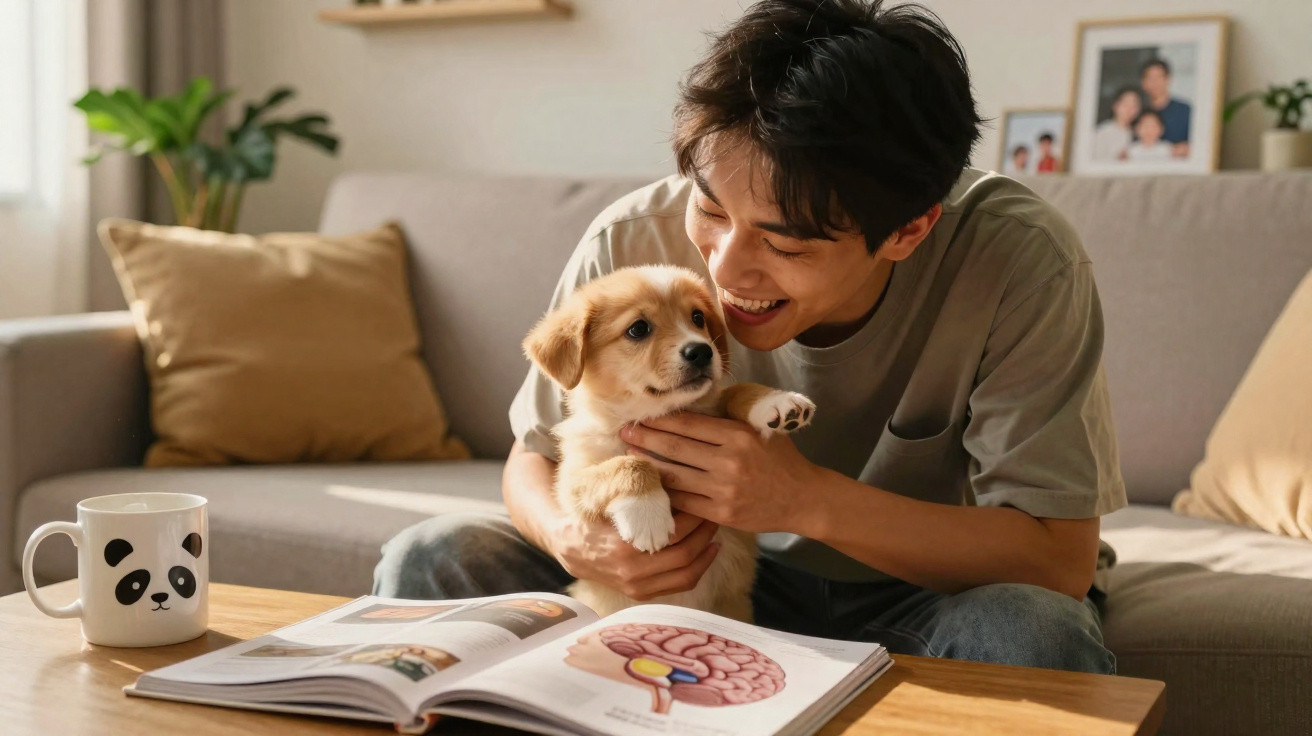
A gangly puppy skidding across a kitchen floor, a duckling attempting a leap onto a step that is obviously far too tall, a tiny kitten making that hesitant sideways bounce that resembles a cartoon in slow motion. You tap play “just for a second”, then realise ten minutes have gone by. You are still watching, faintly smiling at the screen and somehow feeling lighter.
Nothing else about your day has altered. Your work remains the same, unanswered emails are still there and the world is just as loud. But a 12-second video of a baby otter can warm your chest, lower your shoulders and release the tension in your jaw. You experience an unusual blend of affection and urgency, as though you need to pick up that little creature and keep it safe from everything.
Why can a floppy-eared puppy affect your brain more powerfully than a magnificent adult wolf? How can a baby animal you will never encounter capture both your attention – and your heart – in an instant?
The brain’s hidden code for “cuteness”
Psychologists have a term for the immediate “aww” response that takes hold before you have time to think: the “baby schema” effect. A rounded head, large eyes, a small nose, plump cheeks and awkward movements act like a hidden password your brain has recognised for thousands of generations. It is not something you are taught. You are born with it.
These features activate areas of the brain associated with reward and caregiving. Brain scans show that people viewing baby faces have increased activity in regions linked to motivation and even addiction. In a subtle, almost covert way, nature has made vulnerable creatures difficult for us to resist. It is more than sweetness; it is strategy.
Even on a packed Underground train or during an endless Zoom meeting at work, that programming continues quietly in the background. When a baby animal appears on your screen, ancient instincts collide with modern life. This is why a three-second GIF can seem more compelling than a hundred logical thoughts.
A research group at the University of Oxford showed adults images of human babies, baby animals and adult animals before monitoring their responses. Faces of babies – human and non-human alike – prompted quicker and stronger reactions. Participants looked for longer, their facial muscles changed and their finger seemed to move towards the “like” button almost automatically.
Parents did not own this reaction exclusively in the study. Teenagers, single adults and people who had no desire for children all showed brain activity too. Care isn’t only a parenting setting; it’s a human setting. This is why a baby panda at a zoo on the other side of the world can leave you feeling personally invested.
The effect is visible away from screens as well. Animal shelters that feature photographs of puppies and kittens attract more visitors and secure more adoptions. Wildlife charities understand that a baby elephant with disproportionately large ears is likely to generate more donations than a spreadsheet of information. Your emotional reaction can be measured, anticipated and almost programmed.
Behind this wave of “cute” content lies a stark evolutionary rationale. Human babies arrive helpless and remain so for an exceptionally long period compared with other species. Had our ancestors simply ignored crying infants, our lineage would have ended rather quickly. Genes that encouraged adults to respond to baby-like traits therefore offered an obvious survival benefit.
Over time, this attraction expanded. We domesticated animals, favouring those that were more approachable, less aggressive and more “juvenile” in appearance. Wolves gradually became dogs with floppy ears, rounder heads and gentler faces. Some scientists even refer to human “self-domestication”, suggesting that we may have selected ourselves for kinder, more cooperative characteristics.
So, if a baby koala makes you melt, you are not being foolish or superficial. You are following a pattern written across millions of years, one that connected tenderness with survival. Your emotions are ancient technology in a fluffy disguise.
How to recognise what “cute” is doing to you
There is a straightforward habit that can change the way you scroll: the next time a baby animal appears in your feed, stop for three seconds. Do not assess it; simply notice what happens physically. Does your heart feel a little softer? Is your jaw less tense? Are your shoulders dropping without your permission?
That brief pause is like turning on a light in a room you normally walk through in darkness. You begin to notice when your caregiving circuits are being activated – for comfort, for clicks or for both. You can still enjoy the calming lift of a duckling montage, but you reclaim some choice over how deeply you become absorbed.
Once you recognise the effect, “cute” content can become a small practical tool. Had a difficult day? Rather than doomscrolling through the news, choose a brief video that genuinely gives you a warm, protective feeling. Watch it properly, then stop. Allow your nervous system to take in that softness rather than being pulled into a 40-minute autoplay loop.
Many people privately fear that becoming soft over baby animals means they are naive. They tell themselves they ought to be tougher and that proper adults do not squeal at baby goats in pyjamas. Then they conceal the fact that they watched the same goat video three times before going to bed.
There is another pitfall: criticising yourself for “wasting time” on cute content. Let’s be honest: nobody truly lives in a perfectly rational mode every day. On some evenings you are simply worn out, and your brain reaches for the emotional equivalent of fast food. The important thing is not to prohibit it, but to recognise when it begins to replace genuine rest or connection.
Marketers and platforms, naturally, understand this mechanism extremely well. They combine emotional cues – baby animals, soft colours, slow motion and gentle music – to keep you watching and sharing. That does not make them wicked. It simply means you are taking part in a game where your ancient instincts are in play. Keep that in mind when “just one more” cute clip becomes midnight.
“Our response to baby animals isn’t a glitch in the system,” explains one evolutionary psychologist. “It’s the system doing exactly what it was shaped to do: push us toward care, even when logic is quiet.”
This “push toward care” can be deliberately directed outwards. Animal shelters now organise “puppy rooms” during stressful periods at universities and companies. Hospitals occasionally bring in therapy dogs, or even baby goats, for patients experiencing isolation. The same circuits that make you melt at a kitten can also help you reconnect with your own ability to be gentle.
- Notice your initial physical response: a smile, a sigh or the urge to protect.
- Ask yourself: “Is this soothing me, distracting me, or nudging me to act?”
- Use cute content intentionally, as a break rather than a standard escape.
- Turn that feeling into one small, real-world act of care.
When used in this way, the “aww” response is not a dead end. It is a doorway.
From baby pandas to the way we view one another
Once you understand that “cuteness” is an evolutionary hook, some uncomfortable questions emerge. If our brains are programmed to care more about large eyes and round faces, what happens to creatures – or people – who do not match that pattern? Who looks after those who are not immediately adorable?
Some charities have already encountered this obstacle. Baby seals in glossy pictures draw attention, while older street dogs with scars and grey fur struggle to do so. Injured orphaned wild animals raise less money than fluffy newborns. Our instincts are beautiful, but they are also biased. They focus on vulnerability that looks a particular way and quietly overlook the rest.
This is where awareness becomes important. If you notice yourself scrolling past an adoption post for a “less cute” animal, you are watching your own programming in real time. The aim is not guilt, but choice: will you allow default instinct to take the lead, or invite your slower, more reflective mind into the room? Caring beyond cuteness is almost a second phase of evolution – not in our genes, but in our ethics.
You may spot the same pattern in your own life. Perhaps it is easier to stay patient with a toddler having a tantrum than with an exhausted colleague who snaps during a meeting. The child fits your baby-care programming; the colleague does not. Yet both are overwhelmed nervous systems trying not to fall apart in public.
We are not about to start viewing adult strangers as baby penguins, and that is perfectly fine. The point is more nuanced. The reflex that makes you soften instinctively towards a puppy can remind you that this tenderness is present within you. It is genuine. You can offer a small part of it to people who are more difficult to “aww” over – the grumpy neighbour, the teenager on the bus or even yourself on a bad day.
Our affection for baby animals also reveals a peculiar contrast in the digital age. One side of your feed brings war headlines, climate graphs and reports of collapsing species. The other offers a raccoon in a bubble bath. Your brain moves sharply between alarm and sweetness, survival anxiety and immediate comfort.
There is no simple way to reconcile these extremes. What you can do is treat soft moments as fuel rather than a sedative. That short surge of “I want to protect this tiny thing” can prompt a question: what in my real life, right now, deserves even 1% of that protective instinct? A nearby shelter, a fragile friendship or a tired parent in your family?
Perhaps this is what baby animals truly teach us, beyond algorithms and cuteness. Under layers of news, stress and performance, our default setting is not indifference. It is care, deeply wired into us. Sometimes it takes a wobbly-legged puppy sliding over a kitchen floor to remind us.
| Key point | Detail | Why it matters to the reader |
|---|---|---|
| Baby schema | Round faces, big eyes and clumsy movements trigger caregiving circuits in the brain. | Helps you understand why cute animals feel so emotionally powerful. |
| Evolutionary wiring | Our attraction to baby traits evolved to keep helpless young alive. | Shows that your “aww” reaction is ancient survival tech, not a weakness. |
| Conscious use of cuteness | Short, intentional exposure to cute content can soothe stress and inspire real-world care. | Gives you a practical way to turn scrolling into something a bit more meaningful. |
FAQ:
- Why do I feel almost physical pain from too much cuteness? Psychologists call this “cute aggression”: your brain may release a bit of aggressive energy to balance overwhelming tenderness, so you say things like “you’re so cute I could crush you” without meaning harm.
- Do all cultures find baby animals cute? Details vary, but research suggests the basic response to baby-like traits is shared widely across cultures, because it’s rooted in shared human biology.
- Why do some people say they don’t like baby animals at all? Personal history, mood, stress levels or even masking vulnerability can blunt the “aww” response, yet brain scans often show some underlying activation anyway.
- Can watching cute animal videos really reduce stress? Several small studies show lower heart rate and reduced anxiety after viewing cute images, especially when people watch mindfully instead of half-distracted.
- Is it manipulative when brands use baby animals in ads? They’re tapping into genuine evolutionary instincts; it only becomes a problem when cuteness is used to sell things that clash with your values or long-term wellbeing.


Comments
No comments yet. Be the first to comment!
Leave a Comment