
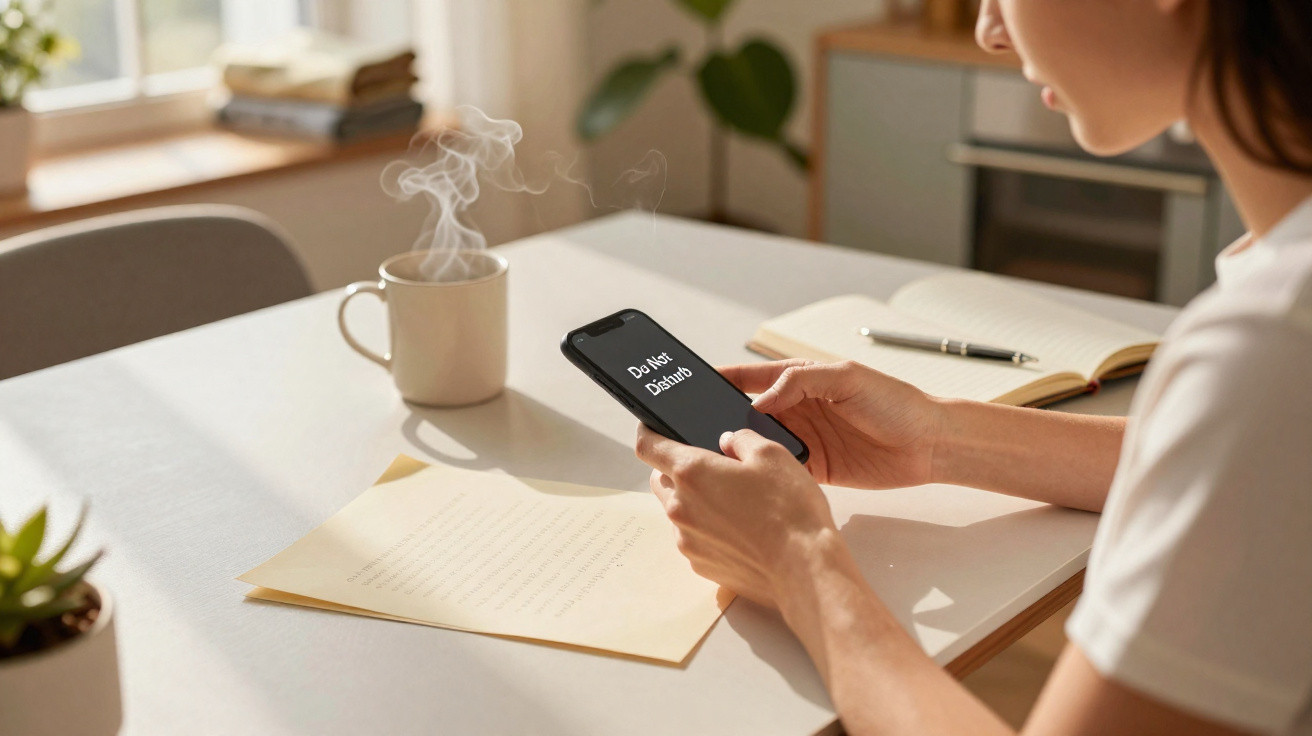
The same sofa, the same programmes, the same weekends. Yet some people need to step away for a while… so that they can return more fully. It can be unsettling. One person feels rejected; the other feels suffocated. We call it “taking distance” or “being cold”, when it is often simply a brain that works differently. Psychologists keep making the point: for some people, silence is a secret route to intimacy rather than an escape. What if time alone is their unusual but very genuine way of saying, “I care about us”?
On a Saturday evening in a small London flat, Emma scrolls through Netflix without much interest. The bedroom door is slightly ajar. Her partner, Josh, sits on the floor with his back against the bed, headphones on. He does not reply to her messages, including those sent from the next room. She wonders whether he is angry, losing interest or already “somewhere else”. In reality, he is simply catching his inner breath. After a week of appointments, meetings and noise, he feels drained.
When he eventually comes out, he smiles, makes tea and sits beside her. He places a hand on her leg as though nothing has happened. Slightly hurt, Emma wants to ask, “Why are you ignoring me like that?” Paradoxically, Josh feels more able to be there for her than he has all day. Two parallel realities, in the same living room. What if their misunderstanding has nothing to do with love?
Why some people cannot recharge in company
Psychologists describe a difference between people who replenish themselves with others and those who recover alone. The latter group is not colder or less affectionate. Their nervous system simply cannot handle the same level of stimulation. At the end of a long day, their mind is already humming. Each conversation, notification and request adds another layer of noise.
If these people remain “on” for too long, their stress rises. They may become irritable, distracted or strangely withdrawn. It is not about the person in front of them, but about the intensity surrounding them. Being alone acts as a reset button: ten, thirty or ninety minutes during which nobody needs anything from them. Once their internal gauge settles, they can return gentler, more patient and genuinely more loving. It is not so much an escape as a return to themselves.
Consider Maya, 34, who started therapy believing she was “bad at relationships”. Her partners regularly complained that she “disappeared” after spending weekends together. She needed a whole evening alone in her flat, with the curtains half drawn and her phone on silent, cooking slowly and scrolling without purpose. One former partner described it as “emotional shutdown”. Another said she was “selfish”. Eventually, she began to accept their view.
But when her therapist asked how she felt after that solitary bubble, her response surprised even her. She felt warmer, more ready to laugh and more willing to listen. More available. It was not disconnection; it was upkeep. Research supports this: studies of solitude suggest that regular time alone can lower irritability and increase empathy for some people. Put simply, space first and closeness afterwards - provided nobody interprets it personally.
Psychologists often describe it as emotional oxygen. Picture two people holding hands beneath the water. Eventually, both must surface to breathe. Some people rise together through shared rituals; others have different lung capacities. One person wears their stress on the surface and needs to talk through it straight away. The other processes everything internally and quietly before they can find words for it.
Without common language, this contrast can look harsh. The more talkative partner thinks, “If they loved me, they’d stay and talk.” The quieter one thinks, “If they loved me, they’d let me step away.” Beneath it, the need is identical: safety. The “alone-time type” is not asking for less closeness. They need a different rhythm of closeness, with pauses that do not mean a break-up.
How to take space without breaking the bond
Psychologists interviewed on this subject repeatedly suggest one practical approach: explain the distance before taking it. Rather than disappearing into another room or into your phone, say something aloud. Keep it simple: “My brain’s overloaded, I need 30 minutes to myself and then I’m all yours.” It may seem almost childish when written down, but it can change everything.
That single sentence distinguishes “I need space from you” from “I need space from the noise in my head”. It reassures the other person that the distance is not a judgement of them. It offers a time frame and a promise to come back. For the person stepping away, it also creates a clear limit: this is not silent punishment, but a brief reset. Such clarity can turn frightening withdrawal into a shared plan.
Many couples make the mistake of waiting until they reach breaking point. They swallow their exhaustion, agree to every plan, carry on talking and engaging… until their voice turns sharp or they explode over something minor. Their partner then sees only the outburst, not the hours of quiet effort that preceded it. Resentment builds on both sides.
It is kinder to state your limits early, while you are still largely calm. You could say, “I’m listening but I notice my head is getting foggy, can I have a short pause and we pick this up after dinner?” There is nothing glamorous about that sentence. Let us be honest: nobody really does this every day. Still, trying it now and then can make everyday life less abrasive. It changes “You’re always distant” into “Okay, I understand how your battery works.”
One therapist I spoke to put it this way:
“Needing time alone doesn’t mean you love people less. It often means you want to love them better, for longer.”
A few small agreements can help make this work in daily life. They may look almost too simple on the page, yet they reduce anxiety for both people.
- Agree on a code phrase meaning “I’m overwhelmed, not angry”.
- Set an approximate time limit for solo breaks, even if it is adjusted later.
- Choose one small ritual for reconnecting afterwards, such as tea, a hug or a 5-minute check-in.
- Do not allow silent “ghosting” while living in the same flat. Always say that you are stepping away.
- Make it normal for both partners to request space, rather than only the “quiet one”.
Learning to read distance as care, not danger
When you begin to regard time alone as a tool rather than a threat, the dynamic changes. A person going into another room with a book may not be “rejecting” their family. They may be safeguarding their ability to be kind later. On a difficult day, every closed door can seem like a judgement. On a better one, you can ask, “Is this about me, or about their own weather inside?”
We all recognise the moment when a partner returns from a walk alone or a quiet bath and suddenly seems lighter. Their face has colour again, and jokes come more easily. That is not magic; it is nervous-system chemistry. Cortisol levels fall as stimulation decreases. Heart rate slows down. The area of the brain that handles empathy can finally breathe. Closeness does not always develop during the hours you spend together. Sometimes it grows in the hour you allow each other to go.
Speaking openly about this difference may feel awkward initially. You may find that one of you grew up in a family where closed doors signalled conflict. For that person, silence means danger. The other may have been raised in a noisy home where solitude was a rare luxury. To them, a closed door is a gift. Neither person is wrong; you are simply following two different scripts.
Bringing this into the open is itself a form of intimacy. You get to know the backstage of the person you love: why they need to retreat on Sunday evenings, why disagreements go better after a twenty-minute pause, and why a solo trip or a night in another room can make them kinder rather than colder. When space is framed with words and care, it stops appearing to be a crack in the relationship and becomes one of its supports.
| Key point | Detail | Benefit for the reader |
|---|---|---|
| The need for solitude is neurological | Some brains become overloaded more quickly and need calm to regulate themselves | Less guilt and greater understanding of how you function |
| Naming the need to step away changes everything | A simple sentence before isolating yourself defuses the feeling of rejection | Fewer everyday conflicts and misunderstandings |
| Space can strengthen closeness | Time alone allows someone to return more present, patient and affectionate | Turn perceived distance into a tool for a stronger bond |
FAQ:
- Is it normal to feel hurt when my partner asks for time alone? Yes, this is a common response, particularly if you link distance with conflict or rejection. Calmly naming the feeling and asking what alone-time means to your partner can already lessen the sting.
- How much alone-time is “too much” in a relationship? There is no universal amount. It becomes “too much” when one person feels persistently unsafe or unheard, or when practical life and shared plans no longer work.
- Can I be both social and need a lot of solitude? Absolutely. Many outgoing people crash after intense social periods. Enjoying people and needing recovery time are not opposites; they often go together.
- What if my partner does not respect my need for space? This is an important issue to raise in an honest conversation, or even in therapy. A boundary only exists when both people agree that it matters and act accordingly.
- How can we explain this to children or friends? Use simple images: “My head is a bit full, I need a little quiet so I can be nicer after.” Over time, they will associate your solo moments not with rejection, but with a calmer, warmer version of you.




Comments
No comments yet. Be the first to comment!
Leave a Comment