
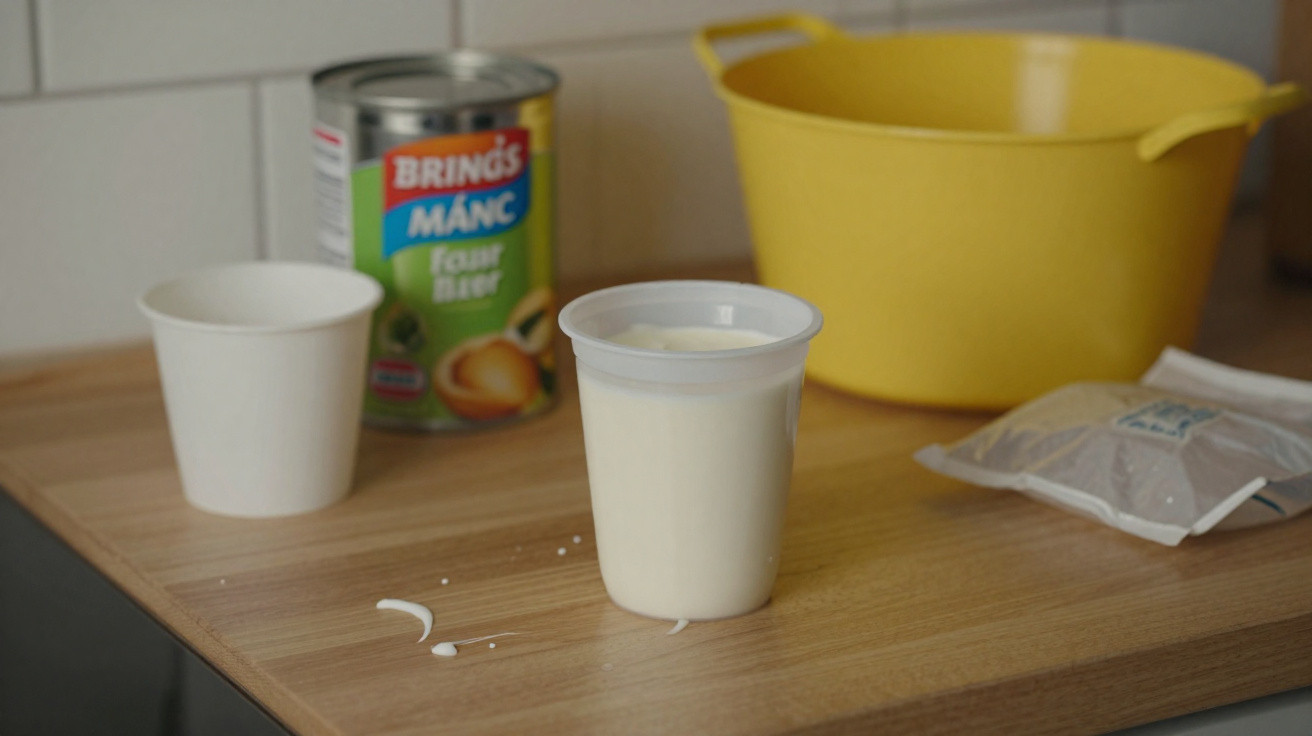
At the end of breakfast, Emma lifted the foil lid from her yoghurt, finished the final spoonful and, as she had done countless times before, dropped the half-full pot straight into the recycling bin alongside the tins. The lightweight plastic struck the metal with a dull clatter. When she opened the lid again a few minutes later, a faintly sour odour drifted upwards. She frowned, dismissed it and pressed the bag down with her foot.
Later that day, a neighbour mentioned something she could not stop thinking about: one unclean yoghurt pot can spoil an entire load of recyclables. Back home, she raised the bin lid and looked at the sticky jumble inside. Tins dotted with white residue, smeared foil and splashed cardboard. At first, it seemed innocuous. Then she understood that it was anything but.
Why your yoghurt does not belong in the tin can bin
Most of us assume we are making the responsible choice when we put “all recyclables” in one bin. A plastic yoghurt pot is recyclable. A tin is recyclable. So it can seem reasonable to put them together, still sticky and partly full, and leave the system to sort it out. In the rush of an ordinary weekday, that logic is reassuring.
But good intentions combined with leftover food can become a minor disaster as soon as the waste leaves your kitchen. Just a few spoonfuls of yoghurt leaking into a bag of clean tins can alter the whole load. Odours, bacteria, mould and residue begin to build up before the collection vehicle has even arrived. The bin may look “green” from the outside; inside, it is much closer to rubbish.
We do not often witness what happens once the lorry takes our bins away. At the sorting centre, tins and packaging travel along rapid conveyor belts. Cameras, magnets and workers’ hands attempt to separate metals from plastics, and cardboard from contamination. A small amount of yoghurt can dry onto tins, paper and other packaging, changing valuable recyclables into sticky rejects. What seemed an environmentally friendly action at home becomes an added cost and complication at the facility.
In several European cities, waste operators estimate that up to 25–30% of material delivered as “recycling” is downgraded because food remnants, liquids or unsuitable items have contaminated it. Yoghurt, sauces and dairy products are among the main offenders. One spoiled bag in a collection vehicle can affect hundreds of kilograms of material. The knock-on effect may be unseen, but it is genuine.
Picture the tins, cardboard sleeves and plastic trays from an entire street arriving together. One or two households put unemptied yoghurt pots in their bags. By the end of the collection round, the yoghurt has leaked and spread, soaking labels, collecting at the bottom and mixing with coffee grounds slipped into the bag “just this once”. At the sorting centre, workers can detect the smell from metres away. That load is not merely untidy: it can attract pests and require extra cleaning or disposal costs.
For a recycler, clean metal is ideal: it can be melted down and reused almost indefinitely. Cover it in dried yoghurt or decaying dairy residue, however, and it may need washing, additional handling or even complete rejection. The financial balance changes fast. Recycling facilities require material of a certain quality to remain viable. As contamination increases, collection charges rise, rejection rates increase too, and confidence in the system gradually fades. That partly used yoghurt pot in the tin can bin has a small but persistent part in that decline.
How to deal with yoghurt without damaging recycling
At home, the easiest step is almost ridiculously simple: finish the yoghurt. Eat the final spoonful, scrape the sides with your spoon, and only then consider the bin. If some remains, add a small splash of cold water to the pot, swirl it around and pour it into the sink. It does not need to be spotless; the aim is simply to remove the thick food residue that would spread onto other items.
When the packaging is reasonably clean, inspect its components. Many yoghurt packs consist of a plastic pot, an aluminium lid and a cardboard sleeve. Pull them apart by hand. Tins should go with metal, the plastic pot with plastics, and cardboard separately. This takes around ten extra seconds, yet that small piece of “surgery” makes your recycling more useful. The yoghurt itself should never go in the recycling bin. Put food into food waste or compost, or, where neither is available, into general waste.
On a hectic weeknight, these instructions can feel demanding. Children are shouting, pasta is boiling over and notifications are buzzing. You rinse what you can and overlook the rest. A Sunday afternoon feels different: it is quieter and slower, and you may actually remove the cardboard sleeve and flatten it. The space between those situations is where real life happens. We recycle in the middle of real life, not in a tutorial video.
On a warm summer day, dairy residue in a bin deteriorates quickly. Smells can develop within hours. Small fruit flies seem to appear from nowhere around the recycling area. Many collection workers quietly say they can identify households that regularly put food-stained packaging in their bags simply from the smell. Let’s be honest: nobody really manages it every day.
What matters is not perfection, but one straightforward principle: do not put visible food in recycling. Scrape it out, rinse quickly when you have time, and separate materials whenever practical. If you know you will not clean it, putting that dirty item in general waste is preferable to contaminating a whole bag of otherwise clean tins. This may feel counterintuitive if you are trying to “recycle everything”, but it protects the value of materials that can genuinely be reused.
Some council guidance is beginning to express this more directly. One UK waste manager put it plainly:
“We’d rather receive less recycling that’s clean than huge amounts that are dirty and end up in the incinerator. Quality beats quantity every time.”
A few visual prompts can make these small actions easier to remember when your attention is already elsewhere.
- Keep the recycling bin a little smaller than the general waste bin, so it is emptied more regularly and smells do not build up.
- Put a brief reminder on the lid: “No food. Quick rinse only.” A few simple words can have a major impact.
- Show children the difference between a clean tin and a sticky one; they often become the most diligent recycling “inspectors” in the household.
Rethinking the everyday gesture of the yoghurt pot
The next time you finish a yoghurt in your kitchen, there is a brief, quiet pause: lid in one hand, pot in the other and bin by your feet. Your choice during those three seconds may seem insignificant. Yet that is where the recycling journey truly starts - not in the collection vehicle or at the plant, but above your own bin.
For years, we have heard sweeping messages about “recycling more” and “saving the planet”, without much honest discussion of the messier reality. Yoghurt stuck to tins, sticky packaging and the one bag that smells unpleasant but still goes into the “right” bin. Explaining what really happens when food comes into contact with metal or cardboard is not about making people feel guilty. It is about helping that story take a different path.
Small routines spread without much noise. A neighbour notices you rinse a pot before walking to the shared bins. A child asks why the lid is separated from the pot and, through a simple explanation, develops a new instinct. Perhaps a building group chat shares a reminder about clean tins after the caretaker raises concerns about odours in the bin store. These small moments determine how much of what we sort at home actually receives a second life.
Discussing yoghurt and tins may appear trivial beside major environmental headlines. But this is one area where many of us can take practical action every day. The spoon, the tap, the brief look into the bin before dropping in the pot. From the outside, it is another ordinary routine. From within, it is a subtle change in how we treat the objects and leftovers that pass through our hands. And perhaps, next time you hear the hollow clink of a tin in your bin, you will hear it slightly differently.
| Key point | Detail | Benefit for the reader |
|---|---|---|
| Limit food in the bin | Avoid putting yoghurt pots that still contain food in with tins | Reduces odours, contamination and rejected recycling |
| Quick cleaning | Scrape out leftovers, rinse lightly and separate materials | Improves material quality and the likelihood that it will actually be recycled |
| Simple systems at home | Use small visual reminders, suitable bins and shared family habits | Turns a constraint into a smooth everyday routine |
FAQ:
- Can a tiny bit of yoghurt really ruin recycling? One pot will not spoil an entire lorry load, but repeated contamination across many bins reduces overall quality and results in more material being rejected at the sorting facility.
- Do I need to scrub containers until they’re spotless? No. Remove visible food and rinse briefly if you can. Recyclers do not expect perfection; they need containers without thick layers of residue.
- Should yoghurt pots go with tin cans or plastics? Most yoghurt pots are plastic rather than metal, so they should go in the plastics stream, while the foil lid normally goes with metals, depending on local rules.
- Is it better to throw a dirty pot in the trash than in recycling? Yes. A heavily soiled pot in recycling can contaminate other materials, whereas in general waste it does not reduce the value of clean recyclables.
- What if my city doesn’t accept yoghurt pots at all? Empty and rinse them before placing them in general waste, and check regularly whether your council has updated its recycling guidance.






Comments
No comments yet. Be the first to comment!
Leave a Comment