
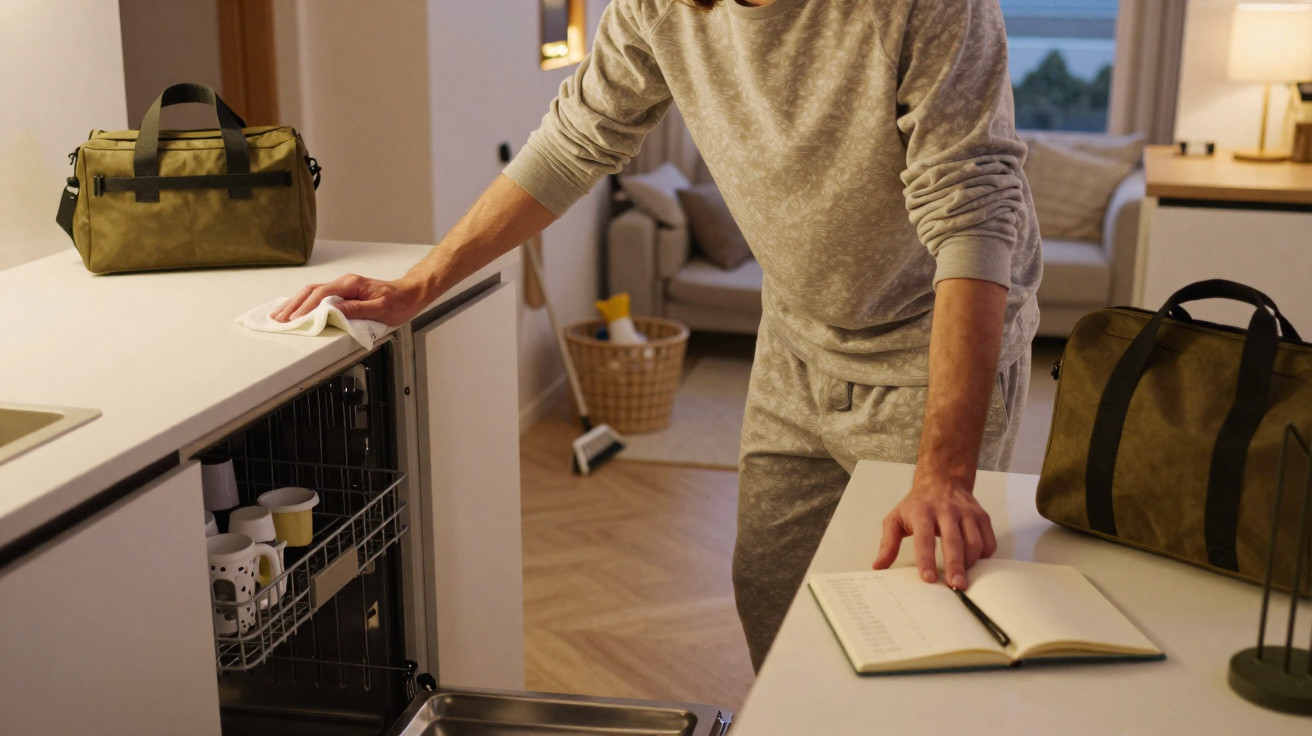
A small adjustment can make the evening easier – and leave the morning surprisingly calm.
Many households now rely on a short evening routine. It takes very little time, clears mental pressure and makes the start of the following day noticeably gentler.
Why an evening routine works
Tidiness gives the brain an unambiguous message: everything is under control. Making a few deliberate adjustments in the evening removes friction from the morning. It cuts down on time spent searching, potential arguments and impulsive chaos. It is also easier to switch off when loose ends have been dealt with.
Less stress, better sleep
A clear view of the kitchen, living room and bathroom has a calming effect. Reduced visual clutter quietens the internal alarm system. That makes falling asleep easier, as the mind is not turning over unfinished tasks.
More time in the morning
Preparing clothes, documents and journeys in advance saves steps and decisions. Just 10 to 15 minutes of preparation can turn time pressure into useful breathing room.
Invest 10 minutes in the evening, gain 20 minutes in the morning – plus a calmer pulse.
The six steps that make the difference
- Wipe down kitchen surfaces
- Set out tomorrow’s outfit and bag
- Quickly clear the living room: gather up items left around
- Do a mini bathroom check: basin, mirror, fresh towels
- Plan the morning: decide on three specific tasks
- Sweep high-traffic areas: hallway, kitchen, dining-table area
Wipe down kitchen surfaces
Clear away crumbs and splashes, and clean the chopping board. A damp cloth with a little washing-up liquid is enough. The stage is then set for a pleasant morning coffee. If you wish, empty the dishwasher too.
Time needed: 3–5 minutes. Extra tip: keep a small caddy with a cloth and spray bottle within easy reach.
Set out tomorrow’s outfit and bag
Choose a top, trousers, socks and shoes. Put your work pass, keys and headphones in your bag. Rain forecast? Add a coat and umbrella. Place the clothes visibly on a chair.
Time needed: 3 minutes. Extra tip: make a note of missing buttons or stains so your laundry plan stays on track.
Quickly clear the living room
One basket, one purpose: put everything that does not belong there inside it. Then carry the basket around the home once and return each item. The room immediately looks more restful.
Time needed: 5–8 minutes. Extra tip: use a designated tray in each room for small items.
Mini bathroom check
Rinse the basin, wipe away water marks, quickly clean the mirror, change the towels and check the toilet roll. The room smells fresh and the day begins with a cared-for feeling.
Time needed: 3–4 minutes. Extra tip: store a microfibre cloth within reach in the cupboard.
Plan the morning
Pick three tasks, not ten. Check the calendar and weather forecast. Combine errands: returning a parcel on the way to nursery? Stick a note on the door.
Time needed: 2–4 minutes. Extra tip: a mini checklist on the fridge prevents last-minute rushes.
Sweep high-traffic areas
Focus on the hallway, kitchen floor and the space around the dining table. Remove crumbs and sand. Enjoy a barefoot feeling instead of scratching sounds with your first coffee.
Time needed: 2–3 minutes. Extra tip: keep a dustpan and brush or cordless vacuum in one fixed place.
| Step | Time needed | Effect |
|---|---|---|
| Wipe down kitchen surfaces | 3–5 min. | Fewer germs, a more pleasant start in the kitchen |
| Outfit and bag | 3 min. | Getting out faster, fewer decisions |
| Clear the living room | 5–8 min. | Less distraction, a calmer field of view |
| Mini bathroom check | 3–4 min. | A fresh feeling, a clear morning routine |
| Plan the morning | 2–4 min. | Priorities are set and errands are combined smartly |
| Sweep high-traffic areas | 2–3 min. | A cleaner floor, less dirt tracked around |
Consistency beats perfection: 70 per cent of the routine delivers 100 per cent of the feeling of control.
How to make the evening routine stick
The 2-minute start
Set the lowest possible barrier: begin with two minutes. Most of the time, you will carry on anyway. A kitchen timer reduces inner resistance.
Link habits together
Attach routines to fixed cues: do the bathroom check after brushing your teeth. Sweep high-traffic areas after the news. The brain likes dependable sequences.
Involve the family
Children can tidy up with a “10-item sprint”. Your partner checks the bags. Clear responsibilities prevent discussions. A small reward at the end helps.
When energy is low
Choose three of the six steps. Do the kitchen, bathroom and planning today. Tackle the living room, sweeping and clothes tomorrow. This keeps the evening manageable.
More than tidiness: health, money and climate
Clean surfaces reduce the germ load while cooking. Clearly defined storage places prevent duplicate purchases and food waste. Short sweeps with a dustpan and brush use less electricity than lengthy vacuuming sessions at the weekend.
Keeping fewer items on the floor lowers the risk of tripping. Combining errands in the evening reduces car journeys the following day. That saves both time and nerves.
Common pitfalls – and how to avoid them
Perfectionism
Nobody needs gleaming grout at 22:00. The aim is a morning set-up that works, not a showroom. Your stop signal: a 15-minute timer.
“I’ll start later”
Choose a regular slot after dinner. Put music on, start the timer and begin. A routine depends on consistency, not motivation.
Items with no home
Create a fixed box for cables, pens and post. Anything without a designated place goes into a “waiting tray” and is given a home at the weekend.
A small calculation, a big effect
You invest 12 minutes on weekdays. That adds up to 60 minutes a week. In the morning, you save 15 minutes each day. This produces a gain of 75 minutes. That leaves a net 15 minutes, plus a calmer feeling – every week.
Over the course of a month, five to six hours of lost time from daily friction disappear. There are also fewer arguments about minor things and a start to the day that feels more sustainable.
Useful additions for experienced organisers
Create seasonal capsule wardrobes. This speeds up outfit choices. Use a small whiteboard for weekly goals and fixed appointments. A 30-minute “Sunday reset” smooths out the entire week.
For allergy sufferers, an additional evening wipe of smooth surfaces is worthwhile during pollen season. Anyone with pets can keep a lint roller by the coat rack. This prevents having to make “one more quick trip to the bedroom” just before leaving.






Comments
No comments yet. Be the first to comment!
Leave a Comment