
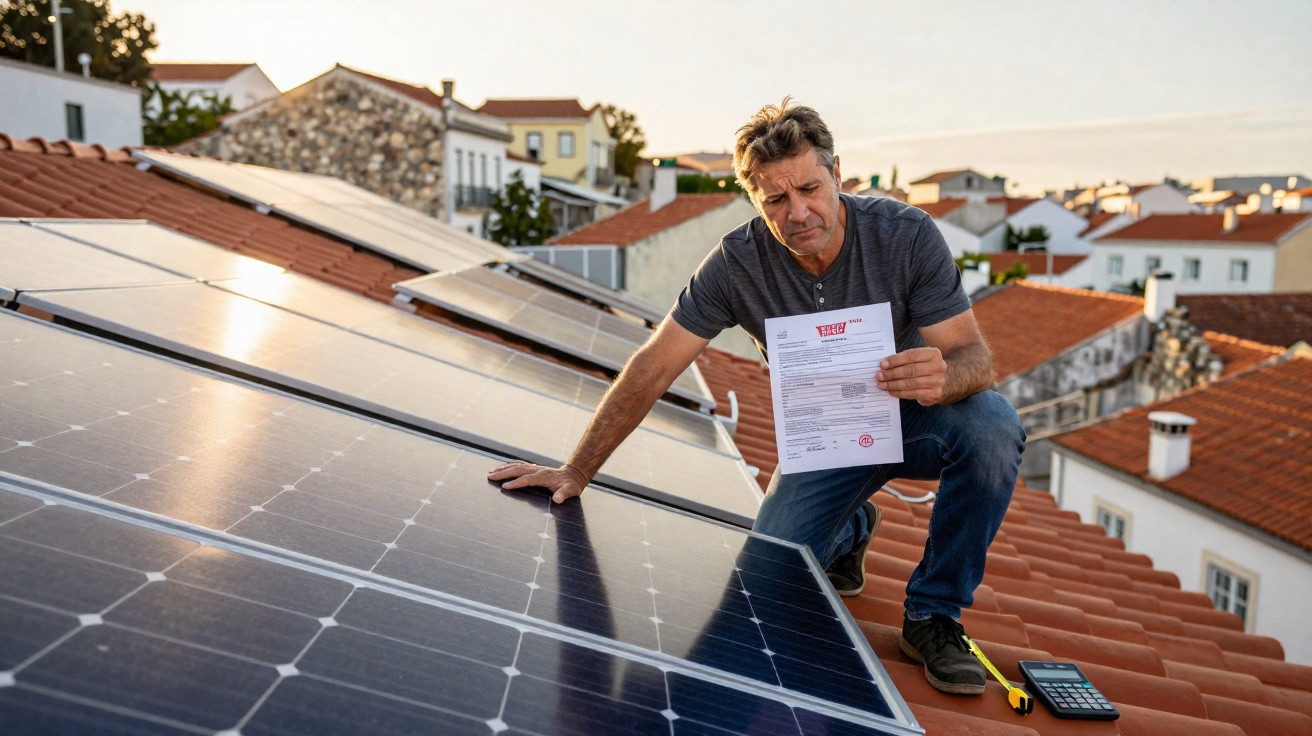
The envelope felt weighty before it was even opened.
Its paper was thick, stamped with the local tax office’s crisp black logo, and brought that familiar feeling of alarm before the seal had been broken.
Tom, a 43-year-old IT technician and father of two, had just been looking up at his newly fitted rooftop solar panels from the garden.
Birdsong, sunshine, and a quiet sense of achievement.
He had finally done it: taken out a small loan, tightened the household budget and made the greener choice.
Then he opened the tax notice.
“Reassessment of property value due to improvement,” it read.
Further down was another phrase: “luxury property tax bracket.”
The figure at the bottom left him weak at the knees.
“I installed solar panels,” he whispered.
“I didn’t build a swimming pool.”
Similar letters are arriving through letterboxes across the country.
The same panels, the same hopes of cheaper energy bills, and the same icy shock from the tax office.
The question has become painfully immediate: who should truly bear the cost of going green?
When rooftop solar is treated as a luxury
In theory, rooftop solar is the ideal middle-class success story.
It is an ordinary home with a modest roof, occupied by a family hoping to cut both its energy costs and carbon footprint.
But in many areas, gleaming solar panels can quietly bring a new description to the paperwork: “major improvement” or “luxury enhancement”.
That administrative wording converts a practical energy decision into a taxable “upgrade”.
Rather than a moral victory, it becomes a financial burden.
The contradiction is most acute in peaceful suburban streets.
The driveway is unchanged, the fence still creaks and the worn sofa remains in the sitting room.
Yet, according to the tax records, the homeowner has entered the ranks of “high-value property owners”.
It is a club they never wanted to join.
Tom’s story could happen almost anywhere: in a commuter town beyond a medium-sized city, in a typical three-bedroom semi-detached house, with a dog barking at the postman.
He paid for his 9 kW rooftop solar system with a bank loan, carefully counting every penny.
The installer said it should pay for itself in 8 to 10 years.
His electricity bills were expected to fall, the property’s resale value could increase, and he liked the thought of his children seeing panels rather than satellite dishes along the roofline.
Then the reassessment arrived.
On paper, the value of his home rose by far more than the solar panels had actually cost.
This was not simply a modest change to his yearly tax bill: it pushed him into the “special contribution” tier intended for more expensive homes.
He drove an ageing hatchback, not a Tesla.
Nevertheless, he was suddenly being taxed as though he owned a luxury property.
His neighbours took notice and, one after another, began cancelling their own solar quotations.
Nobody needed to spell out the message.
Tax authorities say they are only applying the existing rules.
In their view, solar panels are a permanent improvement that increases a home’s value.
Anything that improves long-term comfort, cuts operating costs or makes a house a small-scale power generator alters its classification, they argue.
The calculation then follows: a higher value means higher tax.
It is spreadsheet reasoning imposed on homes and the people living in them.
Critics interpret the situation very differently.
They see climate targets on one side and a system that penalises, financially, the people taking action to meet them on the other.
When a straightforward climate measure is put in the same category as a home spa, the gap in trust grows wider.
The reality is that few people study the small print in tax legislation before agreeing to a solar contract.
They look at the hours of sunlight their roof receives, their electricity bill and the money in their account.
The policy wording appears later, in the form of an invoice.
Check the small print before installing solar panels
One way homeowners are pushing back is by doing something they probably never expected: consulting a tax adviser before contacting an installer.
It may not be romantic or glamorous green technology, but it can be vital.
Some local rules exempt renewable-energy systems from reassessment for a set number of years.
Others limit the amount by which an energy upgrade can increase a property’s value.
A small number of cities actively protect solar adopters from extra tax in order to encourage installation.
There is only one way to establish which rules apply where you live: check every line.
That could involve calling the town hall, emailing the tax office or paying for an hour with a specialist.
These may be dry discussions, but over 15 or 20 years the financial difference can be severe.
Today, the most sensible solar project often begins with a spreadsheet rather than on the roof.
Many homeowners say they approached solar with equal measures of optimism and blind faith.
Government campaigns, green slogans and neighbours sharing photographs of gleaming panels on social media can make it appear an obvious and uncomplicated choice.
Then the practical consequences arrive.
There may be a reassessment in one letter, a “green surcharge” in another and conflicting messages from different departments.
Rules originally intended for large commercial schemes can end up being applied to modest homes.
The emotional impact may be greater than the financial hit.
You believed you were becoming part of the solution, only to be treated as a speculator.
We have all experienced that moment of feeling punished for trying to do the right thing.
This is why specialists continue to repeat the same unexciting guidance: keep records of everything.
Save contracts, invoices, dates, subsidy commitments and correspondence with local authorities.
If a tax notice arrives, those documents may be your only protection.
“I’m trying to help the planet, not get rich,” Tom told me, holding the tax letter between his fingertips like it might stain.
“I’ll still keep the panels, but next time I hear a politician asking us to ‘go green’, I’ll remember this bill.”
- Ask your municipality whether renewable-energy upgrades qualify for exemptions or temporary relief before you sign a contract.
- Keep written proof of any promised subsidies, rebates or tax breaks connected with the solar installation.
- Check if your region distinguishes between standard energy renovations and luxury improvements in its property-tax rules.
- Speak to neighbours who have already fitted solar panels to find out whether they faced reassessments or unexpected levies.
- Plan your budget for more than installation and upkeep: allow for a possible rise in annual property charges.
The rooftop culture war over the energy transition
Behind the technical regulations lies a more difficult argument: who should carry the financial burden of the energy transition?
Should it be households such as Tom’s, already balancing mortgages and food prices, or large companies with greater resources and full-time tax lawyers?
Some argue that homeowners should pay more if solar panels increase the value of their property.
Others say that, during a climate emergency, green investment should be viewed as a public good rather than a private luxury.
These are two ideas of fairness meeting on the same roof.
The divide is audible around family dinner tables.
One uncle describes solar subsidies as “middle-class welfare”; another responds that fossil-fuel businesses receive much more support, merely concealed within corporate tax rules.
One sibling will not fit panels “until the rules are clear”; another goes ahead in the hope that the system will eventually catch up.
Every country says it wants millions of roofs covered in panels, yet the small print still treats many of those roofs like private playgrounds for the rich.
| Key point | Detail | Value for the reader |
|---|---|---|
| Check local tax rules first | Solar can count as a “luxury improvement” and trigger reassessments | Avoid surprise bills that wipe out expected savings |
| Document every promise | Keep contracts, subsidy letters, and emails in one place | Have evidence if tax treatment or grants are later challenged |
| Think long-term, not just in panels | Consider resale, policy changes, and ongoing property-tax trends | Decide if solar fits your real financial and personal situation |
FAQ:
- Question 1 Can installing rooftop solar really push my home into a luxury tax bracket?
- Answer 1 In some regions, yes. Panels are classed as a major improvement that raises your property’s taxable value, which can move you into a higher band or special contribution tier.
- Question 2 How can I find out the rules before I install anything?
- Answer 2 Contact your local tax office or municipal planning department, and look for written guidelines on “energy renovations” or “property improvements” that affect assessments.
- Question 3 Are there places where solar is protected from higher property taxes?
- Answer 3 Yes. Some cities and regions have exemptions or grace periods where renewable energy upgrades don’t trigger higher property taxes for several years.
- Question 4 What if I already installed panels and then get hit with a big reassessment?
- Answer 4 Gather your paperwork and consider appealing. A tax adviser, local consumer group or homeowners’ association might help challenge the classification or negotiate a phased increase.
- Question 5 Is rooftop solar still worth it financially despite the tax risk?
- Answer 5 For many households, yes - especially where energy prices are high and policies are supportive. The key is to run realistic numbers that include potential tax changes, not just optimistic savings charts.





Comments
No comments yet. Be the first to comment!
Leave a Comment