

At the supermarket checkout, Monique counts her coins again before handing over her bank card. At 74, she lives alone on a modest pension and dislikes discussing money, let alone asking for support. “I manage,” she tells her children repeatedly. Yet, like thousands of other pensioners, she may be able to receive extra income each month through the Allocation de solidarité aux personnes âgées (ASPA). The issue is not always that an application has been refused. Very often, no application is made at all. The scheme remains poorly understood, surrounded by rumours and worries about inheritance. Money that could ease the cost of food shopping, heating or healthcare is therefore left unclaimed. Sometimes, all it takes is a straightforward check.
This little-known support can top up a modest pension
The ASPA, formerly known as the “minimum old-age pension”, is intended for older people with limited means. It is not automatically added to every pension: its purpose is to bring the income of a single pensioner or couple up to an annual threshold. Many people assume they do not qualify because they already receive a pension, however small it may be. This is precisely where the misunderstanding begins. The payment may be available to a former employee, a farmer, someone who has experienced periods of unemployment, or a person who spent years working part-time. Receiving a pension does not necessarily mean that there is enough money to live on.
The same situation regularly arises at social welfare advice sessions. A 68-year-old widower says he receives just under €900 a month and has decided against replacing his glasses; a former care assistant has a pension split across several funds. Neither had started the process, convinced that “the minimum old-age pension is for other people”. According to estimates frequently cited by public bodies and charities, almost one in two eligible people may not claim the ASPA. Every year, this non-take-up means substantial sums never reach the households concerned. Behind the figures are, above all, less well-stocked fridges and bills left unpaid for longer.
A further reason for this lack of awareness is the way social entitlements are presented. Letters from pension funds are often dense, acronyms pile up, and the amounts differ according to family circumstances. Let us be honest: nobody really deals with this every day. The ASPA is based on household income, not solely on the main pension, which can make the calculation seem impossible to understand. A spouse’s income, certain assets and pensions received abroad may all be considered when the application is assessed. The principle, however, is fairly simple: if an older person who lives permanently in France does not reach the required level of income, they can apply for this top-up.
Applying for ASPA without being discouraged
The first step is to check the household’s actual monthly income, including every retirement pension, survivor’s pension and other regular income. The next step is to look at the current thresholds on the official Service-Public.fr website or with the body paying the main pension: Carsat, MSA, the civil service pension fund or another relevant scheme. Amounts are uprated, so it is best not to rely on information read two years ago. A benefits calculation or an appointment with a social worker can resolve many uncertainties. Asking for an appointment costs nothing, and it will often clarify the situation within a few minutes.
The most common mistake is to decide too quickly that you are “not eligible” because you have a small savings account, an old car or a home used as your main residence. Each item is assessed under specific rules, and not all savings have the same effect on the calculation. Another concern is recovery from an estate after death. This can apply in certain circumstances, but only where the net value of the estate exceeds a threshold set by law, which may change. This possibility should be explained clearly, without either exaggerating it or concealing it. Turning down essential support because of a misunderstood rule can have serious consequences for years.
The application usually requires proof of identity, residence, income and pensions, along with information about the applicant’s relationship status and assets. Gathering these documents gradually helps prevent that sense of an administrative mountain which leads people to put the letter aside until it is forgotten at the bottom of a drawer.
“The right approach is not to guess whether you are entitled, but to have it checked,” a local social adviser regularly points out.
- collect recent pension statements;
- note the household’s income over the past few months;
- contact the relevant pension fund;
- ask the local CCAS for help if the form seems complicated.
An incomplete application can be completed later: do not give up because one document is missing at the first attempt.
A matter of money, but also of dignity
Claiming ASPA is neither a favour nor an admission of failure. It is the use of an entitlement designed to prevent old age and an incomplete working life from leading to silent poverty. Many pensioners have worked throughout their lives, sometimes in physically demanding jobs, with gaps that do not show clearly on their records: seasonal work, unpaid family help, involuntary part-time employment, or career breaks to raise children. By the time retirement arrives, those fragments can make a difference. Even a modest monthly payment can restore some room to deal with the unexpected. A dentist appointment no longer has to be postponed. The boiler no longer becomes a constant source of anxiety.
There is also a deeply human side to this lack of take-up. Some older people fear being a burden, while others worry that relatives or public authorities will judge them. They have learned to live on very little and may sometimes view going without as a form of courage. Yet turning down the heating, skipping a meal or foregoing care should never be seen as proof of dignity. Relatives can play a quiet part: raising the question without pushing, offering to print a form, or accompanying them to an appointment. Discussing a parent’s finances is not always easy. One simple sentence may be enough: “Shall we check together, just to make sure?”
Before making any decision, it is also helpful to distinguish ASPA from other possible support: housing benefit, Complementary Health Solidarity, local departmental support, social tariffs or help from pension funds. A pensioner may be refused ASPA while being entitled to another form of assistance, or the reverse may apply. Circumstances can change after bereavement, separation, a rent increase or a reduction in a spouse’s income. Nothing is fixed. Digital tools can help, but in-person support at the CCAS, France Services or an association remains valuable for people who are not comfortable using the internet. The most useful entitlement is often the one people finally dare to check.
Discussing entitlements can transform everyday life
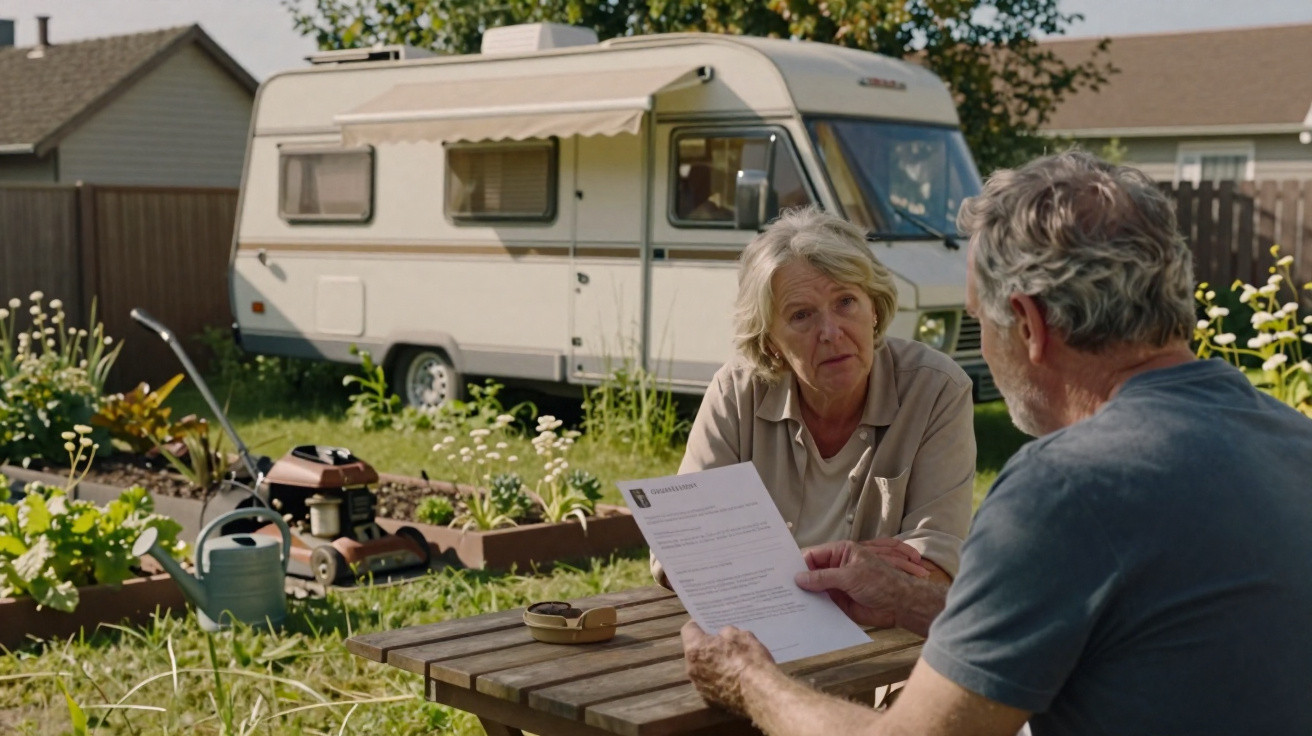
Monique’s story mirrors that of many pensioners who discover too late that they could have asked for support. She did not complete her application alone: her daughter called the CCAS, then they gathered the paperwork on the kitchen table, between a cup of coffee and the month’s bills. This seemingly ordinary action turned a vague worry into a practical step. The rates, residence requirements and any possible consequences for an estate should always be checked with an official source, as the rules change. One thing remains clear: nobody should give up an entitlement through lack of information. Within a family, a block of flats or a village, sharing this option can sometimes achieve far more than people imagine.
| Key point | Detail | Benefit for the reader |
|---|---|---|
| The support concerned | ASPA tops up the income of older pensioners on modest means. | Identify an entitlement that is often mistaken for an ordinary pension. |
| The right contact | The pension fund, CCAS or France Services can provide guidance and help with the application. | Avoid facing forms and calculations alone. |
| The point to check | Household income and recovery from an estate must be reviewed on a case-by-case basis. | Make decisions using reliable information rather than rumours. |





Comments
No comments yet. Be the first to comment!
Leave a Comment