
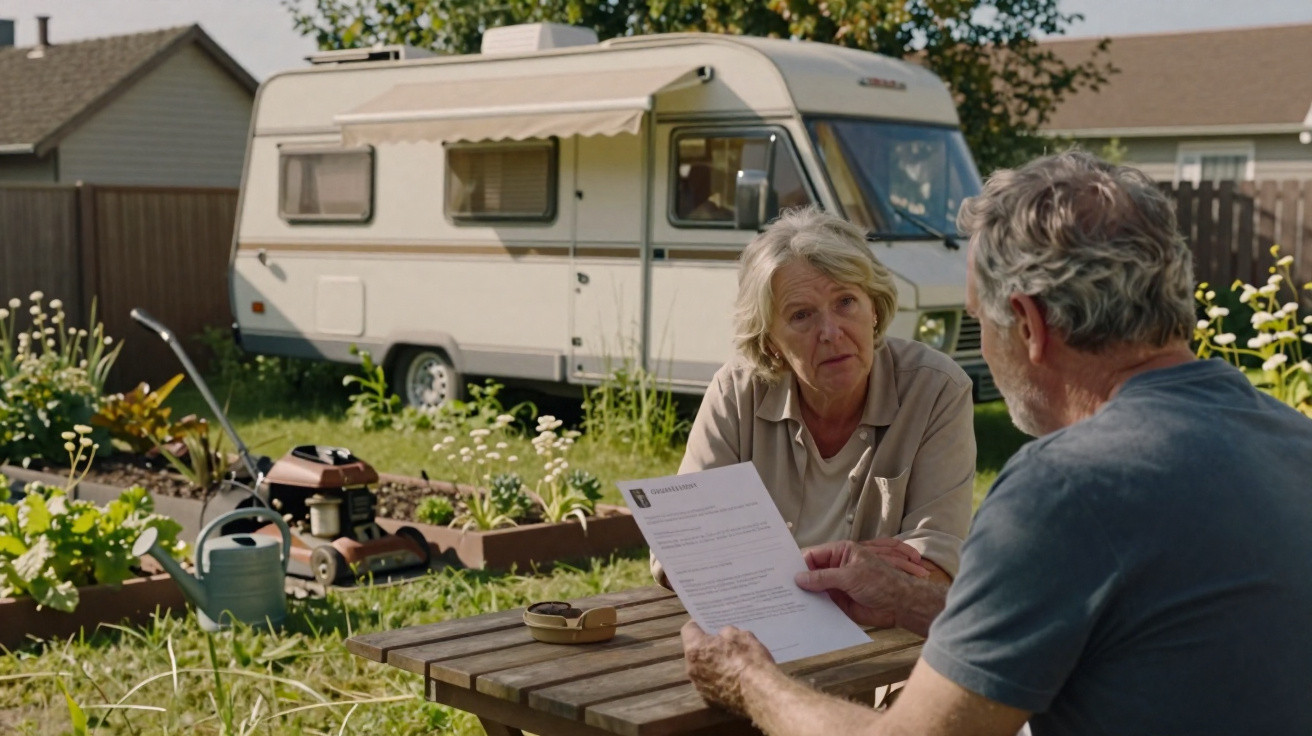
For seven years, Alain and Patricia’s motorhome had been sitting at the bottom of their garden. As far as they were concerned, it was bothering nobody: it was used for a few summer weekends, as occasional sleeping space for the grandchildren, and gave them the reassuring feeling that holidays were always close at hand. That changed when a letter from the council turned the ageing vehicle into a source of conflict.
The gate had barely shut before Patricia, standing in the kitchen, read the letter for the third time. It referred to a council inspection, a “permanent installation” and possible failure to comply with local planning rules. Alain kept insisting that, although the motorhome had not moved for years, it was still a vehicle, with wheels, registration and insurance. In many households, the same scene would prompt the same concern: can you genuinely be challenged over a motorhome parked on your own property? The detail troubling the council is not always the one people expect.
A vehicle in the garden or an installation that has become permanent?
From the street, Alain and Patricia’s plot looked unremarkable: a slightly overgrown hedge, a shed, folding chairs and, right at the back, the white outline of the motorhome. The issue was not merely that it was there, but that it had remained still for so long and appeared to be in use. When a leisure vehicle stays in the same place over an extended period, some councils may decide it is no longer simply parked, particularly if it becomes an extra living space. The dividing line can seem unclear, until someone marks it on a cadastral plan.
In their situation, several details may have caught an officer’s eye during the visit: wheel chocks, a discreet electricity connection and a small paved patio laid outside the door. Patricia occasionally dried laundry there, while Alain used the space for DIY when rain threatened. None of this seemed unusual to them. Taken together, however, these details suggest a vehicle that has been set up rather than merely parked. Let us be honest: nobody does all this every day, yet a family habit can ultimately look like a permanent alteration in the eyes of the authorities.
The council is not necessarily criticising Alain and Patricia for owning a motorhome. Its main concern is whether the vehicle is being used as regular accommodation, connected to services or permanently changing the use of the land. The rules differ according to the local development plan, the designation of the area and any applicable council bylaws. Scrutiny is greater in certain locations, especially near a protected site or on agricultural land. A roadworthy motorhome is not automatically a building, but planning issues may arise when its installation appears fixed.
The council’s letter: how to respond without panicking
The most helpful first step is to read every line of the letter and identify the language used: a request for information, an enforcement notice, a finding of a breach or a simple invitation to regularise the position do not have the same consequences. Alain initially wanted to call, convinced that an explanation would be enough. Patricia preferred to arrange a meeting with the planning department, taking photographs of the vehicle, its registration certificate and insurance documents. This is often a sensible approach: remain calm, show the actual situation and ask exactly which local rule is being cited.
A common mistake is either to dismiss the issue or, conversely, to move the motorhome hurriedly without understanding the allegation. If the council refers to a connection, patio, awning or year-round occupation, removing those features may be more relevant than concealing the vehicle beneath a cover. The local development plan, available from the council or on its website, should also be checked. Building land does not necessarily grant free rein, and a private garden remains subject to rules that many people discover too late.
Before replying, Alain and Patricia made a very simple list of everything visible around the motorhome. This helped them realise that the discussion was not solely about the vehicle, but about the way it fitted into the plot and the impression of permanence it gave neighbours.
“We thought we were preserving a reminder of our travels. The council saw a fixed installation. We had to accept that both viewpoints could coexist,” Patricia explains.
- Check the rule that applies under the local development plan or zoning regulations;
- Keep the registration certificate, insurance documents and photographs showing that the vehicle is mobile;
- Identify any connections, chocks, patios or awnings that could raise questions;
- Ask the council for a written response before incurring costs;
- Seek advice from a planning law professional if the letter announces a procedure.
What this motorhome story says about gardens and our habits
Over the years, gardens have become far more than green spaces. They may contain an office, guest bedroom, caravan, spa, trailer converted into a workshop or an old motorhome filled with memories. There is something both warm and practical about these choices: gaining a room without moving house, welcoming family, doing DIY in peace or keeping a little freedom close to home. Yet a garden is never entirely out of sight. It forms part of a neighbourhood, a landscape and collective rules that are sometimes poorly understood.
For Alain and Patricia, the council inspection came as a shock, without necessarily leading to an immediate penalty. They understood that speaking with the council could prevent matters escalating, provided they did not leave it until the last moment. The real risk often comes from silence, when each side holds its ground and explanations arrive only after a finding has been made. A council officer does not know a family’s story; homeowners, meanwhile, do not always know the precise restrictions affecting their plot.
The case also raises a wider question: how far can people adapt their home without quietly turning their garden into extra living accommodation? There is no identical answer for every council area. The right instinct is to look at the plot through the eyes of a neighbour or an officer: what makes the installation look permanent? An electrical socket, a patio, hidden wheels, regular occupants? These small signs, ordinary in isolation, can change everything.
| Key point | Detail | Value for the reader |
|---|---|---|
| Length of parking | A motorhome left in the same place for a long time may prompt an inspection, especially if it appears no longer to be used on the road. | Understand why seven years without moving attracts attention. |
| Installation features | Connections, wheel chocks, a patio, awning or use as accommodation may influence the council’s assessment. | Identify the details to check in your own garden. |
| Dialogue with the council | A written request and a meeting with the planning department can often clarify the situation. | Respond methodically rather than anxiously. |
Also read: Unlike Germany, this Nordic country, which abandoned nuclear power 46 years ago, has finally reversed its decision and opted for British SMRs
Also read: Alain, 68, parks his motorhome behind the hedge: it is neither the height nor the hedge that causes the problem





Comments
No comments yet. Be the first to comment!
Leave a Comment