
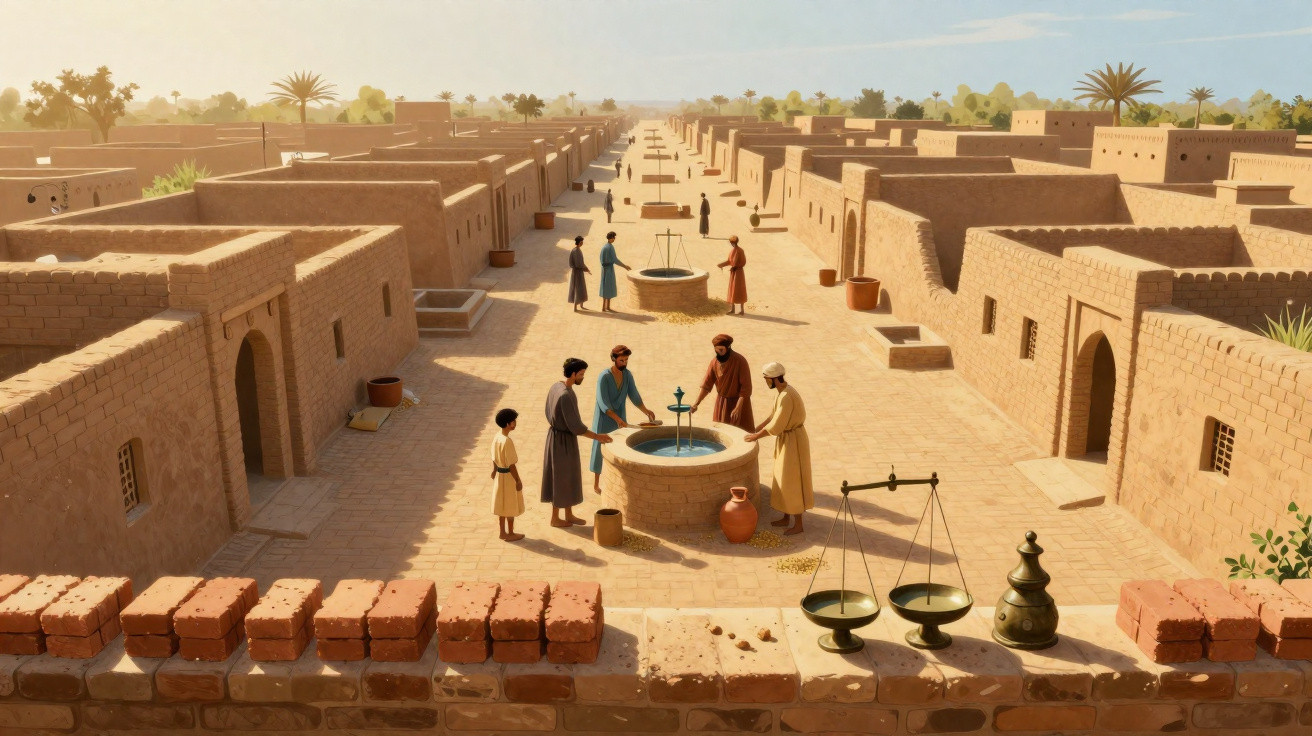
Mohenjo-daro, the biggest city of the Indus civilisation, which occupied areas of present-day Pakistan and India from 2600–1900 BCE, appears to have defied a familiar historical pattern in one important respect.
As civilisations expand from modest villages into vast cities, the divide between rich and poor normally grows. At Mohenjo-daro, however, the reverse seems to have occurred.
Mohenjo-daro and a narrowing wealth gap
A new study in Antiquity, conducted by researchers at the University of York and the University of Cambridge, examined 309 excavated homes at Mohenjo-daro in Pakistan's Sindh province.
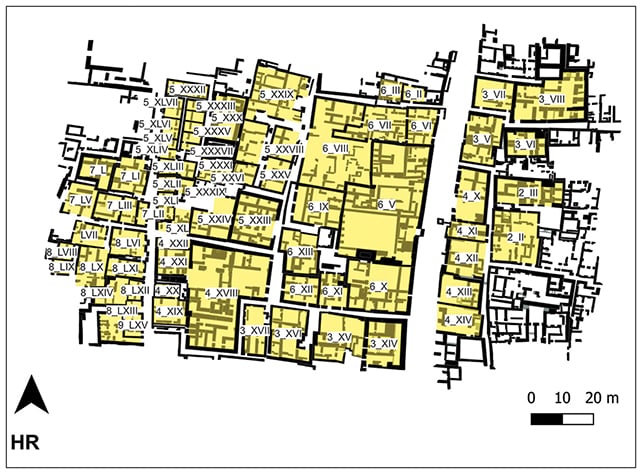
The researchers examined the sizes of 309 properties. (Green et al., Antiquity, 2026)
The team treated house size as an indicator of wealth. They found that the difference between the most and least affluent households was far smaller than in comparable ancient Greek and Maya cities. Because the houses could also be dated, the researchers were able to track a decline in inequality as Mohenjo-daro remained prosperous.
"Legacy data from the ancient city shows that as the city matured, the gap between the largest and smallest homes narrowed," says University of York archaeologist Adam Green.
"In fact by its later years, the wealth gap in this massive urban centre had dropped to levels typical of the first farming villages."
How the researchers measured inequality
The researchers used a Gini coefficient: a calculation archaeologists commonly apply to estimate household wealth from dwelling size, since bigger homes require more resources to construct, maintain and operate.
On this measure, 0 represents complete equality and 1 represents complete inequality. Mohenjo-daro recorded 0.44 overall, against 0.86 for Knossos, a Bronze Age Greek city, and 0.75 for the Maya site of Palenque.
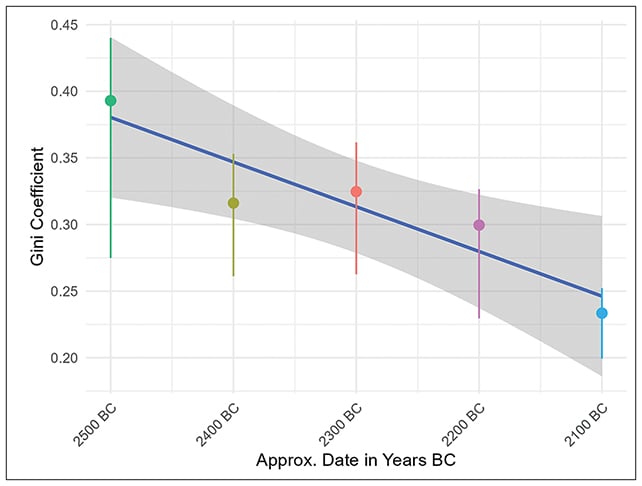
The city seems to have become more egalitarian over time. (Green et al., Antiquity, 2026)
"While ancient Egyptians were building pyramids for god-kings, and the Greeks were constructing massive palaces at Knossos, the people of the Indus were building something entirely different," says Green.
"Instead of gold-filled tombs and huge temples, Mohenjo-daro focused on sophisticated brick-lined drains and organized street layouts. Instead of allowing the perks of society to accumulate with a tiny elite, the city's amenities were widely distributed amongst the everyday households."
Mohenjo-daro's reputation as a comparatively egalitarian place is not entirely new. Researchers have long noted the lack of grand palaces, tombs and statues.
Yet this fresh assessment of property sizes provides experts with firm evidence of how evenly resources were distributed, as well as how that distribution shifted through time.
"In the period when inequality appears to be lowest, productivity appears to rise," says Green. "It challenges the idea that prosperity requires us to concentrate decision-making powers in the hands of the few."
Evidence of shared resources in the Indus civilisation
Earlier research has identified further indications of a civilisation structured around collective benefit rather than individual advantage. These include the decentralised use of stone seals-an early system for handling credit and debt-and standard weights and measures used across social classes and communities to ensure fairness.
Related: Is Your Country Lazy or What? "Activity Inequality" May Be The Best Measure
Other research has proposed that Mohenjo-daro's residents gathered in 'deliberative spaces' for city governance, directing time, labour and resources towards projects that served everybody.
Together, these findings question the assumption that greater prosperity inevitably brings greater inequality. At a time when the modern gap between rich and poor is widening, the Indus people may offer lessons.
"It is quite an interesting lesson for modern societies, as the Indus civilization demonstrates clearly that an urban society can be highly productive and inventive at scale, whilst also ensuring that resources and power are shared equitably," says Green.
"In fact, doing so may even have been essential to sustaining prosperity over the centuries."
The research was published in Antiquity.
This article was fact-checked and edited by Fiona MacDonald. Although we take pride in our process, we are only human. If you notice an error, please tell us.





Comments
No comments yet. Be the first to comment!
Leave a Comment