
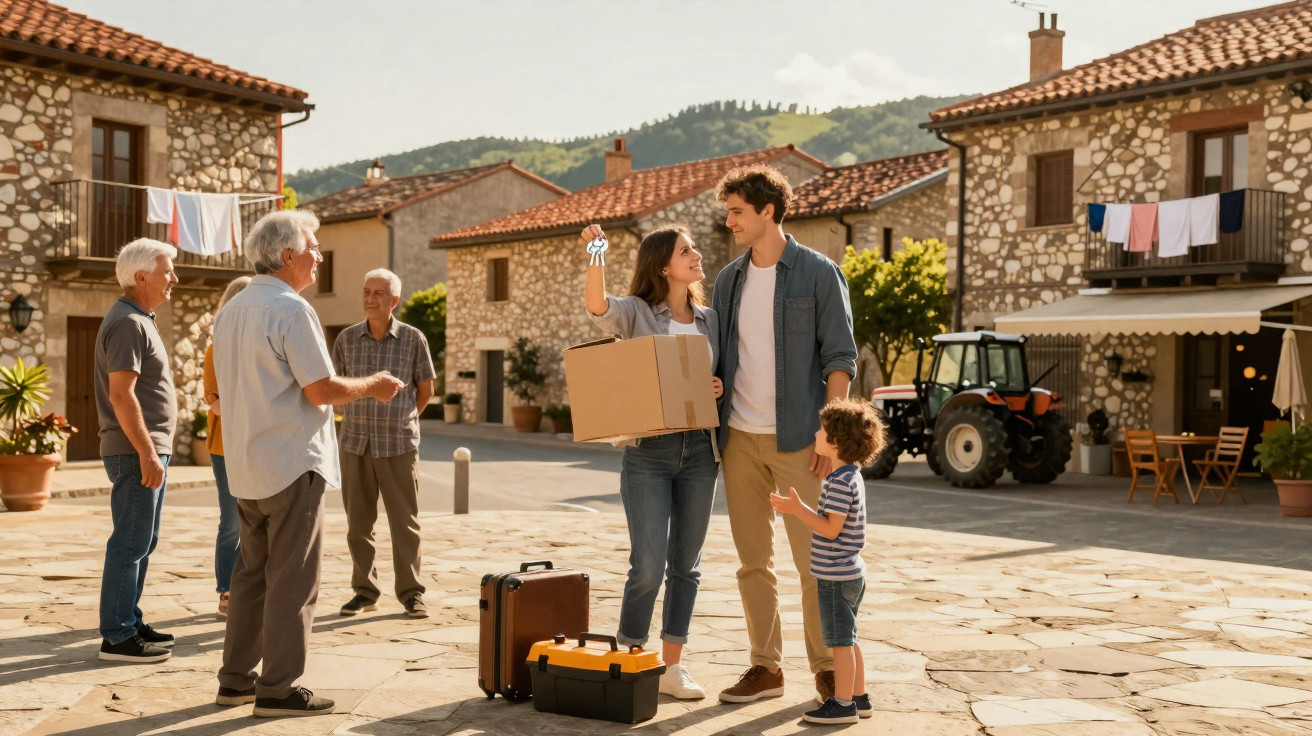
The village of 40 inhabitants that attracted attention by offering both housing and work is Arenillas, in Spain’s province of Soria. The scheme was intended to find a family willing to leave urban routines behind and settle permanently in rural Castilla y León, helping to keep local services, properties and community ties alive.
What did Arenillas offer its new residents?
The package provided a refurbished, municipally owned home with no rent to pay. The so-called “free house” did not involve ownership being transferred; instead, it gave the selected family the right to live in the property provided that it met the project’s requirements.
It also included a bricklayer’s post focused on maintaining and restoring municipal buildings. Running the social bar was presented as an additional activity that could bring in income while helping the family become part of village life.
Who was the Spanish village looking for?
The initiative gave priority to people genuinely planning to stay in the village, rather than visitors seeking a short-term experience. The selection process considered the following factors:
- willingness to make Arenillas their permanent home;
- experience in, or an interest in, construction and maintenance work;
- ability to adjust to a community with very few residents;
- preference for families with school-age children;
- willingness to take part in everyday local life and activities.
Why would a village provide housing and a job?
Arenillas is affected by the rural depopulation facing many communities in inland Spain. With too few permanent residents, businesses disappear, buildings stand empty, and it becomes harder to retain services such as transport, schooling and everyday provision.
The council and the local cultural association had already renovated seven homes in an effort to attract families. In summer, the population can rise to almost 300 people, yet only a few dozen residents remain once the holiday and festival period has ended.
What would daily life be like in this small municipality?
Moving there offered peace, access to the rural landscape and direct involvement in a close-knit community. However, it also required adapting to the distance from major centres and the limited range of available services.
- school transport took children to Berlanga de Duero, around 20 kilometres away;
- the social bar served as one of the village’s main meeting places;
- farming, sheep rearing and lavender cultivation formed part of the local economy;
- festivals and cultural events temporarily brought more activity to the village;
- shopping, education and certain appointments required travel within the region.
Is the opportunity to live in Arenillas still available?
The original offer drew 116 expressions of interest in under a week and, after attracting international attention, received thousands of enquiries. Local information from April 2026 indicated that a family had already been selected and that applications had closed.
The story remains relevant because it shows how rent-free housing and local employment can help address population decline. In Arenillas, the aim was not simply to fill an empty property, but to find new neighbours ready to work, put down roots and sustain everyday life in this small Spanish municipality.


Comments
No comments yet. Be the first to comment!
Leave a Comment