
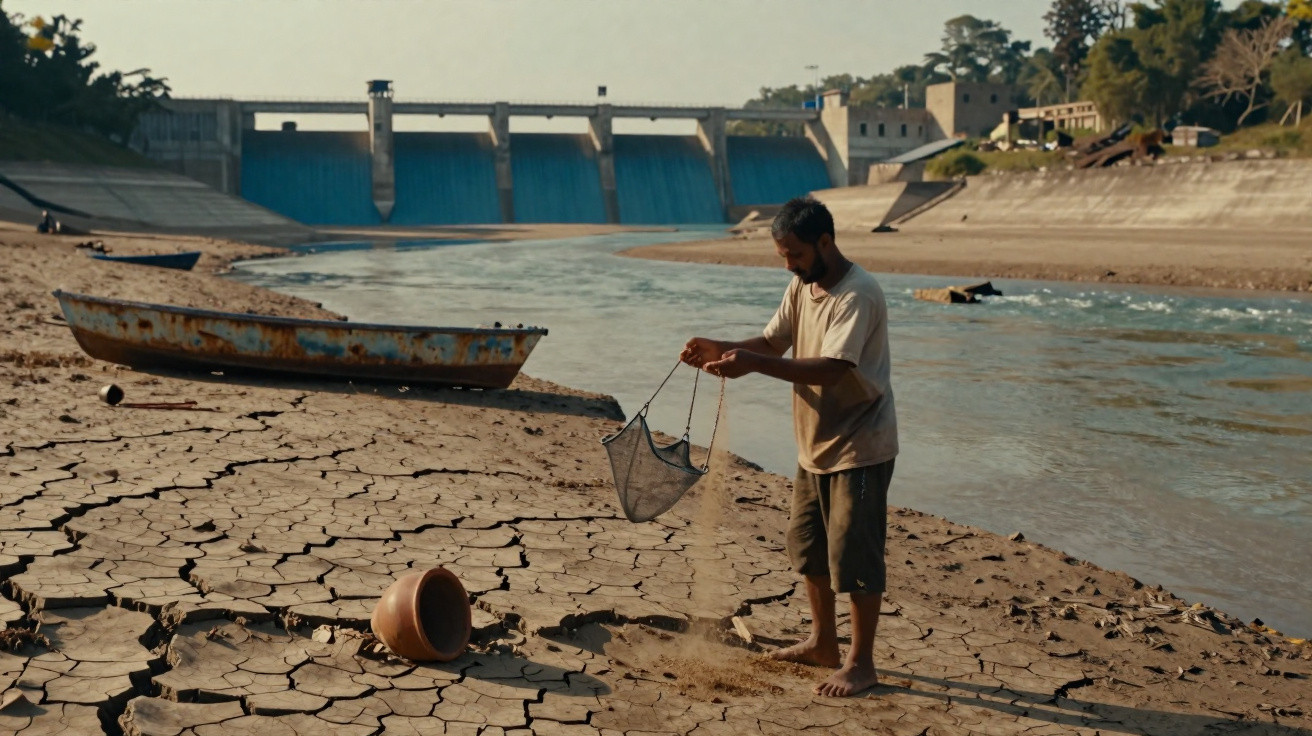
The river appears broad and abundant, yet the villagers along its banks shake their heads. “It’s thinner,” one tells me, pulling bare feet through sand that was once fertile silt. Hundreds of kilometres upstream, a concrete barrier holds back the water - along with the life-giving grains that once travelled freely.
Fishing nets are coming up less full here. Vegetable plots are becoming saline. A jetty built just ten years ago now dangles above a retreating waterline. The shift is subtle, almost courteous, like a neighbour gradually claiming your garden while smiling over the fence.
The dam is still celebrated for its electricity, prestige and promise of “modern development”. But downstream, those assurances sound increasingly empty. Something essential has disappeared, though it cannot be seen with the naked eye.
The invisible cargo rivers once carried
Stand on almost any major river delta at sunset and watch the light. It gleams on the water, certainly, but also seems to shine from the earth, the muddy banks and the weathered hands of farmers who once relied on the floods. For millennia, rivers have carried more than water: they have transported sediment - an unceasing, quiet stream of sand, silt and clay from the mountains to the sea.
This invisible cargo created the fertile Nile Valley in Egypt, nourished rice paddies along the Mekong and formed the broad, resilient Mississippi Delta. Each season, floodwater spilled over riverbanks, laid down a fine layer of material and then withdrew. Farmers understood these cycles as they would a calendar. There was no app or satellite, only the familiar rhythm of mud and water. Break that rhythm, and the entire downstream system begins to falter.
The Nile offers a striking example. Building the Aswan High Dam in the 1960s abruptly transformed this ancient relationship. Before the dam, yearly floods spread a smooth layer of nutrient-rich sediment across farmland - a natural fertiliser that supported millions of people. After the concrete wall was built, almost all of that sediment began collecting on the reservoir bed. Farmers downstream suddenly needed to purchase chemical fertilisers to replace what the river had stopped supplying. With less silt reaching the Mediterranean, coastal fisheries declined, while sections of the Nile Delta began eroding as waves encountered no fresh upstream material.
The Mekong presents a comparable story, but at a quicker pace. A surge in dam construction on its main channel and tributaries has captured vast quantities of sediment that previously fed Cambodia’s floodplains and Vietnam’s delta. Researchers estimate that the Mekong’s sediment supply to the sea could fall by more than half this century. In Vietnam’s Mekong Delta, one of the world’s great rice bowls, farmers see fields sinking and canals becoming deeper as soft ground compacts without fresh deposits. Up to 20 million people live across this subsiding landscape, caught between rising seas and rivers that are being emptied of sediment.
Rivers are not simply pipes that transfer water from A to B. They are moving belts of matter and energy that continually remake the land. Dams disrupt that movement in a direct physical sense. Upstream of the wall, the river slows. As its flow weakens, heavier sand and gravel settle onto the reservoir floor, accumulating like an unseen delta beneath the surface. Fine silt and clay can travel farther, but much of this material is captured too, particularly in long, narrow reservoirs. Water released downstream is therefore often clearer - and “hungrier” - carrying more energy than sediment. It begins eroding riverbeds and banks, taking material from downstream areas because it can no longer receive it from upstream.
Rethinking dams when sediment, not just water, is the issue
Engineers and river communities are gradually adopting a different approach: treating sediment as a resource rather than a nuisance. One practical measure is to design and run dams with sediment “pass-through” as a priority. Instead of retaining everything, operators can release controlled pulses of high flow that imitate natural floods and flush out part of the stored material. This can involve lowering reservoir levels at particular times of year, opening bottom gates or coordinating releases from several dams in a cascade.
It is neither straightforward nor likely to look ideal on a spreadsheet. Electricity generation may temporarily fall, boat traffic may have to stop, and water managers must work closely with downstream communities to ensure sudden releases do not become disasters. Even so, focused sediment management can give deltas a chance to survive. Managed flood releases on the Rhône and the Colorado, for instance, have helped restore sandbars and habitats while delivering more sediment downstream, without requiring the dams to be dismantled altogether.
Many nations embraced dam building with a form of engineering bravado. Concrete walls were raised more quickly than the science developed. Planners are now beginning to confront a more difficult reality: some dams are in unsuitable locations, or have been designed to fulfil too many functions at once. Let us be honest: nobody really does this every day - looks at a dam and asks whether its design respects the life of a delta 800 kilometres away. Yet future water and energy plans need to pose precisely this question, especially for proposed projects in sediment-rich basins such as the Himalayas and the Andes.
“We thought we were only stopping water,” a retired engineer on a large Asian dam told me. “We didn’t realize we were stopping the soil under people’s feet.”
Discussions of improved dam management can quickly disappear into technical jargon. Here is a straightforward informal checklist for anyone seeking to understand whether a project respects sediment and downstream communities:
- Does the dam’s design provide low-level outlets or bypass tunnels for sediment?
- Do its operating rules include flood pulses or sediment-flushing events?
- Have downstream farmers and fishers been consulted on changes to flood timing?
- Is there a long-term plan to monitor erosion, salinity and delta subsidence?
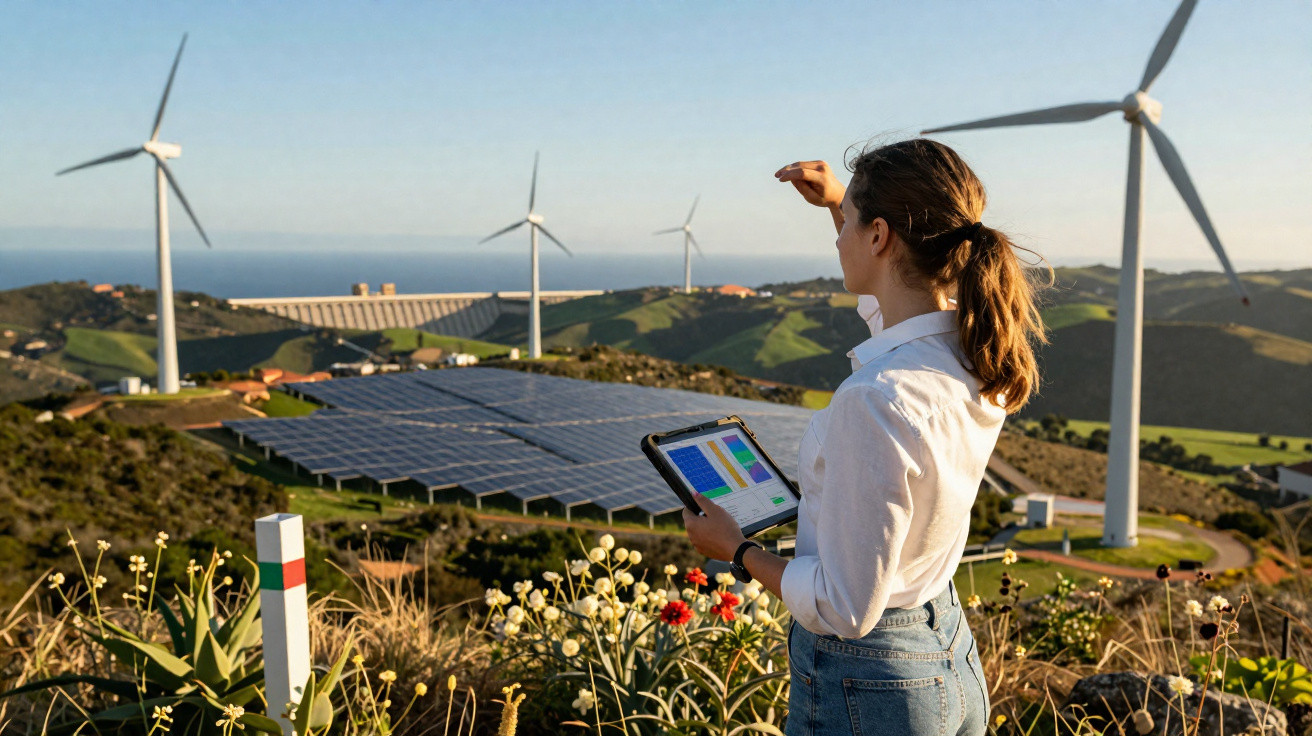
- Are solar and wind alternatives being assessed fairly for energy generation?
The human cost of “clean” energy that chokes a river
On a humid night in a coastal village, a fisherman spreads out his nets and repairs holes under lamplight. His eight-year-old son runs a finger over a map in an old schoolbook: a blue line leading from the mountains to the sea. That line once represented a route for fish, silt and floating logs. Now it is broken into a series of rectangles, each one a dam. The father speaks more quietly. “When I was his age,” he says, “the river brought us the soil and the fish. Now it brings us stories about electricity we cannot afford.”
Most of us have experienced the moment when a “green” answer looks less impressive at close range. Large hydropower dams are often presented as clean energy: no smokestacks, no coal dust and a tidy figure in a climate pledge. But concealed costs accumulate wherever water slows and sediment is halted. As deltas compact and erode, saltwater moves inland and contaminates wells and rice paddies. Coastal mangroves lose the muddy base needed for growth. Storm surges reach farther inland, at times changing what were once modest floods into full-scale disasters for villages with nowhere else to go.
For millions of people downstream, this is not an abstract “environmental impact”. It means losing a safety net. Low-income families rely on fertile floodplain soil that costs them nothing, wild fish that migrate with seasonal flows and sandbars that serve as natural levees. When sediment cycles are disrupted, these quiet supports disappear. People must then spend more on fertiliser, pumped irrigation and storm-damage repairs. Some leave entirely, joining the increasing number of migrants under climate pressure. The river that once sustained them becomes another danger they need to flee.
Scientists caution that in several of the world’s great deltas - the Ganges-Brahmaputra, Mekong, Nile and Mississippi - trapped sediment, groundwater pumping and sea-level rise could together force extensive low-lying land below the high-tide line within decades. This does not necessarily mean these places will vanish beneath the water, but it does mean more regular flooding, greater salinity and increased pressure. A dam constructed hundreds of kilometres away and praised at a ribbon-cutting ceremony quietly helps determine whether a child in a coastal village can grow rice in the same plot as their parents, or whether that land will fade into a brackish memory. This slow-moving drama is unfolding now, often overlooked amid the glow of megawatt statistics.
The next time you see a polished image of a huge new reservoir, mirror-smooth beneath mountain slopes, try to imagine what the picture leaves out. Consider the downstream price, grain by grain: a boat stranded where a navigation channel was once deep; a farmer in a field needing more fertiliser each year; a coastal household building its home slightly higher than the previous one because the land feels less secure than it did in their grandparents’ time. These are not anti-development stories. They are the other side of the ledger, rarely included in launch speeches or project reports.
Some countries are beginning to test different rules: prohibiting dams on the last free-flowing stretches of major rivers, requiring sediment-passage features or even removing ageing, inefficient dams. Others are intensifying their efforts, rushing to dam every available tributary in the name of national pride or energy security. The result is not predetermined. It depends on whether rivers are treated as living systems with memory and a downstream future, or as basic infrastructure channels that can be switched on and off from a control room.
Speaking candidly about sediment is not glamorous. It is mud, not marble. But mud is what keeps millions of people fed, housed and rooted in place. The surprising truth is that some of the most intelligent climate investments available to us are not about adding something new, but about allowing ancient processes to continue their quiet work. Allowing a river to carry its load. Allowing a delta to breathe. Allowing downstream communities to have a meaningful say in how often concrete constricts their lifeline. The map in that child’s schoolbook need not become a chain of broken links. It can still tell a flowing story.
| Key point | Detail | Why it matters to the reader |
|---|---|---|
| Rivers carry sediment, not only water | Sand, silt and clay transported downstream create fertile soils and deltas | Helps explain why dams reshape distant farms, coasts and cities |
| Dams retain this “invisible cargo” | Reservoirs become sediment traps, starving downstream areas and driving erosion | Shows how one dam can affect food, flood risk and the local economy |
| Sediment-smart planning is possible | Design choices, flushing flows and honest trade-offs can limit the harm | Provides practical questions to ask about new “clean energy” projects |
FAQ:
- How exactly do dams block sediment? By slowing the river, dams make heavier particles settle on the reservoir bed rather than continue downstream, progressively capturing a large proportion of the sediment load.
- Why should someone living in a city care about sediment cycles? Urban areas often depend on food from deltas and floodplains, stable coastlines and flood protection, all of which rely on a healthy sediment flow.
- Are all dams equally bad for rivers? No. Their impact depends on design, size, location and operation; some have features that permit partial sediment passage or preserve more natural flow patterns.
- Can old dams be fixed to let sediment through? In some cases, yes: by installing low-level outlets, altering operations to create flushing flows or, where a dam no longer makes sense, removing it entirely.
- Is hydropower still considered clean energy? Hydropower can lower greenhouse gas emissions compared with fossil fuels, but describing it as “clean” is misleading when sediment disruption, ecosystem loss and social impacts are overlooked.




Comments
No comments yet. Be the first to comment!
Leave a Comment