
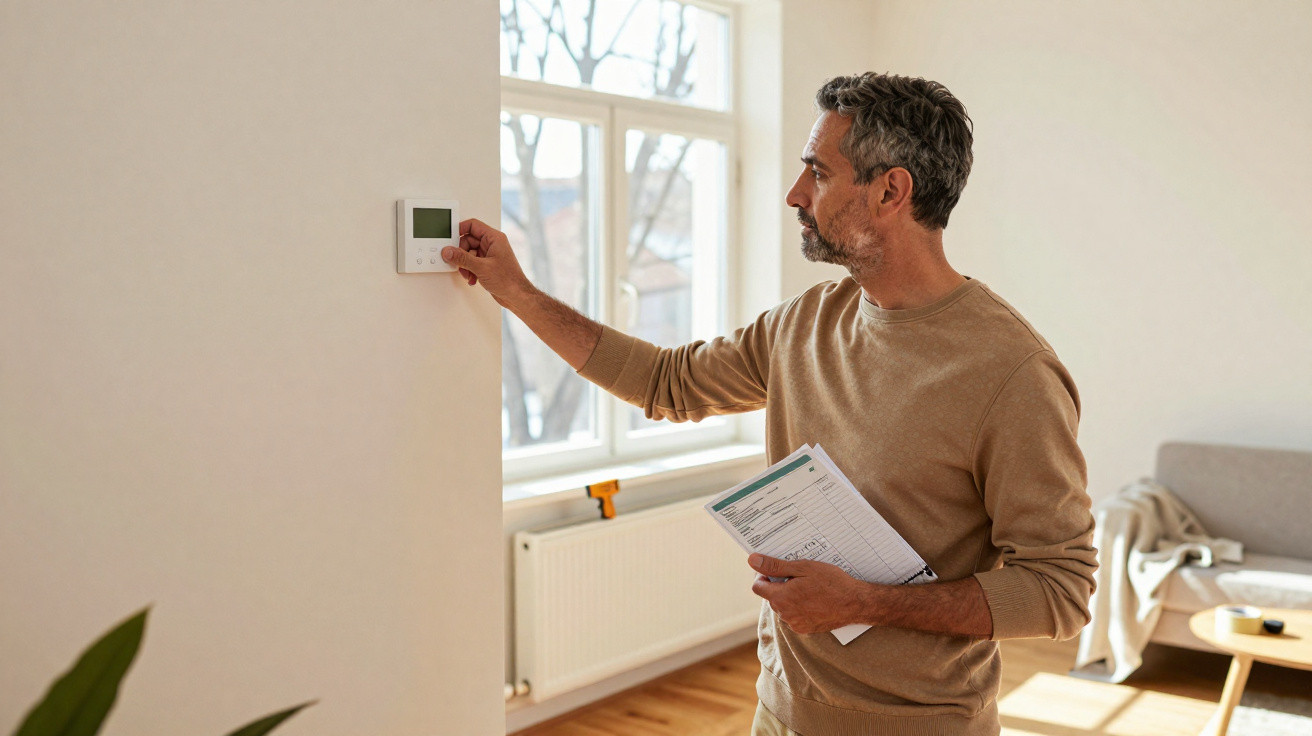
Across Europe and the UK, households are weighing up whether leaving radiators on at a low level throughout the day is worthwhile. With gas and electricity costs increasing, the practice can seem reassuring and even sensible. However, an industrial engineer specialising in household energy use says this belief should be discarded.
The myth of “always on” heating
At first glance, the argument appears convincing: if a property is never allowed to cool, the boiler supposedly has to “work less”, meaning the system uses less energy. The idea is widely repeated in social-media discussions, while some landlords also suggest it to their tenants.
From an energy perspective, keeping your heating constantly on at low temperature to save money is false, says industrial engineer Jorge Morales de Labra.
Jorge Morales de Labra, a Spanish industrial engineer and frequent commentator on energy consumption, recently explained the logic on the radio. His case is rooted in simple physics: a heating system uses energy for every minute it operates. The longer it remains switched on, the more it consumes, regardless of a low thermostat setting.
He says it will generally be cheaper to turn the heating fully off when leaving the house, including for a brief trip. Even if you only pop out to buy bread for a few minutes, he maintains that switching the boiler off and on again will usually use less energy than leaving it running in the background.
Why “low and constant” doesn’t add up
Heat loss never stops
A home loses warmth continually through its walls, roof, windows and small gaps around doors. The loss becomes greater as the difference between outdoor and indoor temperatures rises. Keeping a house at 20°C when it is 5°C outside therefore means heat is escaping throughout the day.
Maintaining 20°C at all times requires the boiler or heat pump to keep replacing that lost energy. Switching the heating off lets the indoor temperature drop a little, narrowing the gap with the outside air and reducing heat losses while the system is off.
The moment the heating stops, heat loss slows. Less time running usually means less energy burned over the week or the month.
Short breaks still matter
It is often assumed that heating should only be switched off during lengthy absences. Morales de Labra disputes this view. Pauses of just 20–30 minutes can still produce measurable savings, as the system is inactive and no fuel is used for that period.
Modern boilers and heat pumps restart efficiently, without the same drawbacks associated with older equipment. In most reasonably insulated homes, the “start-up cost” - the brief burst of energy required when the system comes back on - is lower than the energy saved during a modest period with the heating off.
Thermostats, not intuition
In practice, domestic heating systems seldom operate as tidily as theory suggests. Different rooms heat up at varying rates, radiators may contain trapped air, and residents open windows. A programmable thermostat manages this unpredictability more effectively than relying on instinct.
- Keep daytime living spaces at a comfortable range of around 19–21°C.
- Allow bedrooms and hallways to remain a little cooler.
- Reduce the set temperature by several degrees overnight and whenever nobody is at home.
- Set timed programmes that reflect your real daily routine.
Energy experts regularly stress the same point: each extra degree on the thermostat can raise consumption by approximately 6–8%. Over an entire winter, a seemingly minor and careless adjustment can add significantly to bills.
Practical ways to cut winter heating costs
Temperature, timing and behaviour
According to Morales de Labra, effective heating control is not about enduring an uncomfortable cold home. Instead, it means using energy only at the times and in the places where it provides comfort.
The goal is not “spend less at all costs”, but use energy better and avoid waste that never improves comfort.
Most domestic energy bills are influenced by three main factors: temperature, hours of operation and the performance of the building itself.
| Action | Typical impact |
|---|---|
| Reduce thermostat by 1°C | About 6–8% less energy use |
| Turn heating off when away | Cuts runtime, lowers total fuel burned |
| Improve window and door sealing | Reduces drafts, slows constant heat loss |
| Use daily schedules | Heating only when the home is occupied |
Insulation and simple fixes at home
No heating approach performs particularly well in a property that loses warmth from every direction. In poorly insulated flats, heat can escape so quickly that the boiler cycles repeatedly even when modest temperatures are selected. Improving insulation can bring lasting savings, although the first measures are often straightforward and inexpensive.
There are several steps households can take without carrying out renovation work:
- Apply adhesive sealing strips around windows and doors.
- Hang thick curtains and draw them at night to retain indoor warmth.
- Put rugs on cold floors to lessen the feeling of chill.
- Shut internal doors to retain heat in the rooms that are actually in use.
By slowing heat loss, these measures allow the heating system to rest for longer and operate in shorter bursts.
Using free solar heat wisely
Winter sunshine provides free warmth, even in northern climates. South-facing windows can act as passive radiators when curtains and blinds are left open during the daytime. Once the sun goes down, closing them promptly helps to retain some of that warmth indoors.
Think of curtains and blinds as a second, temporary layer of insulation you control daily at no extra cost.
In smaller living rooms especially, the difference between a home that collects solar warmth all day and one kept closed behind blinds can amount to several degrees.
Rethinking common heating habits
Comfort versus habit
Many heating routines are driven by anxiety about feeling cold rather than by evidence. Some people leave radiators running “just in case”, while others warm unused rooms because “they have always done it that way”. When energy prices rise sharply, such habits can become costly.
Energy engineers commonly suggest a simple task: walk around the home one evening and consider when each room needs heating, and why. A spare bedroom, storage room or hallway may require much less warmth than a lounge or a child’s bedroom.
This assessment will often result in smaller areas being heated, fewer operating hours and lower bills, with little noticeable effect on comfort.
When “always on” might feel tempting
There are limited situations in which almost continuous, low-level heating can appear attractive: very old properties with thick stone walls, homes affected by severe damp, or people with particular medical needs who cannot cope with temperature fluctuations. Even in these circumstances, engineers usually favour controlled setbacks rather than genuinely constant heating.
Rather than operating a boiler 24/7, a specialist may recommend a less substantial temperature reduction overnight, a moderate setting during the day, and focused improvements to the most exposed windows or walls. The underlying rule remains the same: reduce operating time and avoid excessive differences between indoor and outdoor temperatures when the space is not being used.
Looking ahead: smarter, not harder, heating
Smart thermostats and connected radiator valves provide an additional level of control. They can learn household occupancy patterns, recognise open windows and make adjustments room by room. For many households, this technology offers an easy way to move away from the “always on” myth, as heating is automatically reduced when the home is empty.
For instance, a family could programme the house to remain at 17°C during working hours, increase to 20°C one hour before they arrive home, then reduce again at bedtime. The boiler operates for less time, the rooms are still comfortable on arrival, and seasonal bills fall.
Anyone uncertain about how their own property responds can try a simple comparison over two cold weeks. Maintain your normal comfort level, but test two routines: constant low heating for one week, followed by scheduled heating with small setbacks for another. Checking actual use on a smart meter often changes opinions more quickly than a technical explanation.
The discussion ultimately raises a wider issue: how to live comfortably through colder months without wasting money and energy. Engineers such as Jorge Morales de Labra say the answer is not to leave heating systems quietly running in the background, but to decide when warmth genuinely matters - and eliminate the rest.






Comments
No comments yet. Be the first to comment!
Leave a Comment