
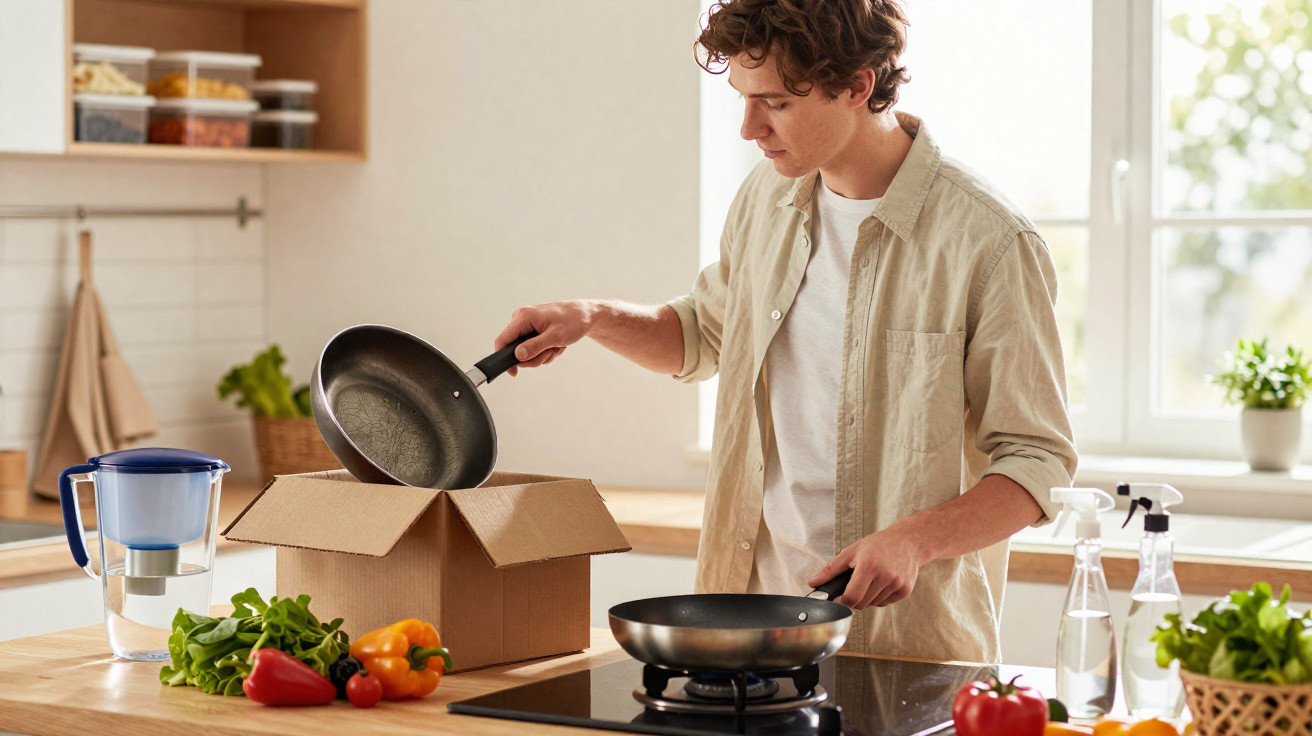
Simple everyday habits can reduce unnecessary exposure.
Damaged frying pans, food packaging, stain-resistant clothing and long-lasting beauty products: potential sources of per- and polyfluoroalkyl substances, known as PFAS, are increasingly common in daily life. In response to these compounds, often described as “forever chemicals”, health authorities have issued a range of practical recommendations intended to change everyday routines without disrupting household life.
Substances found in many everyday activities
PFAS are a broad group of molecules that have been used for decades because of their useful properties. They repel water, grease and dirt, which means they may be present in certain fabrics, cooking utensils, food-service packaging, firefighting foams, cosmetics and waterproofing treatments.
Their main issue is their exceptional persistence. These molecules break down very little in the environment and can move through soil, air, waterways, some foodstuffs and living organisms. Everyone may therefore encounter them, although exposure levels vary.
People living close to a contaminated area, along with some workers who handle these substances, are among those who may be more affected.
Pregnant and breastfeeding women, as well as babies, also require particular care. Scientific evidence links some compounds in this family with raised cholesterol, effects on fertility and foetal development, and an increased risk of certain cancers. The impact depends on the substance involved, the amount received and the duration of exposure.
Choose a less repetitive diet
The first measure highlighted is to make food choices more varied. Rotating food groups, places of origin and cooking methods helps prevent exposure from becoming concentrated around one source. This reflects a straightforward dietary principle: no single food should take up too large a place in the diet week after week.
Authorities advise favouring seasonal produce and meals prepared at home. Where household budgets allow, opting for organic products may also be an option. This does not mean that food will contain no traces of contaminants, but it forms part of an overall approach to reducing exposure.
A few easy habits to adopt
- Vary vegetables, fruit, cereals and protein sources.
- Prepare more straightforward meals using unprocessed ingredients.
- Avoid eating the same foods from the same place very frequently.
- Use durable containers to store leftovers.
- Do not reheat meals in plastic containers, particularly if they are old or scratched.
For drinks, official guidance favours water supplied to the home. It is tested regularly, and local authorities can introduce restrictions when non-compliance is identified. In areas where pollution has been confirmed, local guidance remains the point of reference: it may apply to drinking water, meal preparation or the use of particular water collection points.
In the kitchen, replace the most worn items
Particularly worn utensils deserve closer attention. A scratched non-stick frying pan, a cloudy plastic container or an ageing kettle should not necessarily cause immediate concern, but replacing them with more stable materials reduces uncertainty and potentially risky uses.
Glass, stainless steel and cast iron are among the materials recommended for cooking, serving and storing food.
Packaging designed to resist grease or moisture should also be used in moderation. This may include certain food papers, disposable boxes and packaging for ready-to-eat meals. Moving food into a plate or glass container before heating it is a very practical step.
Textiles, household products and cosmetics under scrutiny
The home involves more than the kitchen. Stain-resistant, water-repellent and waterproof treatments used on sofas, clothes, rugs and shoes may contain fluorinated compounds. Before buying, it is worth considering whether this feature is genuinely needed. A coat intended for urban journeys does not always require a highly technical treatment.
Guidance also encourages the choice of clothing made from natural fibres, second-hand items, or brands stating that they do not use these substances. This should be checked on the label or with the manufacturer, as marketing descriptions are not always enough.
Clean without multiplying products
A pared-back cleaning routine can help limit the recirculation of dust already present in the home. Airing rooms for ten minutes every day, including in winter, refreshes indoor air. Damp-cleaning floors and surfaces captures particles more effectively than dry dusting.
- Open windows for ten minutes each day.
- Mop floors regularly with a damp mop.
- Clean using simple products, such as soft soap or vinegar suitable for the surface.
- Avoid building up stocks of aerosols and specialist treatments.
- Wash hands before meals, especially for young children.
In the bathroom, products that are highly water-resistant or claim long-lasting wear can be swapped for simpler formulas. Organic-certified cosmetics are one possible route, provided the ingredients list is checked too. A short formula does not automatically guarantee the absence of every undesirable substance, but it often makes products easier to assess and limits the layering of products.
A long-term risk
PFAS present a particular challenge: there is currently no treatment that can remove them from the body on demand. The main strategy is therefore to avoid preventable exposure. This is not about turning every shopping trip or meal into a cause for anxiety. Authorities emphasise gradual changes that can be introduced according to each household’s circumstances.
The cumulative effect is worth keeping in mind. Replacing one item will not solve everything, whereas a series of small choices - cooking with stainless steel, varying menus, limiting grease-resistant packaging, airing the home and avoiding unnecessary sprays - can reduce opportunities for exposure over the months.
In an area where contamination has been reported, residents can contact their local council, the relevant regional authority or the local supplier to find out what measures are in place. Guidance may change according to sampling results and the nature of the molecules detected.






Comments
No comments yet. Be the first to comment!
Leave a Comment