
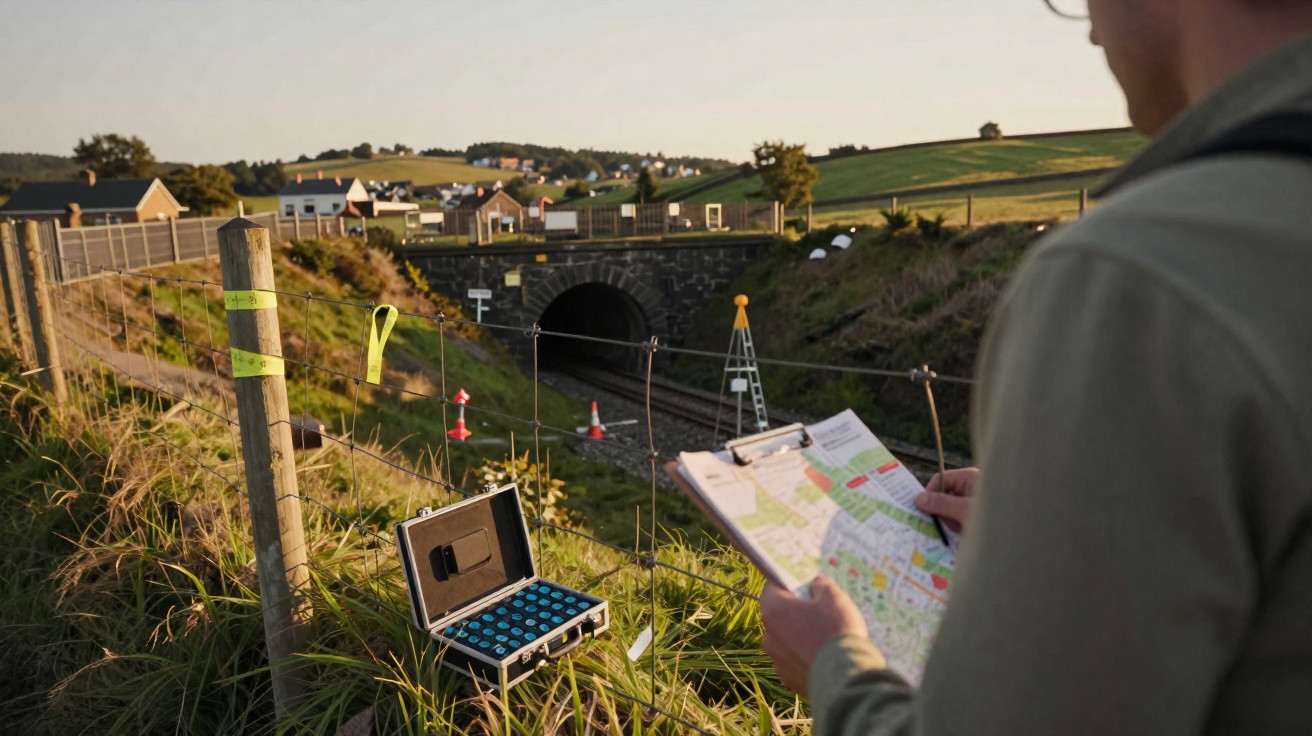
At the far end of the Old South Tunnel, walkers’ lamps still pick out damp walls and rails eaten away by rust. For years, this forgotten route was simply a local landmark: a slightly gloomy shortcut and a tale older residents told children. Then technical vehicles began appearing, marker posts were driven into the ground, and a handful of maps started circulating quietly. According to several documents reviewed by local residents, a cobalt deposit may have been identified underground, while TotalEnergies is said to have secured exploration rights without meaningful prior information for the public. The tunnel has not moved, but everything around it suddenly feels different. Questions are now coming to the surface.
An old route becomes an industrial issue
Every morning, residents pass the sealed entrance to the Old South Tunnel without considering what the surrounding rock might hold. Cobalt, a strategic metal used in particular in some batteries, can turn otherwise ordinary land into an area that is monitored, sought after and sometimes contested. On the face of it, this is only an abandoned tunnel; in reality, a single administrative signature can reshape the future of a neighbourhood, a village or nearby farmland.
Initial concerns emerged when technical signs were installed and teams carrying out geological surveys were seen in the area. Based on information shared locally, the affected area could extend across several hectares around the tunnel, with rights granted to TotalEnergies through a process that some local residents consider opaque. One resident says she learned about the scheme only after spotting coloured stakes behind her garden. “No one came to explain anything to us,” she says, still surprised.
The central concern is less about cobalt itself than the feeling of having been excluded. A prospecting or exploration permit does not automatically mean that a mine will be opened, but it does allow investigations that may alter land use and everyday life. Noise, construction traffic, sampling and restricted access are among the possible effects, and they deserve a clear explanation. The right to information should never come only after the first signs of work.
What residents can check without getting lost in jargon
When faced with a mining or energy proposal, the most useful first step is to request the official paperwork: permits, maps of the relevant boundary, environmental studies, the operations timetable and consultation arrangements. The local council, prefecture or relevant authority should be able to direct citizens to these materials. A written request that is dated and specific is preferable to relying on rumours shared on social media or at the village café.
A common mistake is to assume that a construction sign means every decision has already been made. That is not necessarily true: depending on the precise status of the rights granted, appeals, consultations and inspections may still take place. Let us be honest: nobody reads dozens of administrative pages every day. Joining forces with neighbours, dividing up the documents for review and seeking support from a local association can often make the situation far clearer.
Residents should also record what they observe, without exaggeration or premature accusations. Dated photographs, vehicle timings, notes from public meetings and copies of correspondence provide a robust record if the matter grows in importance.
“What we are asking for is not to block every project, but to know what is planned beneath our feet and around our homes,” explains one involved local resident.
- Request the exact name of the mining title or right granted.
- Check the publication date and the period for which it remains valid.
- Identify areas close to homes, water sources and crops.
- Insist on having a contact person who can be reached for local questions.
Cobalt raises a question beyond the Old South Tunnel
The energy transition depends on materials whose extraction often remains unseen by people using an electric car, a phone or a home battery. Cobalt is sought for its properties, yet its presence underground alone does not make a project acceptable in residents’ eyes. Water, dust, biodiversity, roads and site restoration must also be discussed. An industrial decision is never solely industrial.
The case of the Old South Tunnel highlights a very practical reality: trust disappears quickly when a community discovers a proposal by chance. TotalEnergies, like any holder of rights in a sensitive area, is expected to provide clear explanations, follow procedures and maintain a constructive local dialogue. A public meeting announced in good time does not solve everything, but it prevents the uncomfortable sense that the dice have already been thrown before those most affected have had the chance to ask a question.
One question remains, and it is now familiar to many areas: can the search for strategic metals be accelerated without asking residents to bear the uncertainties alone? Elected representatives, companies and state services each have part of the answer to provide. Local residents are not necessarily demanding inaction; they want to know where the boundary begins, what the authorisations cover and who will accept responsibility if the project moves forward. Long silent, the tunnel is becoming the starting point for a much wider discussion.
| Key point | Detail | Value for the reader |
|---|---|---|
| Reported cobalt deposit | Surveys and exploration rights around the Old South Tunnel are raising questions. | Understand why a forgotten place has become strategic. |
| Information for local residents | Some residents believe they were not informed early enough about the steps under way. | Know which documents to request from the authorities. |
| Citizen vigilance | Letters, maps, meetings and on-site observations can help monitor the matter. | Take methodical action rather than responding with concern. |
FAQ:
- What is an exploration right? It is an authorisation to investigate the subsoil and assess whether resources are present. It does not automatically amount to permission to operate a mine.
- Is cobalt necessarily dangerous for local residents? The risk depends on the operations undertaken, the methods used and the safeguards planned. Environmental studies are specifically intended to assess these potential effects.
- How can I find out whether my land is affected? Request the official boundary plan from the local council, the prefecture or the authority responsible for mining and the subsoil.
- Must TotalEnergies inform the public? Obligations vary according to the type of authorisation and the stage of the project. Citizens can request publication of the information and the holding of local meetings.
- What should I do if I have doubts about the procedure? Keep the available evidence, contact local elected representatives, consult a specialist association or legal adviser, then send a written request to the relevant authorities.






Comments
No comments yet. Be the first to comment!
Leave a Comment