
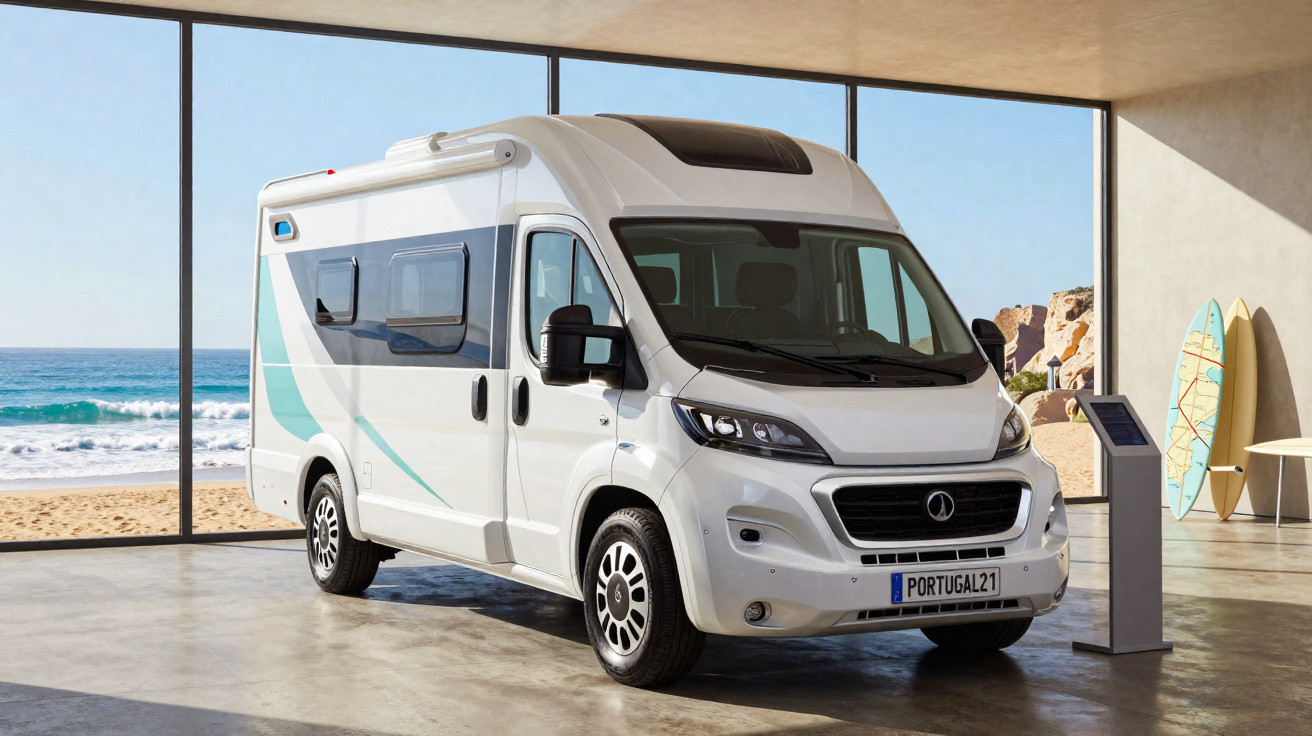
At dawn, in a wind-lashed car park near the Algarve coast, Colette cautiously slides open the side door of their van. André, 72, is making coffee as the ocean crashes in the distance beyond a line of salt-bent pines. Their routine is well established: two folding chairs, a blanket across their knees, the newspaper bought in the village the previous day, and the new caution that comes with bedtime. Since 2021, Portugal has introduced rules for the overnight parking of motorhomes, including in places travellers had long regarded as unrestricted. The landscape is unchanged; the way they stop there is not. Every sign now matters.
By the ocean, freedom has become more regulated
For over ten years, Colette and André have spent each winter in Portugal. In November, they leave the grey weather of western France, drive unhurriedly through Spain, then settle for several weeks between the Algarve, Alentejo and the Atlantic coast. Their vehicle is not a large, gleaming motorhome but a discreet converted van, with just enough room for two people to live in. Their luxury is the view. A cliff at sunrise, a fish market, a walking trail within easy reach. They say they are not trying to claim any place as their own, merely to stay overnight without leaving a trace.
In some seaside car parks, more experienced travellers recall a time when it was common to find ten vehicles parked side by side for the night, sometimes far more during school holidays. Eventually, this situation strained relations with local residents, particularly where public toilets, bins and beach access points had not been designed for so many people. In 2021, the rules changed to curb misuse and safeguard vulnerable areas. Colette still remembers it clearly: “One morning, near a beach, we saw officers going round and explaining the new guidance to everyone.”
Portugal is not shutting its doors to touring visitors. Instead, it is attempting to balance a hugely popular way of travelling with coastlines under considerable pressure. The rules particularly concern parking and sleeping outside authorised areas, with close attention paid to protected sites, Natura 2000 areas and land covered by coastal protection measures. Elsewhere, a limited stay-often referred to as around 48 hours within the same municipality, depending on the circumstances and local rules-serves as a guideline. The same car park may therefore be tolerated one day and prohibited the next, depending on its signage or status.
What Portugal’s 2021 law has really changed for motorhome users
The first precaution is to read the signs before switching off the engine. It may sound obvious, yet on Portuguese roads a prohibition may be displayed at the entrance to a car park, beside beach access or on a municipal notice that is less noticeable than expected. André now makes a short walk around the area before settling in: he checks the symbols, looks for service points and uses a specialist app to see whether an official motorhome area is nearby. Ten minutes of research can prevent an anxious night or a fine that spoils the trip.
The most common misunderstanding concerns the distinction between stopping and setting up camp. Taking a break, eating lunch in the vehicle or looking out over the sea is not necessarily the same as putting up an awning, taking out a table, hanging washing and staying overnight. In truth, nobody does all of that every day. However, when a car park becomes a small campsite for several weeks, local people notice straight away. So do the authorities. Service areas, municipal campsites and private pitches cost a few euros, but they often provide water, electricity, waste disposal and, above all, a more restful night.
To avoid unpleasant surprises, Colette and André follow one simple principle: they move on regularly and favour municipalities that have arranged facilities for converted vehicles. They also allow room in their budget so they are never forced to sleep somewhere they should not.
“We do not want to beat the rules. We want to keep coming back without damaging what makes us return,” Colette says as she closes the van door.
- Check local signage before staying overnight;
- Keep away from dunes, beaches, cliffs and environmentally sensitive natural areas;
- Leave behind no rubbish, wastewater or equipment outside;
- Plan an authorised motorhome area or campsite as a back-up option.
Travel is changing, but Portugal’s appeal remains intact
There is something deeply human about Colette and André’s choice: seeking sunshine as winter drags on, slowing down after a working life, and finding a horizon that asks nothing of them. The 2021 law has not removed that desire. It simply requires more mindful travel in a country where every cove and cliff appears to invite a stop. Freedom in a converted van is never entirely spontaneous. It depends on a delicate balance between the pleasure of being there and respect for the people who live there all year round.
The couple have adjusted their habits. They sometimes book two nights at a small family-run campsite, use areas provided by municipalities and head to inland villages when the coast becomes too crowded. There, they have discovered cafés without translated menus, tiny markets and shaded squares where older residents talk for hours. Initially imposed by restrictions, this detour has revealed another Portugal to them: one that cannot be reduced to a sunset photograph taken through a windscreen.
For travellers planning their departure, the right approach is not to search social media for the last “tolerated” car park. It is better to find somewhere their presence will genuinely be welcome. Rules can vary from one municipality to another, as can enforcement, while coastal protection remains a sensitive issue. Between the temptation to sleep facing the waves and the need to preserve these landscapes, everyone leaves a mark. Even a discreet one. Especially a discreet one.
| Key point | Detail | Benefit for the reader |
|---|---|---|
| Rules since 2021 | Overnight parking for motorhomes is regulated, with stricter restrictions in protected natural and coastal areas. | Avoid fines and misunderstandings of the rules. |
| Local signage | A municipality or car park may impose specific rules, shown on signs at access points. | Choose an appropriate stop before nightfall. |
| Responsible travel | Authorised areas, campsites, no rubbish and compliance with permitted durations reduce tensions. | Enjoy Portugal without jeopardising the future welcome given to travellers. |


Comments
No comments yet. Be the first to comment!
Leave a Comment